
Key Takeaways
- A healthy adult dog typically needs between 25 to 30 calories per pound of body weight each day, though activity level can shift that number significantly
- Puppies require roughly twice the calories per pound compared to adult dogs and should eat three to four meals a day until six months of age
- Senior dogs over seven years old generally need 20 to 25 percent fewer calories than younger adults due to reduced metabolism and lower activity
- Treats should never exceed 10 percent of your dog’s total daily calorie intake to avoid nutrient imbalances and weight gain
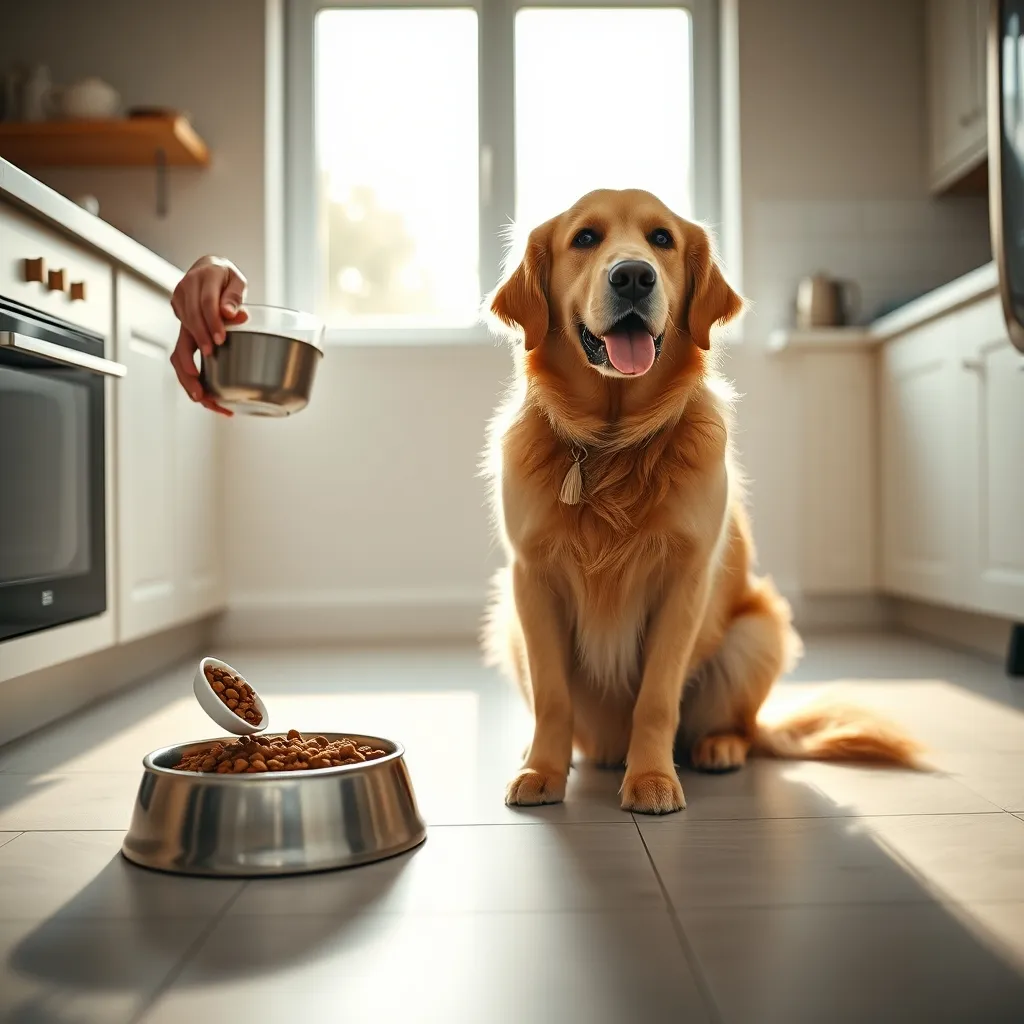
- Using a standard 8-ounce measuring cup rather than guessing portions can prevent overfeeding by up to 50 percent
- Feeding guidelines on dog food labels are starting estimates only and should be adjusted based on body condition score every two to four weeks
In This Guide
- Why Portion Size Matters for Your Dog’s Health
- Understanding Your Dog’s Calorie Needs
- How Much to Feed a Dog by Size
- Adjusting Portions by Age: Puppies, Adults and Seniors
- Activity Level: The Factor Most Owners Overlook
- How to Read Dog Food Labels and Feeding Charts
- Using Body Condition Score to Fine-Tune Portions
- How Often Should You Feed Your Dog?
- Common Feeding Mistakes and How to Avoid Them
One of the most common questions I hear from new dog owners, and honestly from experienced ones too, is simply: how much should I feed my dog? It sounds like it should have a straightforward answer, but it really doesn’t. The right portion depends on your dog’s weight, breed, age, activity level, metabolism and even the specific food you’re using. Over my decade of working with dogs in Austin, I’ve seen countless behavior problems that traced back, at least partly, to nutrition. An overfed, sluggish dog is harder to train. An underfed, anxious dog struggles to focus. Getting portions right is one of the most impactful things you can do for your dog’s overall wellbeing.
Why Portion Size Matters for Your Dog’s Health
According to the American Veterinary Medical Association, an estimated 59 percent of dogs in the United States are overweight or obese. That’s a staggering number, and it leads directly to joint disease, diabetes, heart problems and a shortened lifespan. Studies show that dogs kept at a healthy weight live an average of two years longer than their overweight counterparts.
On the flip side, underfeeding creates its own set of problems. Dogs who consistently receive too few calories can develop weakened immune systems, poor coat quality, low energy and behavioral changes including increased irritability. I’ve worked with reactive dogs whose aggression improved noticeably once their nutritional needs were properly met.
The challenge is that most owners genuinely don’t know how much food their dog actually needs. They scoop kibble into the bowl until it “looks right” or follow the bag’s guidelines without adjusting for their individual dog. Both approaches can miss the mark by a wide margin.

Understanding Your Dog’s Calorie Needs
Every dog has what veterinary nutritionists call a Resting Energy Requirement (RER). This is the baseline number of calories your dog needs just to keep their body functioning at rest. The standard formula is:
RER = 70 × (body weight in kg) ^ 0.75
From there, you multiply by an activity factor to get the Maintenance Energy Requirement (MER), which accounts for daily movement, digestion and thermoregulation. For a typical neutered adult dog, the multiplier is about 1.6. For an intact adult, it’s closer to 1.8. Highly active working dogs might need a multiplier of 2.0 to 5.0, depending on intensity.
Don’t worry if the math feels overwhelming. The practical takeaway is that a moderately active adult dog needs roughly 25 to 30 calories per pound of body weight daily. That gives you a useful starting point before fine-tuning based on what you observe in your individual dog.
How Much to Feed a Dog by Size
Your dog’s size is the single biggest factor in determining portion size. A Chihuahua and a Great Dane obviously don’t eat the same amount, but many owners underestimate just how different their calorie needs really are. Smaller dogs actually have faster metabolisms relative to their body weight, which means they need more calories per pound than larger breeds.
| Dog Size | Weight Range | Daily Calories (moderate activity) | Dry Food (approx. cups/day) |
|---|---|---|---|
| Toy | 2–10 lbs (1–5 kg) | 100–350 | ¼ – ¾ |
| Small | 10–25 lbs (5–11 kg) | 350–650 | ¾ – 1½ |
| Medium | 25–50 lbs (11–23 kg) | 650–1,100 | 1½ – 2½ |
| Large | 50–80 lbs (23–36 kg) | 1,100–1,600 | 2½ – 3½ |
| Giant | 80–150+ lbs (36–68+ kg) | 1,600–3,000+ | 3½ – 6+ |
These numbers assume a standard kibble containing approximately 350 to 400 calories per cup. If you feed a calorie-dense food or a raw diet, the volume will be significantly less. Always check the calorie content (listed as “kcal/cup” or “kcal/kg”) on your specific product. The difference between a budget kibble at 300 kcal per cup and a premium brand at 500 kcal per cup is enormous when translated into actual scoops.
If you’re preparing meals at home, our guide to homemade dog food recipes approved by veterinarians covers how to balance nutrients and calculate portions for home-cooked diets.
Adjusting Portions by Age: Puppies, Adults and Seniors
Puppies (Birth to 12 Months)
Puppies are growing at an extraordinary rate, and their nutritional demands reflect that. A puppy needs approximately twice the calories per pound of body weight compared to an adult dog of the same breed. But here’s the catch: you can’t just pile food into the bowl. Overfeeding a puppy, especially a large breed, can lead to developmental orthopedic diseases because bones grow faster than the supporting structures can handle.
For puppies under six months, I recommend three to four meals per day. Between six and twelve months, you can transition to two meals daily. During this critical period, you’ll also be managing puppy teething and building foundational habits like crate training, so keeping energy levels stable through consistent feeding times makes a real difference in trainability.
Adult Dogs (1 to 7 Years)
Most adult dogs do well on two meals per day, morning and evening. Their caloric needs stabilize once growth is complete, and the focus shifts to maintaining a healthy body condition. The feeding chart above gives good baseline ranges for adults. Spayed or neutered dogs typically need 10 to 20 percent fewer calories than intact dogs because the hormonal change affects metabolism.
Senior Dogs (7+ Years)
As dogs age, their metabolism slows and activity naturally decreases. Senior dogs generally need 20 to 25 percent fewer calories than they did in their prime. However, protein needs actually stay the same or even increase slightly to help maintain muscle mass. Look for senior-formulated foods with moderate fat, higher protein and added joint-support ingredients like glucosamine. The American Kennel Club’s guidance on feeding senior dogs is a helpful resource for navigating this transition.

Activity Level: The Factor Most Owners Overlook
I can’t stress this enough: activity level should fundamentally change how much you feed your dog. A Border Collie running agility courses five days a week has vastly different caloric needs than a Bulldog who spends most of the day on the sofa. Yet both might weigh around 40 pounds.
Here’s a practical framework I use with my clients:
- Low activity (short daily walk, mostly indoor): reduce standard portions by 10 to 20 percent
- Moderate activity (30 to 60 minutes of walking or play daily): feed the standard recommended amount
- High activity (1 to 3 hours of vigorous exercise, hiking, swimming, agility): increase by 20 to 40 percent
- Working/sporting dogs (sustained physical effort, herding, sled pulling, field work): may need 2 to 3 times the standard amount
Seasonal changes matter too. Dogs who spend time outdoors in cold weather burn more calories just maintaining body temperature. If your dog is more active in summer, perhaps swimming regularly (some breeds are natural swimmers, as we discuss in our overview of safe and enriching toy options that encourage active play), adjust portions upward during those months and scale back in winter if activity drops.
For dogs enrolled in training programs, especially intensive leash training or behavior modification work, remember that training treats count toward daily calories. I typically recommend setting aside 10 percent of the daily food allowance specifically for training rewards and reducing the meal portions accordingly.
How to Read Dog Food Labels and Feeding Charts
Every commercial dog food includes a feeding guide, usually a chart on the back of the bag showing recommended daily amounts by weight. These charts are legally required by AAFCO (Association of American Feed Control Officials), but they come with an important caveat: they’re designed to cover the needs of the most active dogs in each weight range. That means for the average pet dog, following the bag’s suggestion can result in overfeeding by 20 to 30 percent.
Here’s what to look for on the label:
- Calorie content statement: Listed as kcal/cup or kcal/kg. This is the most useful number for calculating exact portions.
- Guaranteed analysis: Shows minimum protein, minimum fat, maximum fiber and maximum moisture. Higher fat means more calorie-dense food.
- AAFCO nutritional adequacy statement: Confirms the food meets minimum nutrient requirements for a specific life stage (growth, adult maintenance, or all life stages).
- Feeding guidelines: Treat these as a starting point only, not a fixed rule.
If your food contains 400 kcal per cup and your 40-pound moderately active dog needs about 900 calories per day, that works out to approximately 2¼ cups total, split between two meals. Knowing the calorie density of your food transforms vague “cups per day” guidance into precise nutrition.
Using Body Condition Score to Fine-Tune Portions
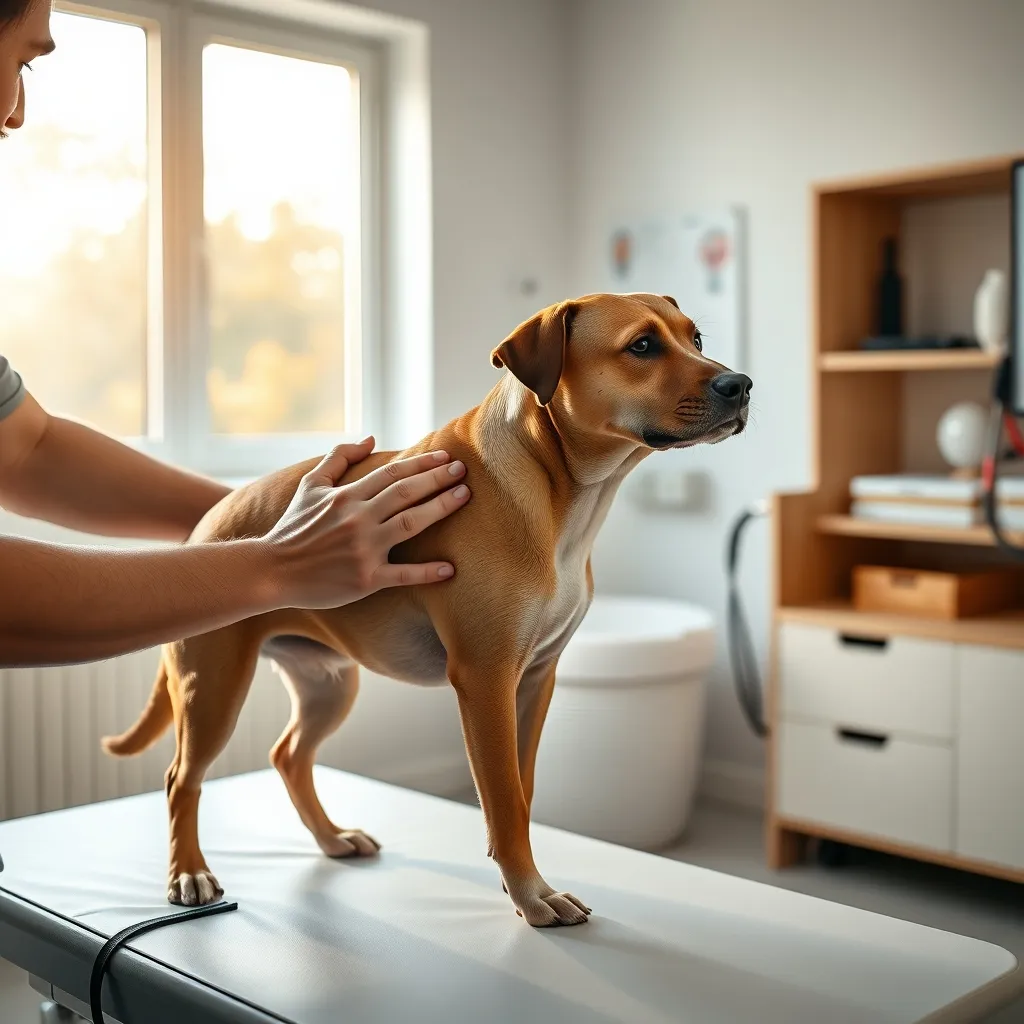
Numbers on a calculator are a great starting point, but the most reliable way to know if you’re feeding the right amount is to assess your dog’s body condition regularly. Veterinary professionals use a Body Condition Score (BCS) system, typically on a scale of 1 to 9, where 1 is severely underweight and 9 is obese. The ideal score is 4 to 5 out of 9.
You can assess your dog at home using three simple checks:
- Rib check: Place your hands on your dog’s ribcage with light pressure. You should be able to feel the ribs without pressing hard, but they shouldn’t be visually prominent. Think of the feel of the back of your hand: that’s about right.
- Waist check (from above): Looking down at your dog, you should see a visible tuck or narrowing behind the ribs. If the body is a straight line or wider at the belly, your dog is likely carrying excess weight.
- Abdomen check (from the side): The belly should slope upward from the chest to the hind legs. A sagging or level belly line suggests overweight.
I recommend doing this assessment every two to four weeks and adjusting food portions by 10 percent up or down based on what you find. It’s a far more accurate method than relying on the bathroom scale alone, because muscle and fat can shift without much change in total weight. If you notice your dog gaining or losing weight unexpectedly, a veterinary check is wise, as medical conditions like hypothyroidism or Cushing’s disease can affect weight independent of diet. Our dog first aid guide covers recognizing signs that warrant a vet visit.
How Often Should You Feed Your Dog?
Beyond how much to feed a dog, how often matters too. The right meal frequency depends largely on age, but individual factors play a role as well.
- Puppies (8 weeks to 6 months): 3 to 4 meals per day
- Puppies (6 to 12 months): 2 to 3 meals per day
- Adult dogs (1 to 7 years): 2 meals per day
- Senior dogs (7+ years): 2 meals per day, sometimes 3 smaller meals if digestion becomes sensitive
A question I get asked frequently is whether feeding once a day is acceptable. While some owners practice once-daily feeding and their dogs manage fine, I generally advise against it. Feeding just once daily can lead to excessive hunger, gulping behavior, increased risk of bloat (gastric dilatation-volvulus, which is life-threatening in large, deep-chested breeds) and blood sugar fluctuations that affect mood and energy. Two meals spaced 10 to 12 hours apart is the standard I recommend for most adult dogs.
Consistency is equally important. Dogs thrive on routine. Feeding at roughly the same times each day helps regulate digestion, makes housetraining more predictable and reduces anxiety. In my separation anxiety work, establishing a reliable feeding schedule is often one of the first changes I implement, because it gives the dog a sense of predictability in their daily structure.
Common Feeding Mistakes and How to Avoid Them
After ten years of coaching dog owners through nutrition basics, I see the same mistakes come up again and again. Here are the most impactful ones to avoid:
1. Eyeballing portions. Grab an actual measuring cup. A standard 8-ounce dry measuring cup is what feeding guidelines reference. Research published in the National Library of Medicine has shown that owners who estimate portions by eye can be off by as much as 80 percent. A kitchen scale is even more precise if you want the gold standard.
2. Ignoring treats in the calorie count. Training treats, dental chews, a bit of peanut butter in a Kong: it all adds up. The general rule is the 90/10 rule: 90 percent of daily calories from complete, balanced meals and no more than 10 percent from treats or extras. During intensive training for challenges like reactive behavior or excessive barking, I help clients choose low-calorie training treats and reduce meal portions to compensate.
3. Free-feeding dry food. Leaving a bowl of kibble out all day makes it impossible to monitor intake. If you have multiple dogs, you can’t know who’s eating what. Timed meals (pick the bowl up after 15 to 20 minutes) encourage healthy eating habits and let you spot appetite changes early, which is one of the first signs of illness.
4. Switching foods abruptly. Any food transition should happen gradually over 7 to 10 days, mixing increasing amounts of the new food with decreasing amounts of the old. Sudden changes cause digestive upset, diarrhea and sometimes food refusal.
5. Feeding table scraps as a regular practice. The occasional bit of plain cooked chicken is fine, but regular table scraps throw off nutritional balance and can introduce toxic ingredients. Onions, garlic, grapes, xylitol and chocolate are all common household foods that are dangerous or fatal to dogs.
6. Not adjusting for life changes. Spaying, neutering, injury recovery, pregnancy, aging: all of these require portion adjustments. A dog recovering from surgery and confined to rest needs significantly fewer calories than the same dog in full health. Reassess portions at every major life transition.
Keeping your dog at a healthy weight also supports other aspects of their care. Dogs at a proper weight are easier to bathe and groom, tolerate nail trimming more comfortably and handle the physical demands of travel with less stress.
Key Points
- Use the calorie content on your dog food label, not just the cup measurement, to calculate precise daily portions
- Assess your dog’s Body Condition Score every 2 to 4 weeks and adjust food by 10 percent up or down as needed
- Follow the 90/10 rule: no more than 10 percent of daily calories should come from treats
- Feed two measured meals per day at consistent times rather than free-feeding or once-daily feeding
- Transition to a new food gradually over 7 to 10 days to prevent digestive upset
Frequently Asked Questions
How much food should I feed my dog based on a chart?
Feeding charts on dog food packaging provide general guidelines based on your dog’s weight, but they tend to overestimate portions by 20 to 30 percent for average pet dogs. Use the chart as a starting point, then adjust based on your dog’s body condition score, activity level and individual metabolism. A toy dog (2 to 10 lbs) typically needs ¼ to ¾ cup of standard kibble daily, a medium dog (25 to 50 lbs) needs 1½ to 2½ cups and a large dog (50 to 80 lbs) needs 2½ to 3½ cups.
Feeding once a day is not ideal for most dogs. While some healthy adult dogs can manage on one meal, it can lead to excessive hunger, gulping, blood sugar swings and an increased risk of bloat, particularly in large and deep-chested breeds. Two meals per day spaced 10 to 12 hours apart is the recommendation supported by most veterinary professionals. Puppies and senior dogs should never be fed only once daily.Is it cruel to feed a dog once a day?
The best way to check is a hands-on body condition assessment. If you cannot easily feel your dog’s ribs with light pressure, if there is no visible waist when viewed from above, or if the belly hangs level or sags when viewed from the side, your dog is likely overweight. Other signs include reluctance to exercise, difficulty breathing during mild activity and a general lack of energy. Weigh your dog monthly and track trends over time.How do I know if I’m feeding my dog too much?
Both wet and dry food can provide complete nutrition as long as they meet AAFCO standards. Dry food is more calorie-dense per volume, which means portions look smaller. Wet food contains about 75 percent moisture, so your dog needs to eat a larger volume to get the same calories. Many owners mix both for variety and hydration benefits. The key is to calculate total daily calories from all food sources combined, whether dry, wet or a combination.Should I feed my dog wet food or dry food?
Puppies need approximately twice the calories per pound of body weight compared to adult dogs of the same breed, because they are fueling rapid growth. However, this should be spread across 3 to 4 meals per day for puppies under six months, and 2 to 3 meals for puppies aged six to twelve months. Use a puppy-specific food formulated for growth, and for large breed puppies, choose a large-breed puppy formula that controls calcium and phosphorus levels to support healthy skeletal development.How much should I feed my puppy compared to an adult dog?
Yes, seasonal adjustments can be appropriate. Dogs that spend significant time outdoors in cold weather burn more calories maintaining body temperature and may need 10 to 20 percent more food. Conversely, if your dog becomes less active during hot summer months, reducing portions slightly prevents weight gain. Always base adjustments on your dog’s actual body condition rather than the calendar alone.Do I need to adjust my dog’s food based on the season?