
Key Takeaways
- Dog aggression is the number one behavioral reason dogs are surrendered to shelters in the United States
- There are at least 7 clinically recognized types of canine aggression, each requiring a different management approach
- An estimated 4.5 million dog bites occur in the U.S. every year, and most involve a dog known to the victim
- Early warning signs like lip licking, yawning, and whale eye appear well before a growl or snap, giving owners a critical intervention window
- Force-free behavior modification paired with desensitization and counter-conditioning is the gold-standard treatment recommended by veterinary behaviorists
- Punishing a growling dog suppresses the warning signal without addressing the emotion, increasing the risk of a bite with no warning
In This Guide
- What Is Dog Aggression and Why Does It Happen?
- Common Types of Aggression in Dogs
- Recognizing Early Warning Signs of Dog Aggression
- Top Triggers That Cause Reactive Behavior
- How to Manage and Reduce Dog Aggression Safely
- Training Techniques for Reactive Dogs
- When to Seek Professional Help for Dog Aggression
- Preventing Aggression in Puppies and Adolescent Dogs
I want to start by saying something that might surprise you: dog aggression is not a character flaw. After more than a decade of working with reactive and aggressive dogs here in Austin, I can tell you that behind every lunge, growl, or snap there is a dog trying to communicate something it feels strongly about. Our job as trainers and owners is to understand that communication rather than punish it away.
Dog aggression is one of the most misunderstood behavioral issues I encounter in my practice. Too many families are told their dog is “dominant” or “just mean,” when the reality is far more nuanced. In this guide, I will walk you through the types, triggers, and science-backed strategies that have helped hundreds of my clients transform their relationships with their reactive dogs.
What Is Dog Aggression and Why Does It Happen?

Dog aggression refers to any behavior from a dog that is intended to threaten, intimidate, or cause harm to another animal or person. It exists on a spectrum: a hard stare at one end and a full-contact bite at the other. According to the ASPCA’s overview of canine aggression, it is the most common and most serious behavioral problem that dog owners face.
From an evolutionary standpoint, aggression is a survival tool. Wild canids use it to protect resources, defend offspring, and establish social boundaries. In our domestic dogs, those same genetic impulses remain, but the context has changed dramatically. A dog living in a suburban home does not need to guard a deer carcass, yet the neurological wiring to protect valued resources is still intact.
There are several broad factors that contribute to aggressive behavior:
- Genetics and breed tendencies: Some breeds were selectively bred for guarding or protection work, which can lower the threshold for aggressive responses.
- Inadequate socialization: Puppies who miss the critical socialization window (roughly 3 to 14 weeks) are more likely to react fearfully to unfamiliar stimuli later in life. If you are raising a young dog, our puppy vaccination schedule guide can help you balance health safety with socialization needs.
- Pain or illness: A dog in physical discomfort may become uncharacteristically snappy. Conditions like hypothyroidism, neurological disorders, or orthopedic pain should always be ruled out first. Familiarize yourself with basic dog first aid skills so you can identify pain-related issues early.
- Past trauma or punishment-based training: Dogs who have been physically corrected or harshly punished often learn to skip lower-level warning signals and escalate to biting more quickly.
- Environmental stressors: Lack of exercise, chronic confinement, household tension, and sudden changes in routine can all push a dog closer to its stress threshold.
Common Types of Aggression in Dogs
Not all aggression looks the same, and the type determines the treatment plan. In my experience, accurately identifying the category is the single most important step toward resolution.
| Type of Aggression | Primary Trigger | Common Signs | Typical Prognosis |
|---|---|---|---|
| Fear-based | Perceived threat the dog cannot escape | Cowering, then lunging; ears pinned back | Good with desensitization |
| Resource guarding | Food, toys, sleeping spots, people | Stiffening over item, hard stare, growling | Good to moderate |
| Territorial | Unfamiliar people or animals entering space | Barking, charging at doors and fences | Moderate; management often needed |
| Redirected | Frustration at inaccessible target | Biting nearest person or dog when aroused | Good if triggers are managed |
| Pain-related | Touch or movement that causes discomfort | Sudden snapping when handled | Excellent once pain is treated |
| Predatory | Fast-moving small animals or children | Quiet stalk, chase, grab sequence | Management-focused; high risk |
| Inter-dog (same household) | Social conflict between cohabitating dogs | Escalating scuffles, guarding owner | Variable; depends on severity |
Fear-based aggression is, by far, the most common type I see in my practice. A fearful dog is not being “bad”; it is trying to make a scary thing go away. The classic pattern is a dog that retreats first, and only when it feels cornered does it lunge or bite. Understanding this distinction is vital because punishing a fear-aggressive dog only confirms its belief that the situation is dangerous.
Resource guarding is the second most frequent issue. It ranges from mild stiffening when you walk past a food bowl to a full bite when someone reaches for a toy. Many owners accidentally reinforce guarding by playing “take-away” games, thinking they need to teach the dog who is boss. In reality, that approach teaches the dog that people approaching its stuff predicts loss, making the guarding worse.
If your dog’s aggression primarily manifests as excessive barking at triggers, addressing the underlying emotional state will often reduce both the barking and the aggressive displays simultaneously.
Recognizing Early Warning Signs of Dog Aggression
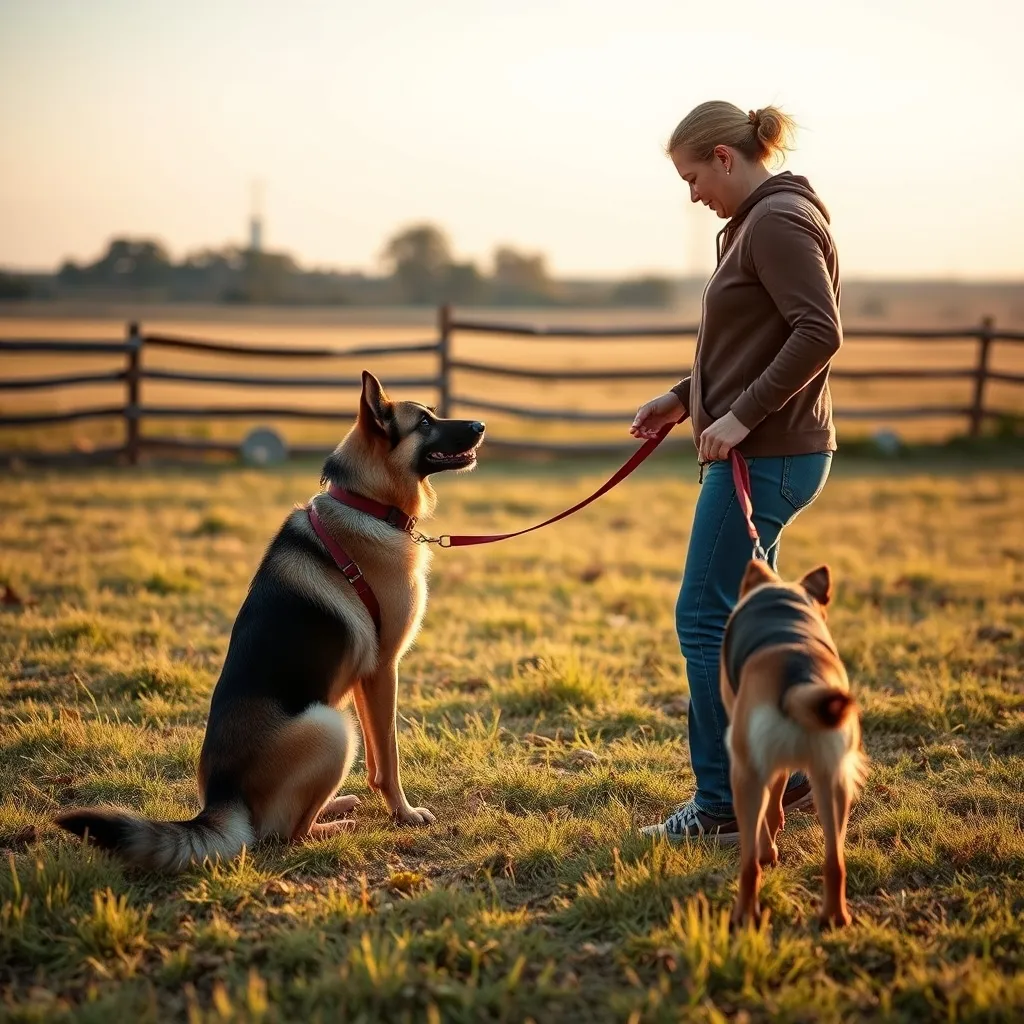
Dogs rarely bite “out of nowhere.” What looks sudden to us is usually the result of many earlier signals that were missed or misread. Behaviorists refer to the “ladder of aggression,” a concept developed by veterinary behaviorist Kendal Shepherd, which describes the predictable escalation from subtle discomfort to a bite.
Here are the signals arranged from lowest to highest intensity:
- Displacement behaviors: Yawning when not tired, lip licking, sniffing the ground suddenly, or turning the head away. These are calming signals the dog uses to de-escalate.
- Freezing: The dog goes completely still. This is one of the most overlooked and dangerous signs. A freeze often means the dog is deciding between flight and fight.
- Whale eye: You can see the whites of the dog’s eyes (the sclera) as it turns its head away but keeps its eyes locked on the threat.
- Low growl: This is a clear verbal warning. I always tell my clients: never punish a growl. A growl is a gift because it gives you time to change the situation.
- Snarl: The lips pull back to expose teeth, often accompanied by a louder growl.
- Air snap: The dog bites at the air deliberately, without making contact. This is a final warning before a real bite.
- Bite: Contact is made. Bite severity varies from an inhibited “mouth” that leaves no mark to a Level 5 or 6 bite on the Ian Dunbar bite scale.
Learning to read these signals in real time is the most valuable skill any dog owner can develop. I spend entire sessions teaching clients to watch their dog’s body language on video before we ever work on training protocols.
Top Triggers That Cause Reactive Behavior
Triggers are the environmental stimuli that push a dog past its stress threshold. Every reactive dog has a unique combination, but the most common triggers I see are:
- Unfamiliar dogs: On-leash greetings are the number one setup for leash reactivity. The leash prevents natural canine communication (curving approaches, sniffing) and forces direct, head-on encounters.
- Strangers approaching the home: Delivery drivers, mail carriers, and guests can trigger territorial displays. The dog learns that barking “works” because the mail carrier always leaves.
- Children: Quick, unpredictable movements and high-pitched voices can overwhelm dogs who were not socialized with children during their critical period.
- Handling and grooming: Nail trims, ear cleaning, and veterinary exams are common triggers for pain-related or fear-based aggression. Cooperative care training can prevent this.
- Other animals in the home: A new pet, a shift in social dynamics after one dog matures, or competition over resting spots can create inter-dog aggression within the household.
- Sudden environmental changes: Moving to a new home, a family member leaving or arriving, or changes in routine (as may happen when traveling with your dog) can increase overall stress and lower the threshold for reactive outbursts.
One concept I emphasize with every client is trigger stacking. A dog that can handle seeing another dog on a calm Tuesday morning may lose it on a Saturday afternoon after a thunderstorm, skipped walk, and a delivery driver ringing the doorbell. Each stressor fills the dog’s “stress bucket,” and it takes only one more trigger to make it overflow.
How to Manage and Reduce Dog Aggression Safely
Management and training are two sides of the same coin. Management prevents rehearsal of the aggressive behavior while training changes the underlying emotional response. You need both.
Safety First: Management Strategies
- Use a properly fitted harness and a 6-foot leash. Retractable leashes give you zero control in a crisis. A front-clip harness redirects your dog’s forward momentum.
- Muzzle training. A basket muzzle is not a punishment; it is a safety tool that protects everyone while you work on behavior modification. Introduce the muzzle gradually with high-value treats so the dog associates it with good things.
- Environmental management at home. Baby gates, crate training, and visual barriers (window film, fence covers) reduce exposure to triggers during the early stages of a behavior plan.
- Avoid flooding. Do not force your dog to “face its fears” by exposing it to the trigger at full intensity. This is called flooding and it frequently makes aggression worse.
Behavior Modification: Changing the Emotional Response
The two protocols I use most often are desensitization (gradual exposure at sub-threshold intensity) and counter-conditioning (pairing the trigger with something the dog loves). When combined, they systematically teach the dog that the scary thing actually predicts wonderful outcomes.
For example, if a dog is reactive to other dogs on walks, I might start by working at 200 feet away from a calm, stationary helper dog. At that distance, the reactive dog notices the other dog but does not go over threshold. I mark the moment the dog looks at the trigger and immediately deliver a high-value treat. Over multiple sessions, we gradually decrease the distance as the dog’s emotional response shifts from fear to anticipation of rewards.
According to guidelines published by the RSPCA on managing aggression in dogs, force-free methods are the recommended approach, and punishment-based techniques carry a significant risk of escalating aggressive responses.
Training Techniques for Reactive Dogs

Beyond the core desensitization and counter-conditioning protocols, there are several practical techniques I teach in every reactive dog class:
The “Look at That” (LAT) Game
Developed by trainer Leslie McDevitt in her Control Unleashed program, LAT teaches the dog to look at a trigger and then voluntarily look back at the handler for a reward. Over time, the dog starts to see triggers as cues to check in with you rather than threats to react to. This builds confidence and gives the dog an alternative behavioral pattern.
The Emergency U-Turn
Sometimes you round a corner and there is a trigger at close range. You need an escape plan. I train a reliable U-turn on a verbal cue (I use “let’s go!”) so that my clients can smoothly turn and walk away before the dog hits threshold. Practice this at home first with no distractions until the dog whips around enthusiastically on cue.
Relaxation Protocol
Dr. Karen Overall’s Relaxation Protocol is a structured 15-day program that teaches dogs to settle on a mat while increasingly distracting things happen around them. It is not specifically a reactivity exercise, but it builds impulse control and an ability to relax in the presence of mild stressors, which translates directly to better behavior on walks and in the home.
Engage-Disengage Protocol
This is a refined version of LAT that works in two phases. In the engage phase, you mark and reward the dog simply for noticing the trigger (looking at it calmly). In the disengage phase, the dog learns to look away from the trigger on its own, and that voluntary disengagement earns the reward. This protocol respects the dog’s autonomy and builds genuine confidence rather than just obedience.
All of these techniques require patience and consistency. I typically tell clients to plan for 8 to 16 weeks of dedicated work before they see significant, reliable improvement in moderate cases of reactivity.
When to Seek Professional Help for Dog Aggression
While mild reactivity (barking and lunging on leash with no bite history) can sometimes be addressed by a knowledgeable owner, there are situations where professional help is not optional. Seek a certified professional immediately if:
- Your dog has bitten a person or animal and broken skin.
- The aggression is directed toward children or vulnerable family members.
- The behavior is escalating in frequency or intensity despite your efforts.
- You feel unsafe in your own home.
- There is sudden onset aggression with no identifiable behavioral trigger, which may indicate a medical issue.
When choosing a professional, look for credentials such as CPDT-KA, CAAB, DACVB, or IAABC-certified consultants. Avoid trainers who promise quick fixes through dominance, alpha rolls, or shock collars. The VCA Hospitals guide to aggression management provides an excellent overview of what to expect when working with a veterinary behaviorist.
In some cases, your veterinarian may recommend behavioral medication alongside a training plan. Medications like fluoxetine or trazodone are not sedatives; they reduce baseline anxiety so the dog can actually learn from the behavior modification work. Think of medication as turning down the volume on the dog’s stress so the training can be heard.
Preventing Aggression in Puppies and Adolescent Dogs
Prevention is always easier than rehabilitation. If you have a puppy or adolescent dog, here is what I recommend to minimize the risk of aggression developing later:
- Prioritize socialization between 3 and 14 weeks. Expose your puppy to a wide variety of people, animals, surfaces, sounds, and environments in a positive, non-overwhelming way. Quality matters more than quantity.
- Teach bite inhibition. Puppies learn how hard they can bite through play with littermates and through our responses. If a puppy bites too hard during play, let out a yelp and briefly disengage. This teaches the puppy that rough mouths end the fun.
- Practice handling exercises. Gently touch your puppy’s paws, ears, mouth, and tail every day, pairing each touch with treats. This prevents handling-related aggression at the groomer and vet. Our guide on how to bathe a dog covers gentle handling techniques that build trust during grooming.
- Avoid punishment-based training methods. Puppies raised with positive reinforcement are statistically less likely to develop aggressive behaviors than those trained with aversive methods.
- Provide appropriate outlets. Chewing, digging, and playing are natural behaviors. Provide enrichment through puzzle toys, sniff walks, and appropriate play so your dog does not develop frustration-based reactivity.
If you are introducing crate training, do so gradually and positively. A crate should be a safe retreat, never used as punishment. Dogs who view their crate as a sanctuary have a built-in decompression tool that can help manage stress before it turns into reactivity.
For households dealing with a specific breed predisposition, such as French Bulldog aggression, understanding the breed-specific triggers and physical limitations can help you tailor your approach more effectively.
Key Points
- Learn the ladder of aggression so you can intervene at the earliest warning signals, well before a growl or snap
- Combine desensitization and counter-conditioning protocols; start at a distance where your dog notices the trigger but stays below threshold
- Invest in muzzle training and a front-clip harness to keep everyone safe during the behavior modification process
- Consult a CPDT-KA, CAAB, or DACVB-certified professional if your dog has bitten, if aggression is escalating, or if children are at risk
- For puppies, prioritize positive socialization before 14 weeks and practice daily handling exercises paired with treats to prevent future aggression
Frequently Asked Questions
How do I stop a dog from being aggressive?
Stopping dog aggression requires identifying the specific type and trigger, then applying a combination of management (leash control, muzzle training, environmental changes) and force-free behavior modification such as desensitization and counter-conditioning. There is no quick fix; plan for 8 to 16 weeks of consistent work for moderate cases. Punishing the aggression typically makes it worse because it increases the dog’s stress without addressing the underlying emotion.
Severe aggression is generally characterized by bites that break skin or cause tissue damage (Level 4 or higher on the Ian Dunbar bite scale), multiple bite incidents, bites delivered with no preceding warning signals, or aggression directed at vulnerable individuals such as children or elderly family members. Severe cases require immediate intervention from a board-certified veterinary behaviorist (DACVB) and may include behavioral medication.What is considered severe aggression in dogs?
In the moment, the best strategy is to increase distance from the trigger using a trained U-turn cue. Do not try to calm your dog by petting or soothing it while it is over threshold, as this can inadvertently reinforce the reactive state. Long-term calming comes from teaching a reliable relaxation protocol, reducing trigger stacking, and building positive associations with previously scary stimuli through counter-conditioning.How to calm a reactive dog?
The relationship between neutering and aggression is more complicated than many people assume. Neutering may reduce hormonally driven inter-male aggression, but it has little effect on fear-based, territorial, or resource guarding aggression. In some cases, particularly with fearful dogs, early neutering can actually increase anxiety-related behaviors. Always consult your veterinarian and a behavior professional to make an informed decision for your individual dog. You can explore this topic further in our article on whether neutering reduces aggression.Can neutering or spaying reduce aggression in dogs?
Sudden aggression toward a familiar person often has a medical cause. Pain from an injury, arthritis, dental disease, or a neurological condition can make a normally tolerant dog snap when touched. Schedule a veterinary exam as the first step. If health issues are ruled out, consider whether something in the environment has changed: a new schedule, a family member’s altered behavior or scent (new medication, pregnancy), or a traumatic event the dog associates with that person.Why is my dog suddenly aggressive toward a family member?
No. Research consistently shows that aversive tools like shock collars, prong collars, and choke chains increase the risk of aggressive behavior rather than reducing it. These tools suppress outward signs of aggression (like growling) without changing the dog’s emotional state, making a bite without warning more likely. Professional organizations including the ASPCA and the American Veterinary Society of Animal Behavior advise against their use for aggression cases.Is it safe to use a shock collar for dog aggression?