
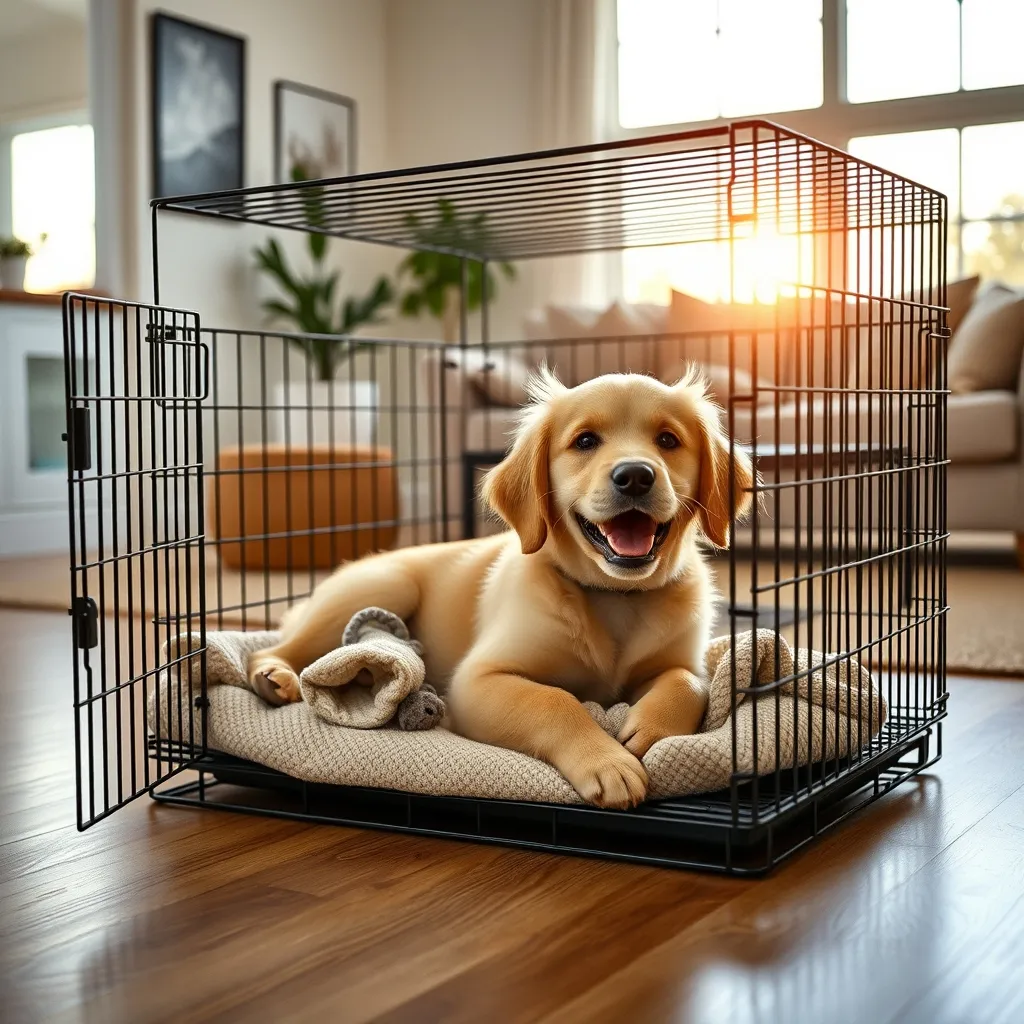
Key Takeaways
- Crate training works best when introduced gradually over 7 to 14 days, never forced
- Puppies under 6 months should spend no more than 3 to 4 hours at a time in a crate
- The ideal crate size allows your dog to stand, turn around and lie down comfortably
- Over 90% of veterinary behaviourists endorse crate training when done with positive reinforcement
- The 2-1 rule (2 hours of crate time followed by 1 hour of free time) helps prevent stress and physical discomfort
- Night-time crate training typically takes 3 to 7 nights before most puppies sleep through without whining
In This Guide
- What Is Crate Training and Why Does It Work?
- Benefits of Crate Training for Dogs and Owners
- Choosing the Right Crate: Size, Type and Placement
- Step-by-Step Crate Training Programme
- Crate Training at Night: Getting Through the First Week
- Common Crate Training Mistakes and How to Avoid Them
- Crate Training Schedule by Age
- When to Phase Out the Crate
I have helped hundreds of families introduce crate training to their dogs over the past decade, and one thing I tell every single client is this: a crate should feel like a sanctuary, never a prison. When done correctly, crate training gives your dog a personal den space where they genuinely want to spend time. When done poorly, it creates fear, anxiety and lasting behavioural problems.
In this guide, I am going to walk you through everything I have learned as a Certified Professional Dog Trainer about humane crate training. Whether you are starting with an 8-week-old puppy or working with a rescue dog who has never seen a crate, these methods will help you build trust and confidence at your dog’s own pace.
What Is Crate Training and Why Does It Work?

Crate training is the process of teaching your dog to accept and enjoy spending time in an enclosed crate or kennel. The method is rooted in the natural denning instinct that dogs inherited from their wild ancestors. Wolves and wild canids seek out small, enclosed spaces to rest, sleep and feel secure. A properly introduced crate taps into this instinct, providing your dog with a predictable, safe retreat.
According to Wikipedia’s overview of crate training, the practice gained widespread acceptance in the United States during the 1970s and has since become a standard recommendation among professional trainers and veterinary behaviourists worldwide.
The reason crate training works so effectively is straightforward. Dogs are creatures of habit who thrive on routine and boundaries. A crate provides both. It becomes the one place in your home where your dog knows exactly what to expect: calm, quiet and rest. This is especially valuable during the chaotic early months of puppyhood, when your dog is still learning the rules of your household.
I want to be clear about something, though. Crate training is not about containment for your convenience. It is about building a positive association with a safe space that benefits your dog throughout their entire life, from the early weeks of puppyhood through to their senior years.
Benefits of Crate Training for Dogs and Owners
The benefits of crate training extend far beyond simple house training. In my practice, I see crate-trained dogs handle stressful situations, from vet visits to thunderstorms, with noticeably more composure than dogs who never had a safe space to retreat to.
House training accelerator. Puppies naturally avoid soiling their sleeping area. A correctly sized crate leverages this instinct, helping your puppy develop bladder and bowel control much faster. Most puppies who are crate trained are reliably house trained by 4 to 6 months of age.
Safety during unsupervised time. Puppies chew everything: electrical cords, toxic plants, shoes and furniture. A crate keeps your puppy safe when you cannot actively supervise them. This is not a shortcut to avoid training; it is a management tool that prevents dangerous habits from forming.
Travel readiness. Whether you are travelling by car or plane, a crate-trained dog handles transit calmly because the crate already represents comfort and security.
Veterinary and emergency preparedness. Dogs who are comfortable in crates recover better after surgery, tolerate veterinary boarding recommended by the ASPCA with less stress, and can be safely contained during emergencies like evacuations or home repairs.
Reduced separation anxiety. While a crate alone does not cure anxiety-related barking, it can serve as an anchor point in a broader behaviour modification programme. Dogs who view their crate as a calming space often cope better with brief periods of alone time.
Choosing the Right Crate: Size, Type and Placement
Selecting the right crate is one of the most important decisions you will make in this process. The wrong size or style can undermine your training before it even begins.
Crate sizing guide
The golden rule is simple: your dog should be able to stand up without crouching, turn around in a full circle and lie down fully stretched out. Too small causes discomfort; too large defeats the purpose of house training because your puppy can use one end as a toilet.
For growing puppies, I recommend buying an adult-sized crate with a divider panel. This lets you adjust the interior space as your puppy grows, saving you from purchasing multiple crates.
| Dog Weight | Crate Length | Crate Type Recommended | Example Breeds |
|---|---|---|---|
| Up to 10 kg | 60 cm (24 in) | Wire or plastic | Chihuahua, Pomeranian, Dachshund |
| 10 to 18 kg | 75 cm (30 in) | Wire or soft-sided | Beagle, Cocker Spaniel, Corgi |
| 18 to 32 kg | 90 cm (36 in) | Wire with divider | Border Collie, Bulldog, Springer Spaniel |
| 32 to 41 kg | 105 cm (42 in) | Wire or heavy-duty | Labrador, Golden Retriever, Boxer |
| Over 41 kg | 120 cm (48 in) | Heavy-duty wire | German Shepherd, Great Dane, Rottweiler |
Types of crates
Wire crates offer maximum ventilation and visibility. They fold flat for storage and usually come with a removable tray for easy cleaning. Most families I work with start here.
Plastic crates (airline-style) feel more den-like because of the enclosed walls. Many dogs find them cosier, and they are required for airline travel.
Soft-sided crates are lightweight and portable, ideal for well-trained dogs. However, they are not suitable for puppies or chewers because they are easy to destroy.
Furniture-style crates double as end tables or credenzas. They look lovely but tend to offer less ventilation. Check airflow before purchasing.
Where to place the crate
Place the crate in a common living area where your family spends the most time during the day. Dogs are social animals, and isolating the crate in a basement or garage will only create negative associations. At night, move the crate to your bedroom so your puppy can hear and smell you. This single adjustment dramatically reduces night-time whining.
Step-by-Step Crate Training Programme
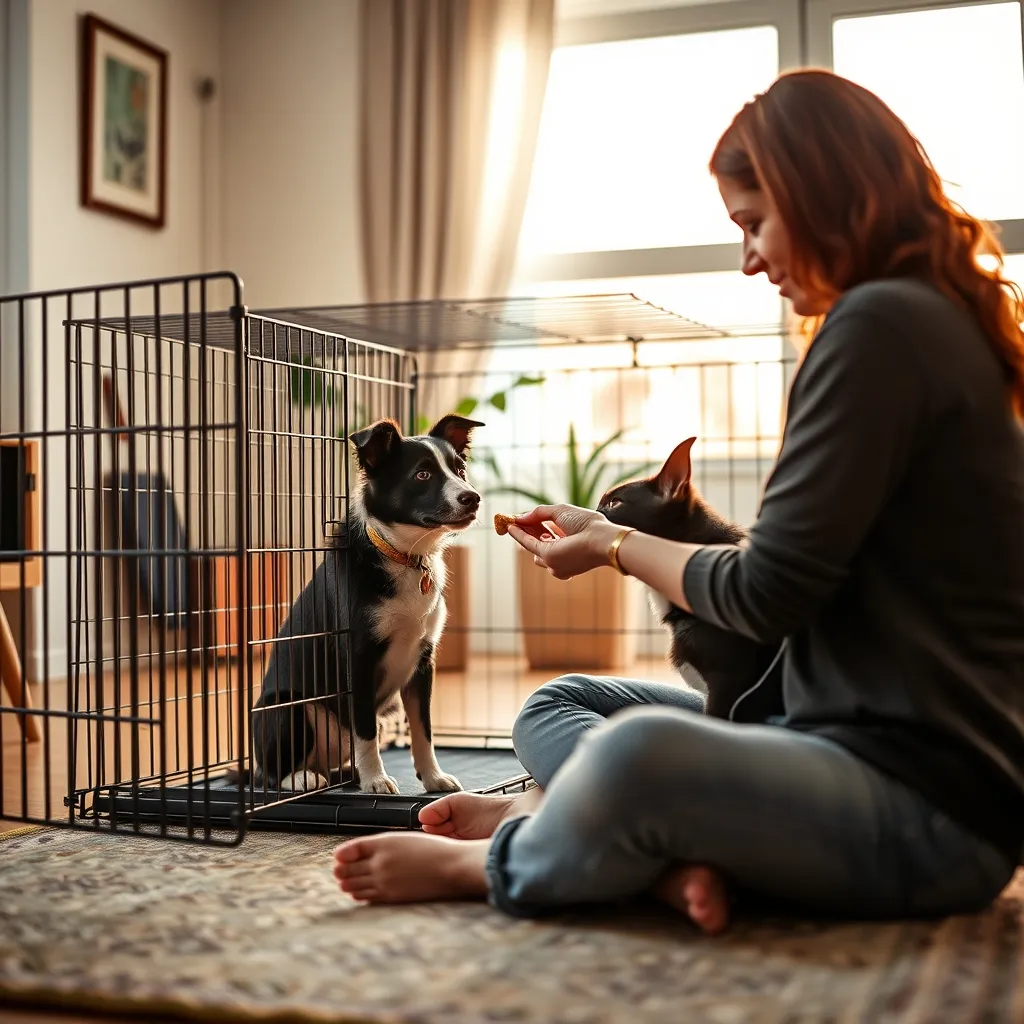
This is my proven 7-day crate training programme that I use with clients in Austin. Some dogs move faster, some need more time. Always follow your dog’s pace rather than the calendar.
Days 1 to 2: Introduction and exploration
Set the crate up with the door open (or removed entirely) and a soft blanket inside. Drop a few high-value treats around and just inside the crate entrance. Do not lure your dog in or push them towards it. Let them discover it on their own terms.
Every time your dog voluntarily approaches or sniffs the crate, mark the behaviour with a calm “yes” and toss a treat nearby. The goal here is not to get them inside; it is to make the crate’s presence entirely non-threatening.
I also recommend feeding meals near the crate during these first two days. Place the bowl a foot or two from the crate door, gradually moving it closer with each meal.
Days 3 to 4: Entering and eating inside
By now, most dogs will investigate the crate willingly. Start placing treats further inside, eventually placing them all the way at the back. When your dog enters to eat, do not close the door. Let them walk in and out freely.
Begin feeding meals inside the crate with the door open. If your dog is hesitant, try a food-stuffed Kong or a puzzle toy designed for crate training. These keep your dog happily occupied inside the crate without any pressure.
Days 5 to 6: Closing the door briefly
Once your dog is eating comfortably inside the crate, gently close the door while they eat. Stay seated right beside the crate. Open the door the moment they finish eating, before they have a chance to whine or paw at the door.
Gradually increase the time the door stays closed after meals: 30 seconds, then 1 minute, then 2 minutes. Always open the door while your dog is still calm. The timing here is critical because you want to end each session on a positive note.
Day 7 and beyond: Building duration and distance
Begin asking your dog to enter the crate using a cue like “crate” or “bed.” Reward them generously when they comply. Close the door and step a few feet away. Return after 30 seconds, open the door and reward.
Over the following days, slowly increase both the duration (how long the door stays closed) and the distance (how far you move away). Start leaving the room briefly, then return. The progression should look something like: 1 minute, 3 minutes, 5 minutes, 10 minutes, 20 minutes, 30 minutes, 1 hour.
If your dog shows signs of distress at any stage, such as excessive panting, drooling, barking or scratching at the door, go back one step. You have moved too fast. This is not a failure; it is information.
Crate Training at Night: Getting Through the First Week
Night-time crate training is often the part owners dread most. The first few nights with a new puppy can be exhausting, but a strategic approach makes a significant difference.
Exercise before bed. A tired puppy is a quiet puppy. Make sure your dog gets a good play session and final toilet break no more than 15 minutes before crate time.
Keep the crate close. As I mentioned earlier, the crate should be in your bedroom for at least the first two weeks. Your presence is incredibly soothing. You can gradually move the crate to its permanent location once your puppy sleeps through the night consistently.
Expect toilet breaks. Puppies under 12 weeks simply cannot hold their bladder all night. Plan for one to two night-time toilet trips. Set an alarm rather than waiting for whining, which helps prevent your puppy from learning that crying gets them out of the crate.
Ignore attention-seeking whining. This is the hardest part. If you know your puppy does not need the toilet and is not in distress, wait for a brief pause in the whining before opening the door. Responding to whining teaches your puppy that noise equals freedom.
The PDSA’s guidance on crate training aligns with this approach, emphasising that patience and consistency are the two most important factors in night-time success.
Common Crate Training Mistakes and How to Avoid Them
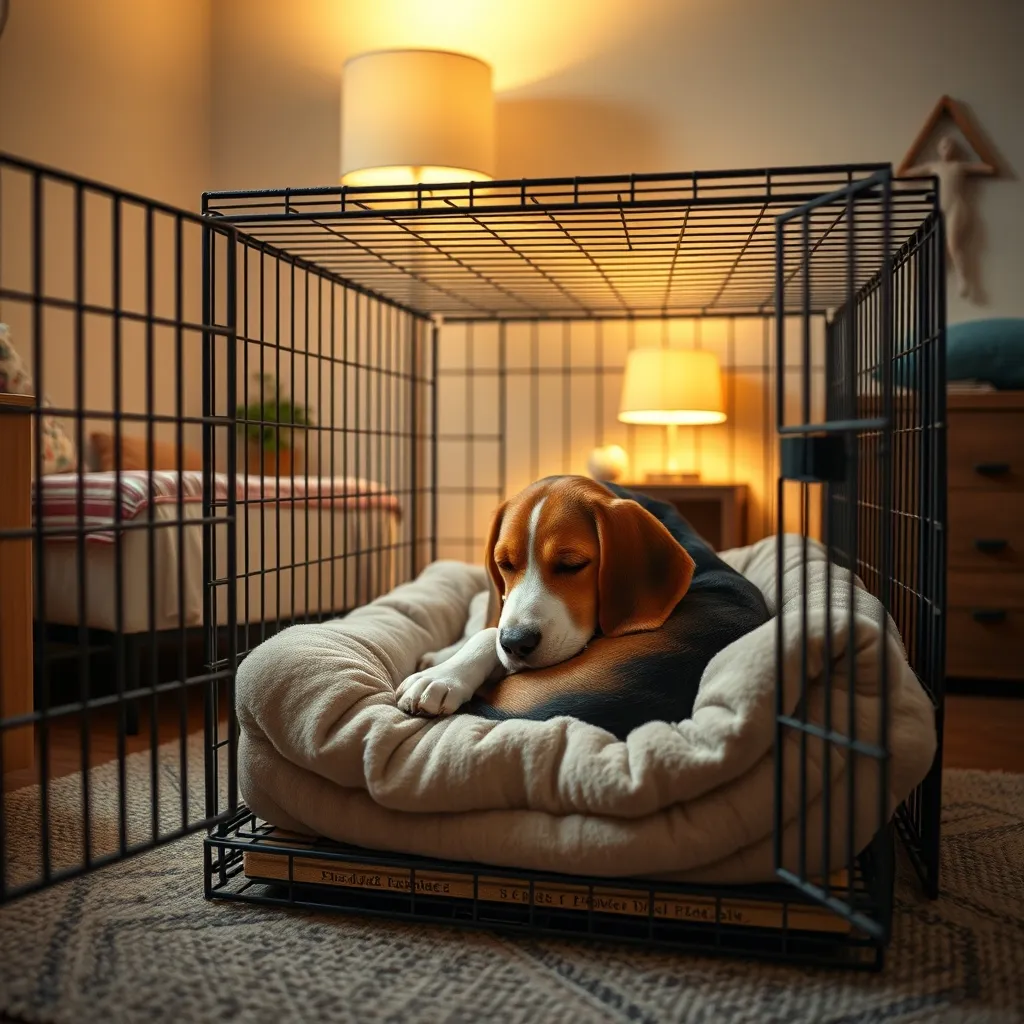
In over ten years of professional training, I have seen the same mistakes repeated again and again. Here are the ones that cause the most harm and how to correct them.
Using the crate as punishment. This is the single biggest mistake owners make. Sending your dog to the crate when they misbehave creates a powerful negative association. The crate should only ever be connected with positive experiences: treats, meals, calm rest and safety.
Moving too fast. Rushing through the introduction phase is tempting, especially when you have read articles promising results in 3 days. Some dogs do learn quickly, but many need two to three weeks of gradual introduction. Forcing the pace creates anxiety that is much harder to undo.
Leaving your dog crated too long. A crate is not a storage unit. Puppies need frequent toilet breaks and social interaction. Even adult dogs should not be crated for more than 4 to 5 hours during the day. If your work schedule requires longer periods, consider a dog walker, daycare or a puppy-proofed room instead.
Wrong crate size. A crate that is too small causes physical discomfort and joint stress. A crate that is too large allows your puppy to toilet in one corner and sleep in another, slowing house training progress.
Inconsistent routine. Dogs thrive on predictability. If the crate routine changes daily, your dog never fully relaxes into the training. Consistency in timing, cues and rewards is non-negotiable.
Ignoring signs of distress. There is a significant difference between attention-seeking whining and genuine panic. If your dog is drooling excessively, trying to escape, harming themselves against the crate walls or refusing to enter despite weeks of training, consult a certified behaviourist immediately. These signs may indicate separation anxiety that requires professional intervention, not more crate time.
Crate Training Schedule by Age
One of the most common questions I receive is how long a dog can safely stay in a crate. The answer depends almost entirely on age. The 2-1 rule, which recommends 2 hours of crate time followed by 1 hour of free time, is a useful general guideline. However, the maximum durations below should be treated as absolute limits, not targets.
| Age | Maximum Daytime Crate Duration | Maximum Night-time Crate Duration | Toilet Break Frequency |
|---|---|---|---|
| 8 to 10 weeks | 30 to 60 minutes | 3 to 4 hours | Every 1 to 2 hours |
| 11 to 14 weeks | 1 to 2 hours | 4 to 5 hours | Every 2 to 3 hours |
| 15 to 18 weeks | 2 to 3 hours | 5 to 6 hours | Every 3 to 4 hours |
| 5 to 6 months | 3 to 4 hours | 6 to 7 hours | Every 4 hours |
| 7 to 12 months | 4 to 5 hours | 7 to 8 hours | Every 4 to 6 hours |
| Adult (1 year+) | 4 to 6 hours maximum | 8 hours | Every 6 to 8 hours |
These durations assume your dog has had adequate exercise, mental stimulation and social interaction before being crated. A bored, under-exercised dog will struggle with even short crate periods.
For puppies on a structured schedule, I recommend combining crate training with regular veterinary check-ups and vaccination appointments to ensure your puppy’s physical development supports the training timeline.
When to Phase Out the Crate
Many owners wonder when they can stop using the crate altogether. In my experience, the answer varies widely. Some dogs love their crate for life and choose to sleep in it with the door open. Others are ready for more freedom by 12 to 18 months of age.
Here are the signs your dog may be ready to graduate from the crate:
- They have been fully house trained with no accidents for at least 2 consecutive months
- They do not chew or destroy items when left unsupervised for short periods
- They show no signs of anxiety when you leave the house
- They are past the adolescent chewing phase (typically 12 to 18 months)
To phase out the crate, start by leaving your dog loose in a puppy-proofed room for short periods (15 to 30 minutes) while you are home. Gradually increase the duration and begin leaving them alone for brief errands. If there are no issues after two weeks, you can expand their access to more areas of the house.
Keep the crate available even after phasing it out. Leave the door open and let your dog choose to use it. Many of my former clients report that their dogs continue to nap in their crate for years after formal crate training has ended. According to the American Kennel Club’s crate training guidelines, maintaining the crate as an option gives your dog a permanent safe space they can rely on during stressful situations.
If your dog is older and you are introducing the crate for the first time, the same principles apply, but expect the timeline to be longer. Adult dogs may carry past negative experiences with confinement, so extra patience and professional guidance can make a real difference. I have written a separate guide on crate training older dogs that covers these nuances in detail.
Remember, crate training is just one piece of your dog’s overall training and well-being. Combine it with regular grooming routines, appropriate socialisation and consistent positive reinforcement to raise a confident, well-adjusted companion.
Key Points
- Choose a crate that allows your dog to stand, turn and lie down, and use a divider for growing puppies
- Follow the 7-day gradual introduction programme, never forcing your dog inside the crate
- Apply the 2-1 rule (2 hours crated, 1 hour free) to prevent stress and physical discomfort
- Place the crate in your bedroom at night for the first 2 weeks to reduce whining
- Never use the crate as punishment; only associate it with treats, meals and calm rest
Frequently Asked Questions
Is crate training actually good for dogs?
Yes, when done with positive reinforcement and gradual introduction, crate training is endorsed by the vast majority of veterinary behaviourists and professional trainers. It provides dogs with a secure den space that reduces anxiety, accelerates house training and keeps them safe during unsupervised periods. The key is never using the crate as punishment and respecting age-appropriate time limits.
Most veterinarians recommend crate training as a valuable tool for house training, post-surgical recovery and travel safety. Veterinary organisations including the ASPCA support the practice when it is done humanely. Vets particularly appreciate crate-trained dogs during overnight stays and recovery periods because these dogs experience significantly less stress in confinement.Do vets recommend crate training?
Adult dogs should not spend more than 4 to 6 hours in a crate during the day, while puppies require much shorter intervals. An 8-week-old puppy should be crated for no more than 30 to 60 minutes at a time during the day. Night-time limits are longer because dogs sleep, but always plan for toilet breaks based on your puppy’s age.How many hours a day should you crate train?
The 2-1 rule is a guideline that recommends 2 hours of crate time followed by 1 hour of free time for exercise, play, socialisation and toilet breaks. This pattern helps prevent physical discomfort and mental stress while keeping crate training sessions productive. It is especially useful for puppies and dogs who are still building positive associations with their crate.What is the 2-1 rule for crate training?
First, rule out physical needs: take your puppy outside for a brief, boring toilet break (no play, no treats). If they do not need the toilet, return them to the crate and wait for a pause in the crying before giving any attention. Ensure the crate is in your bedroom so your dog can sense your presence. If intense distress continues beyond the first week despite consistent training, consult a certified dog behaviourist to rule out separation anxiety.What should I do if my dog cries in the crate all night?
Absolutely. Older and rescue dogs can learn to love a crate, but the process often takes 2 to 4 weeks longer than with puppies. Move slowly, use especially high-value rewards and never force the dog inside. Some rescue dogs may have negative associations with confinement, so watch closely for signs of panic rather than simple reluctance. Professional guidance is recommended if your dog shows severe stress responses.Can I crate train an older or rescue dog?