
Key Takeaways
- Dogs of any age can learn to feel comfortable in a crate; there is no upper age limit for crate training
- Adult and senior dogs typically need 2 to 4 weeks of gradual introduction before they accept the crate willingly
- The recommended crate size should allow the dog to stand, turn around and lie down fully stretched without restriction
- Sessions should begin at 5 to 10 minutes and increase slowly; forcing a dog inside can create lasting negative associations
- Senior dogs with arthritis or mobility issues benefit from orthopaedic bedding and a crate with a wide, low-threshold door
- Crate training an older dog with separation anxiety requires a parallel desensitisation programme, not crate confinement alone
In This Guide
- Why Consider Crate Training for an Adult or Senior Dog?
- Is It Too Late to Start Crate Training an Older Dog?
- Choosing the Right Crate for an Adult or Ageing Dog
- Step-by-Step Crate Training Process for Older Dogs
- Crate Training an Older Dog with Separation Anxiety
- Common Mistakes to Avoid When Crate Training Older Dogs
- Special Considerations for Senior Dogs with Health Issues
- When Should You Stop Using a Crate?
When people hear the words “crate training,” they almost always picture a fluffy eight-week-old puppy learning the ropes for the first time. But in my ten-plus years as a certified professional dog trainer in Austin, Texas, I have worked with just as many adult and senior dogs who needed crate training as I have puppies. Whether you have recently adopted a rescue dog, moved house with a ten-year-old companion, or need a safe recovery space after surgery, crate training an older dog is not only possible; it is often one of the most practical tools in your training toolkit.
In this guide, I will walk you through every step of the process, from selecting the right crate to handling setbacks. I will also address the unique needs of senior dogs with mobility challenges or anxiety, so you can make an informed, compassionate decision for your companion.
Why Consider Crate Training for an Adult or Senior Dog?

There are many situations where introducing a crate to an older dog makes perfect sense. Here are the most common reasons I see in my practice:
- Post-surgical recovery: Veterinary professionals frequently recommend crate rest after orthopaedic procedures, spay/neuter surgeries, or injuries. A dog who has never seen a crate before will find enforced confinement extremely stressful unless you introduce the space positively.
- House training a rescue or rehomed dog: Many adult dogs adopted from shelters have never lived indoors. A crate provides structure and helps prevent indoor accidents while you establish a toilet routine.
- Travel safety: Whether you are driving cross-country or flying, a crate-trained dog is safer and calmer in transit. The PDSA recommends crate training as a way to provide dogs with a secure den-like space at home and during travel.
- Multi-dog household management: If you have introduced a new dog into the home, crates can give each dog a safe retreat while they adjust to one another.
- Anxiety management: Some dogs, particularly those with mild noise phobias, feel genuinely safer in a covered crate during fireworks or thunderstorms.
The key principle behind every scenario is the same: the crate should be a voluntary refuge, never a punishment. When introduced correctly, older dogs can learn to love their crate just as much as a puppy does.
Is It Too Late to Start Crate Training an Older Dog?
I hear this question at least once a week, and the short answer is no, it is never too late. Dogs retain the ability to learn new behaviours throughout their entire lives. What changes with age is not capacity but context. A puppy has few pre-existing associations with crates, whereas an adult or senior dog may carry negative experiences from previous confinement, shelter stays, or improper crate use by a former owner.
That history means you need to move at the dog’s pace rather than follow a rigid puppy timeline. Where a puppy might accept a closed crate door within a few days, an older dog who was previously locked in a crate for excessive hours could need several weeks of careful counter-conditioning. Patience is not optional here; it is the foundation of the entire programme.
According to the ASPCA’s crate training guidelines, adult dogs can be successfully crate trained using gradual, positive-reinforcement-based methods regardless of their background.
Choosing the Right Crate for an Adult or Ageing Dog
Choosing the correct crate is half the battle. A crate that is too small will feel claustrophobic, while one that is too large defeats the purpose of creating a cosy den. The general rule, often called the “2-1 crate rule,” states that your dog should be able to stand up without the top of the crate touching their head, turn around in a full circle, and lie on their side with legs extended.
| Crate Type | Best For | Pros | Cons |
|---|---|---|---|
| Wire crate | Home use, multi-dog households | Good airflow, foldable, easy to clean, allows visibility | Can rattle, less den-like without a cover |
| Plastic airline crate | Travel, dogs who prefer enclosed spaces | Sturdy, airline-approved, naturally den-like | Poor ventilation in warm climates, bulky |
| Soft-sided crate | Calm, already crate-trained dogs | Lightweight, portable, comfortable | Not chew-proof, unsuitable for anxious dogs |
| Heavy-duty metal crate | Strong chewers, escape artists | Extremely durable, secure latches | Expensive, heavy, industrial look |
| Furniture-style crate | Living rooms, aesthetic-conscious owners | Doubles as end table, blends into décor | Limited sizing, harder to clean |
For senior dogs with joint stiffness or arthritis, I strongly recommend a crate with a wide, low-threshold entrance. Some wire crates feature a removable bottom tray and two doors, which makes it easy to place thick orthopaedic bedding inside. Adding the right enrichment items also helps. Have a look at our guide to the best toys for crate training for ideas on keeping your dog mentally engaged inside the crate.
Step-by-Step Crate Training Process for Older Dogs
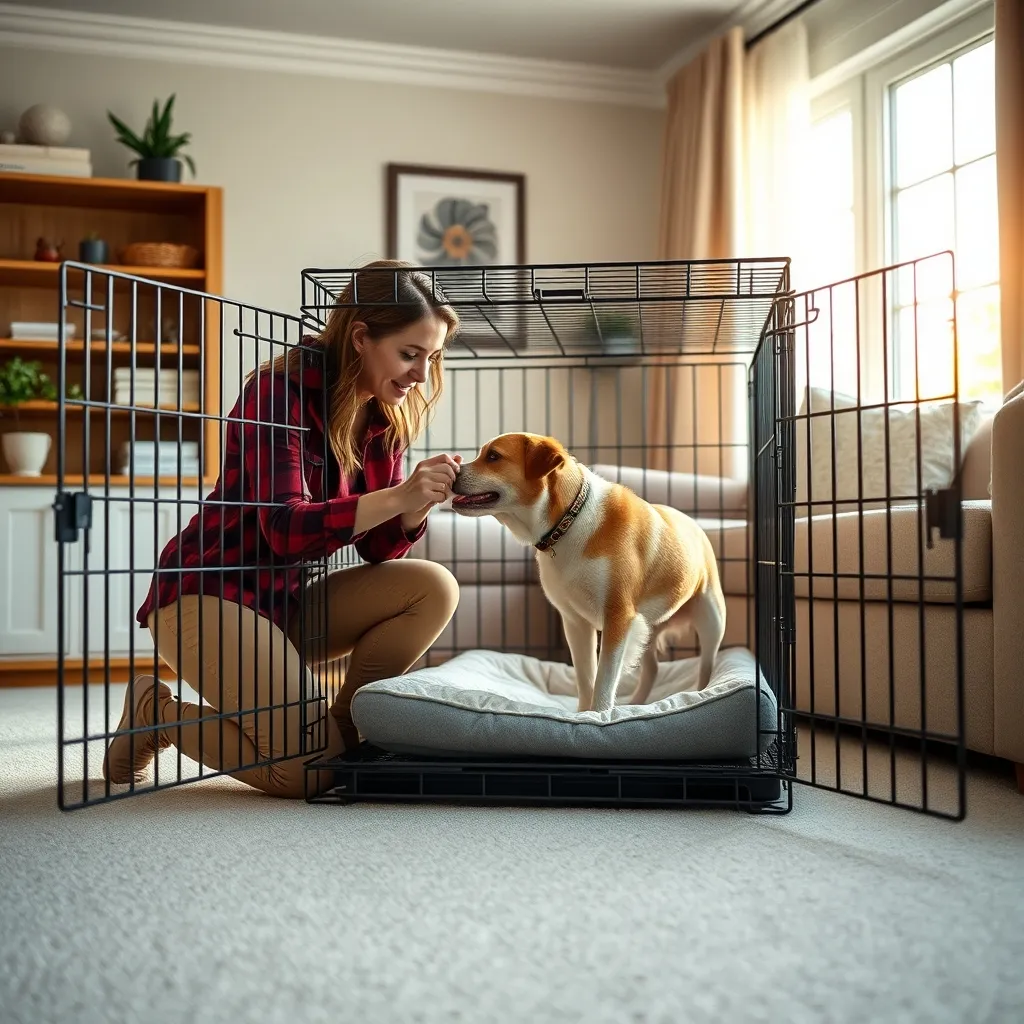
Here is the method I use with every adult and senior dog in my practice. It is built on force-free, positive-reinforcement principles, and it works whether your dog is two years old or twelve.
Phase 1: Introduction (Days 1 to 3)
Place the crate in a room where the family spends the most time. Leave the door wide open, or remove it entirely if possible. Scatter a few high-value treats just inside the entrance. Let your dog investigate at their own pace. Do not push, lure or lift your dog into the crate. If they sniff the outside and walk away, that is perfectly fine. Repeat the treat-scattering exercise three to four times a day.
Phase 2: Voluntary Entry (Days 3 to 7)
Once your dog is comfortable eating treats near the entrance, begin tossing treats progressively deeper inside the crate. When they step fully inside, mark the behaviour with a calm “yes” and reward. Start feeding regular meals inside the crate with the door still open. Most dogs form a positive association with the space within four to five days.
Phase 3: Closing the Door (Days 7 to 14)
While your dog is eating inside the crate, gently close the door. Stay right beside the crate. Open the door before the dog finishes the meal so they never feel trapped. Gradually increase the time the door stays closed after the meal is finished, starting with just five seconds and building up to five minutes over the course of a week. Always open the door while the dog is calm, never when they are whining or scratching.
Phase 4: Increasing Duration (Weeks 2 to 4)
Begin moving a short distance from the crate while the door is closed. Step into the next room for thirty seconds, then return calmly. Avoid making departures or arrivals dramatic. Slowly extend the duration and distance. By the end of week three, most adult dogs can handle 30 to 60 minutes in the crate with the owner in another part of the house.
Phase 5: Alone Time
Once your dog is comfortable for an hour with you home, practise short absences. Leave the house for five minutes, then ten, then twenty. Use a long-lasting chew or puzzle toy to create a positive distraction. Build up to the maximum time you will need, keeping in mind that no adult dog should be crated for more than four to five hours at a stretch during the day.
Crate Training an Older Dog with Separation Anxiety
This is where things get nuanced, and where I see the most well-intentioned mistakes. If your older dog has genuine separation anxiety, placing them in a crate will not solve the problem, and in many cases, it will make things significantly worse. Dogs with separation anxiety are not being disobedient when they destroy furniture or bark incessantly; they are experiencing a panic response.
Confining a panicking dog in a crate can lead to broken teeth, bloody paws, and extreme distress. I have seen dogs bend wire crate bars in their attempts to escape. If your dog shows any of the following signs when left alone, you are likely dealing with separation anxiety rather than simple boredom:
- Excessive drooling, panting, or pacing that starts as soon as you pick up your keys
- Destructive behaviour focused on exit points (doors, windows, door frames)
- Urination or defecation despite being fully house-trained
- Vocalisation that continues for the entire duration of your absence
- Refusal to eat treats or food when alone, even high-value ones
For these dogs, crate training must happen alongside a structured separation anxiety desensitisation protocol, ideally supervised by a certified behaviourist. The crate can eventually become part of the solution, but only after the dog has learned to tolerate absences at a sub-threshold level. If your dog also shows signs of aggression linked to stress, our article on whether neutering helps reduce aggression may provide additional context.
Common Mistakes to Avoid When Crate Training Older Dogs
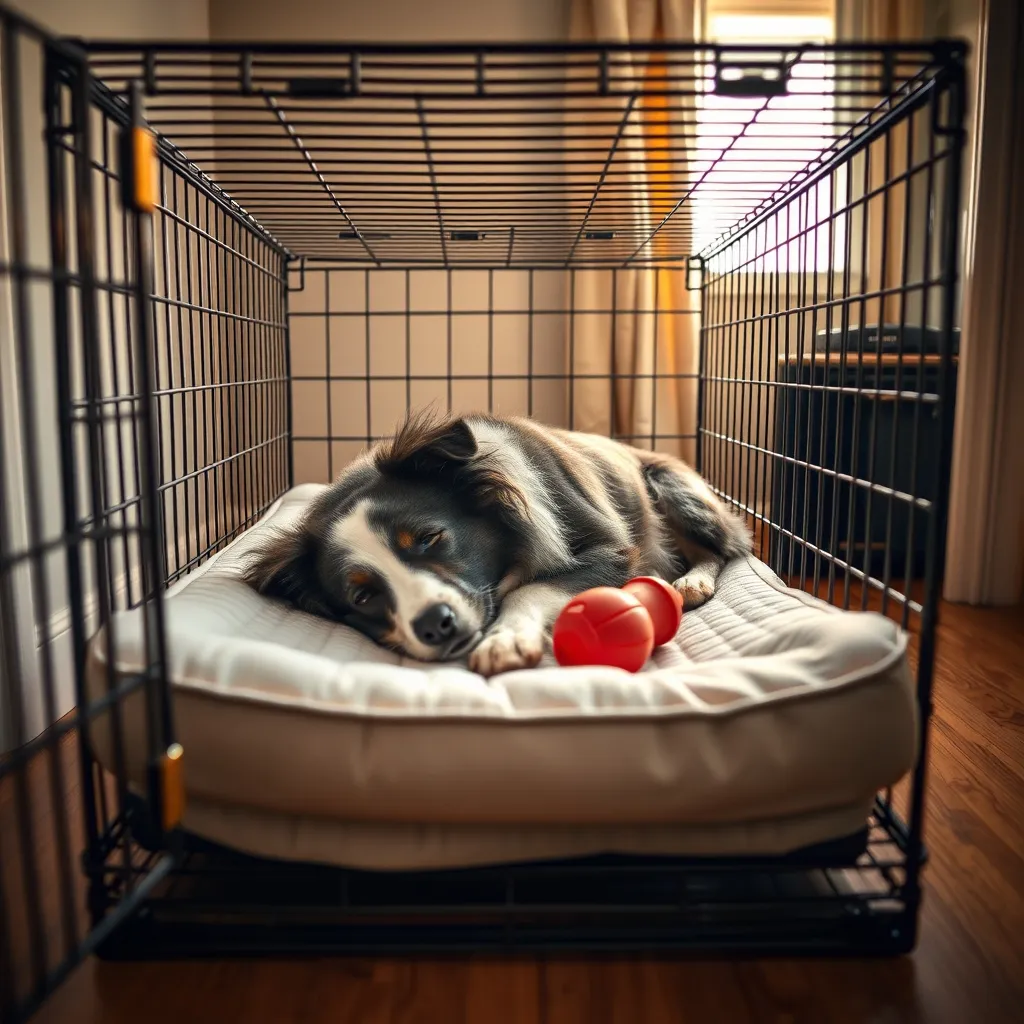
In over a decade of working with families and their dogs, I have seen the same handful of errors come up again and again. Here are the ones I want you to avoid:
1. Using the crate as punishment. Never send your dog to the crate when you are angry or frustrated. The moment the crate becomes associated with negative emotions, the entire training programme unravels. The crate must always predict good things: meals, treats, chews, rest.
2. Moving too fast. Older dogs need time to process new experiences. Rushing through the phases, particularly closing the door before the dog is ready, creates a setback that can take weeks to undo. Watch your dog’s body language. Lip-licking, whale eye, and a tucked tail are all signals to slow down.
3. Crating for too long. An adult dog should not be confined to a crate for more than four to five hours during the day. Senior dogs with smaller bladders or medical conditions may need even shorter intervals. If you work full-time, arrange for a dog walker or consider a playpen setup instead.
4. Letting the dog “cry it out.” This outdated approach causes more harm than good with adult dogs. A dog who is vocalising in the crate is communicating discomfort or fear. Ignoring that communication erodes trust. Instead, shorten the duration, increase the value of treats inside the crate, and rebuild gradually.
5. Choosing the wrong crate location. A crate shoved into a dark garage or basement feels like isolation, not a den. Place the crate in a central living area during the day and near your bedroom at night if your dog finds overnight crating stressful.
6. Skipping exercise before crate time. An older dog who has not had adequate physical and mental stimulation will struggle to settle in any confined space. A calm walk, a sniff session, or a short training game before crate time makes a huge difference. For dogs recovering from injury, hydrotherapy can provide gentle exercise that tires the body without stressing the joints.
Special Considerations for Senior Dogs with Health Issues
Ageing brings a range of physical changes that affect how a dog interacts with a crate. Here are the most important health-related factors to consider:
Arthritis and joint pain: A dog with stiff hips or elbows will avoid a crate with a high lip or narrow entrance. Choose a crate with a low-threshold, wide-opening door, and line it with a supportive orthopaedic mattress at least 7 cm thick. Memory foam is ideal because it distributes weight evenly and reduces pressure on sore joints.
Cognitive dysfunction syndrome (CDS): Senior dogs with CDS may become confused or disoriented, especially at night. A crate can actually help these dogs by providing a predictable, enclosed space that limits overwhelming stimuli. However, you may need to reintroduce the crate periodically if the dog “forgets” their training. Keep routines consistent and use familiar-smelling bedding.
Incontinence: Older dogs with bladder control issues need waterproof, washable crate pads. Check the crate frequently, and never scold a dog for an accident. Medical incontinence is not a training failure; it is a health condition that warrants a conversation with your veterinarian and potentially pet insurance support.
Vision or hearing loss: Blind or deaf dogs rely more heavily on spatial memory and scent. Once you have positioned the crate, do not move it. Use scent markers (a drop of lavender oil on the bedding, for example) and tactile cues (a textured mat in front of the entrance) to help the dog locate their crate independently.
Understanding the full cost of professional support can help you plan ahead. Our breakdown of obedience class pricing gives you realistic figures for in-person and private training sessions.
When Should You Stop Using a Crate?
A crate is a training tool, not a lifestyle. Once your dog has achieved the goal you were working towards, whether that is reliable house training, calm behaviour during recovery, or comfort during travel, you can begin giving them more freedom.
Here is how I typically transition dogs away from regular crate use:
- Leave the crate door open during the day and observe whether your dog returns to it voluntarily. Many dogs will continue to nap inside because they have come to view it as their personal space.
- Gradually increase unsupervised free time. Start with short periods (15 to 30 minutes) and extend as your dog proves trustworthy. Use a camera to monitor behaviour if needed.
- Dog-proof one room and confine your dog there instead of the crate. A baby gate across the kitchen doorway, for instance, provides more space while limiting access to the rest of the house.
- Keep the crate available. Even dogs who no longer need confinement often appreciate having access to their crate. Leave it open in a quiet corner so your dog can retreat to it whenever they want.
Some dogs, particularly senior dogs who find comfort in routine and enclosed spaces, may genuinely prefer to sleep in their crate for the rest of their lives. That is perfectly fine as long as the door remains open and the choice is theirs. The RSPCA’s guidance on dog environments emphasises that dogs should always have access to a comfortable resting area where they feel safe and can choose to retreat voluntarily.
If you are managing a multi-dog household, separate crate spaces become especially valuable during feeding times and rest periods. For families considering breeds that adapt well to shared living, our guide to the best medium dog breeds for families covers temperament traits that influence crate acceptance.
Key Points
- Start with the crate door removed or tied open, and let your older dog explore at their own pace for at least 3 days before closing the door
- Increase closed-door duration in small increments of 5 to 10 minutes, always opening the door while the dog is calm
- Choose a crate with a low-threshold entrance and orthopaedic bedding for dogs with arthritis or mobility issues
- Never use the crate to manage separation anxiety without a parallel desensitisation programme supervised by a qualified behaviourist
- Limit daytime crating to a maximum of 4 to 5 hours for adult dogs, and even less for seniors with medical conditions
Frequently Asked Questions
Can a dog be too old to crate train?
No. Dogs can learn new behaviours at any age, including accepting a crate. The process may take longer with a senior dog, especially if they have had negative confinement experiences in the past, but with patience and positive reinforcement, dogs of any age can learn to feel comfortable in a crate. I have successfully crate trained dogs as old as 14.
The 3-3-3 rule is a general guideline for newly adopted dogs. It suggests that a dog needs roughly 3 days to decompress from the stress of rehoming, 3 weeks to start learning household routines, and 3 months to feel fully settled in their new home. When crate training a newly adopted adult dog, use this timeline to set realistic expectations and avoid rushing the process.What is the 3-3-3 rule for dog training?
I do not recommend it. Allowing an adult dog to “cry it out” can increase stress, erode trust, and create a lasting negative association with the crate. Instead, shorten the crate duration to a level where the dog remains calm, then gradually increase the time in small increments. If vocalisation persists, reassess your training pace and consult a certified trainer.Should I let an adult dog cry it out in a crate?
A healthy adult dog should not be crated for more than 4 to 5 hours at a time during the day. Senior dogs with bladder issues, arthritis, or cognitive decline may need breaks every 2 to 3 hours. Overnight crating can be longer (6 to 8 hours) because dogs naturally sleep through the night, but always ensure your senior dog has had a final toilet break before bedtime.How long can an older dog stay in a crate during the day?
The crate should be large enough for your dog to stand without touching the top, turn around in a full circle, and lie fully stretched on their side. Measure your dog from the tip of the nose to the base of the tail, then add 5 to 10 cm for length. Measure from the floor to the top of the head (or ears, if erect) and add 5 cm for height. When in doubt, size up rather than down.What size crate does an adult dog need?
When done correctly, crate training is not cruel. It provides a safe, den-like space that many dogs actively seek out. Cruelty arises from misuse: crating for excessive hours, using the crate as punishment, or forcing a fearful dog inside. A well-introduced crate, combined with adequate exercise, enrichment, and social interaction, is a legitimate welfare tool endorsed by veterinary and behaviour organisations worldwide.Is crate training cruel for older dogs?