

I still remember the first time a client called me in a panic because her Golden Retriever had turned the backyard into something resembling a lunar landscape overnight. She wanted to know one thing: why do dogs dig, and how on earth could she make it stop? After more than a decade as a certified professional dog trainer, I can tell you that digging is one of the most common complaints I hear, and it is also one of the most misunderstood behaviors in the canine world.
Digging is not spite. It is not revenge for being left alone. It is a deeply rooted, biologically normal behavior that serves real purposes for your dog. The good news? Once you understand why your dog is digging, you can redirect the behavior humanely and effectively without punishment or frustration.
Key Takeaways
- Digging is a natural canine instinct rooted in survival behaviors like denning, hunting and food caching
- The six primary motivations behind digging are breed drive, boredom, temperature regulation, anxiety, prey chasing and escape attempts
- Terrier and Dachshund breeds were selectively bred for digging and may need up to 60 minutes of daily enrichment to satisfy the urge
- A designated digging zone can reduce unwanted yard destruction by over 80 percent when paired with consistent redirection
- Sudden-onset digging in a previously calm dog warrants a veterinary checkup to rule out pain, cognitive decline or compulsive disorder
- Punishment-based corrections for digging increase anxiety and almost always make the problem worse
In This Guide
- The Instinct Behind the Behavior
- Common Reasons Dogs Dig in the Yard
- Why Dogs Dig Indoors: Beds, Couches and Floors
- Breeds Most Prone to Digging
- How to Identify What Is Driving Your Dog’s Digging
- Force-Free Strategies to Redirect Digging Behavior
- Creating a Designated Digging Zone
- When Digging Signals a Deeper Problem
The Instinct Behind the Behavior
Before we talk solutions, it helps to understand that digging is written into your dog’s DNA. The domestic dog’s wild ancestors dug for survival. Wolves and wild canids dig dens to shelter pups, excavate rodent burrows for food and scrape shallow depressions in the earth to regulate body temperature. These behaviors did not disappear when dogs moved onto our sofas. They simply changed context.
According to the American Kennel Club’s guide to digging behavior, most digging falls into a handful of functional categories: comfort-seeking, prey drive, boredom relief, escape behavior and instinctive denning. I would add one more that I see constantly in my Austin practice: anxiety-driven digging, which often overlaps with separation distress.
When I evaluate a digging case, I always start by asking the same question: what is the dog gaining from this behavior? Because dogs do not dig to annoy you. They dig because digging works for them in some way. Our job is to figure out what that payoff is and provide a better alternative.
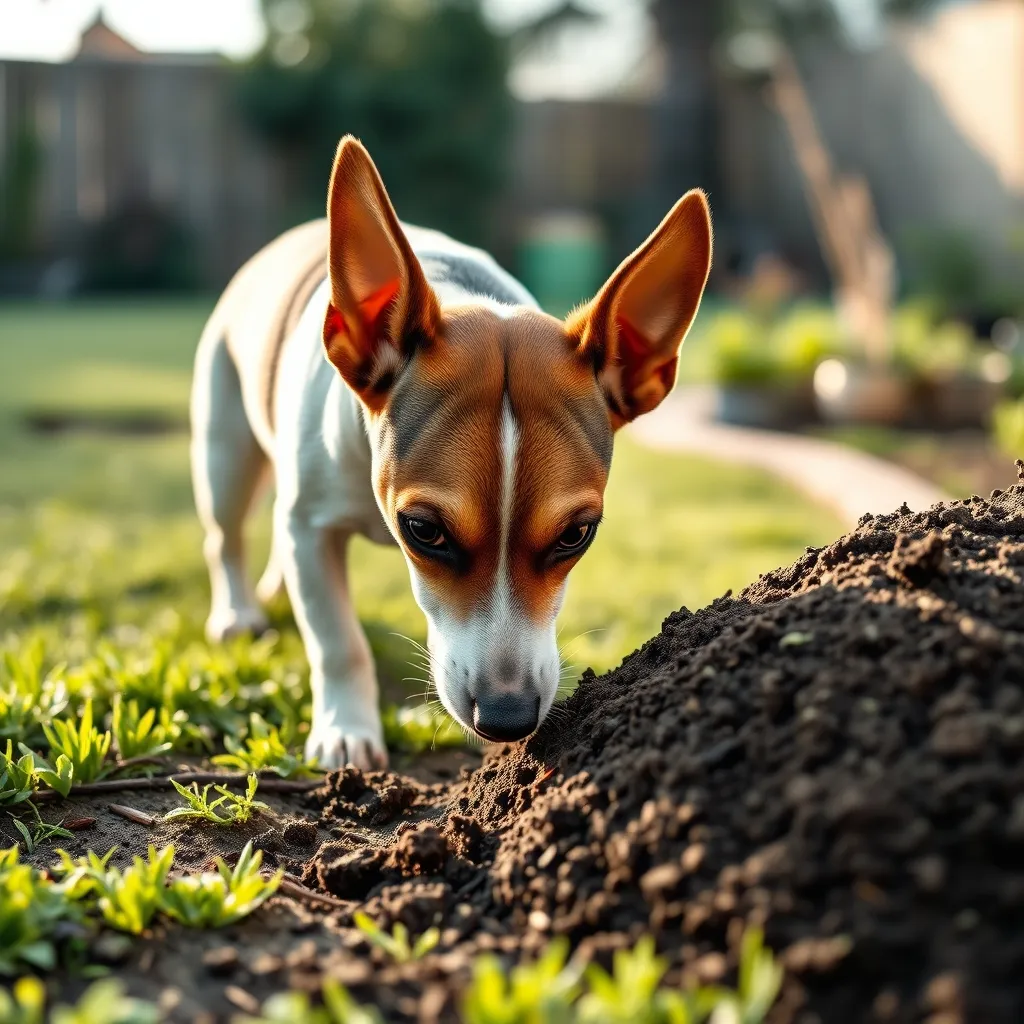
Common Reasons Dogs Dig in the Yard
Yard digging is the classic version of this behavior, and the motivation behind it is rarely just one thing. Here are the six most common drivers I see in outdoor digging cases.
Prey Drive
If your dog digs frantically in one spot, nose pressed to the ground, tail rigid and body tense, there is almost certainly something alive under the surface. Moles, gophers, grubs, lizards and even cicada larvae can send a prey-driven dog into an excavation frenzy. Dogs can detect underground movement with their extraordinary sense of smell, which is roughly 10,000 to 100,000 times more sensitive than ours. You will often see this type of digging concentrated along fence lines, near tree roots or in freshly watered soil where critters are most active.
Temperature Regulation
In the Texas heat, I see this one constantly. Dogs dig to reach cooler soil layers beneath the sun-baked surface. A shallow depression in shaded dirt can be 10 to 15 degrees cooler than the surrounding ground. If your dog digs a hole and then lies in it, temperature is almost certainly the motivator. This is especially common in breeds with thick double coats.
Boredom and Understimulation
A dog left alone in a yard with nothing to do will find something to do, and that something is often digging. This is particularly true for adolescent dogs between 6 and 18 months of age, when energy levels peak and impulse control is still developing. If you are looking for ways to keep your dog mentally engaged, I recommend exploring enriching toy options for every life stage as a starting point.
Caching Behavior
Some dogs dig to bury prized possessions: bones, toys, even stolen socks. This is a food-hoarding instinct inherited from wild ancestors who cached surplus food for leaner times. You may notice your dog nudging dirt or blankets over the item with their nose afterward, a telltale sign of caching.
Escape Motivation
Dogs who dig along or under fence lines are usually trying to get to something on the other side: a female in heat, a neighborhood cat, a walking path where other dogs pass, or simply the freedom to roam. Escape digging is goal-directed and often occurs when the dog is left unsupervised for extended periods. This type of digging can also be a sign of separation distress. If your dog shows other signs of anxiety when you leave, our guide to humane crate training may be a helpful resource.
Attention-Seeking
If your dog only digs when you are watching, and especially if they pause to look at you mid-dig, they may have learned that digging is a reliable way to get your attention. Even negative attention (yelling, chasing the dog away) can reinforce the behavior. I see this most often in highly social breeds who crave human interaction.
Why Dogs Dig Indoors: Beds, Couches and Floors
Indoor digging looks different from yard digging, but the underlying motivations overlap more than you might expect. If your dog scratches at their bed, paws at couch cushions or scrapes at the carpet, here is what is likely going on.
Nesting behavior is the number one cause of bed digging. Dogs circle and scratch at their sleeping surface to create a comfortable depression, fluff up bedding material or simply “prepare” the spot before lying down. This is a deeply ingrained denning instinct and is completely normal. Pregnant or false-pregnant females may exhibit intensified nesting behavior as their due date approaches.
Temperature plays a role indoors too. Dogs may scratch at tile or hardwood floors to expose a cooler surface, or dig into blankets to create an insulated nest when cold. If you notice your senior dog digging at their bed more than usual, it could also indicate joint discomfort; they may be trying to arrange bedding to relieve pressure on sore hips or elbows.
Anxiety-driven indoor digging often targets doorways, crate floors and areas near exits. A dog who scratches at the front door when you leave is communicating distress, not defiance. This behavior can escalate to the point of broken nails and raw paw pads, which is why early intervention matters. Understanding your dog’s emotional state through body language cues is essential for catching anxiety signals before they intensify.

Breeds Most Prone to Digging
While any dog can become a digger, certain breeds were selectively developed for earth work. The word “terrier” itself comes from the Latin terra, meaning earth. These dogs were bred to pursue vermin underground, and that drive does not simply disappear in a pet home. The ASPCA notes that breed predisposition is one of the strongest predictors of persistent digging behavior.
| Breed Group | Examples | Primary Dig Motivation | Typical Intensity |
|---|---|---|---|
| Terriers | Jack Russell, Fox Terrier, Cairn Terrier, Border Terrier | Prey drive and earth work instinct | Very high |
| Dachshunds | Standard, Miniature (all coat types) | Bred to dig into badger setts | Very high |
| Nordic/Spitz Breeds | Siberian Husky, Alaskan Malamute, Samoyed | Temperature regulation and denning | High |
| Retrievers | Labrador, Golden Retriever | Boredom, caching, mild prey drive | Moderate |
| Herding Breeds | Australian Shepherd, Border Collie | Boredom and understimulation | Moderate |
| Scenthounds | Beagle, Bloodhound, Basset Hound | Prey tracking and escape | Moderate to high |
| Guardian Breeds | Great Pyrenees, Anatolian Shepherd | Denning and patrol-related digging | Low to moderate |
If you are considering bringing home one of these breeds, I encourage you to review our guide for first-time dog owners so you can plan for breed-specific needs from day one. Choosing the right breed for your lifestyle is one of the best ways to prevent behavior problems before they start.
How to Identify What Is Driving Your Dog’s Digging
Before you can fix digging, you need to diagnose the motivation. I use a simple detective framework with my clients that I call the Four W’s: When, Where, What and Who.
When does the digging happen? If it occurs only when you are away, separation anxiety or boredom is the likely culprit. If it happens in the evening after a low-activity day, understimulation is probably the driver. If it spikes in summer, think temperature regulation.
Where does the dog dig? Along fences suggests escape motivation. Random spots in the yard point to prey drive. Near the house foundation could indicate cooling. At the front door or crate floor suggests anxiety.
What does the dog do after digging? Lies in the hole? Temperature. Buries something? Caching. Keeps digging deeper? Prey. Looks at you? Attention. Runs through the gap in the fence? Escape.
Who is present or absent? Digging that only happens when you are gone tells a very different story than digging that happens while you stand right there. The audience matters because it helps distinguish between internally motivated digging (prey, temperature, instinct) and socially motivated digging (attention, anxiety).
I recommend keeping a digging diary for at least one week. Note the date, time, location, duration and any context you can observe. Patterns almost always emerge, and those patterns point directly to the solution.
Force-Free Strategies to Redirect Digging Behavior
I want to be clear about something: punishment does not work for digging. Yelling at your dog, filling holes with cayenne pepper, burying chicken wire or spraying the dog with water may suppress the behavior temporarily, but they do nothing to address the underlying need. Worse, they can create new problems like fear, generalized anxiety or redirected aggression. Every strategy I recommend is rooted in force-free, reward-based methodology.
Increase Physical Exercise
A tired dog digs less. Most dogs need a minimum of 30 to 60 minutes of structured exercise per day, and high-energy breeds often need more. Walking is good, but it is not enough on its own. Add running, swimming, fetch or flirt pole sessions to truly drain physical energy. Proper leash training makes walks more productive because a dog who walks calmly covers more ground and engages more muscles than one who pulls erratically.
Add Mental Enrichment
Mental fatigue is just as important as physical fatigue. Puzzle feeders, snuffle mats, frozen stuffed Kongs, scatter feeding in grass and short clicker training sessions can dramatically reduce boredom-based digging. I tell my clients that 15 minutes of nose work is worth 30 minutes of walking in terms of mental satisfaction.
Address Temperature Needs
If your dog digs to cool down, the solution is not to stop the digging but to provide better cooling options. A shaded area, a kiddie pool, a cooling mat or access to air-conditioned indoor space will eliminate the need to excavate for comfort. This is especially critical for brachycephalic breeds who overheat easily.
Manage Prey Access
If critters in your yard are triggering prey-driven digging, consider humane pest management to reduce the underground wildlife population. Keeping your lawn well-maintained and treating for grubs can make your yard less attractive to moles and gophers. You can also use positive interrupters to redirect your dog when they start fixating on a scent trail.
Reduce Escape Opportunities
For fence-line diggers, bury hardware cloth or an L-footer (a section of wire fencing bent at 90 degrees) along the base of your fence. You can also place large, flat rocks along the fence line. Most importantly, address the root motivation: if your dog is escaping due to anxiety, isolation or attraction to stimuli outside the yard, those underlying issues need attention.
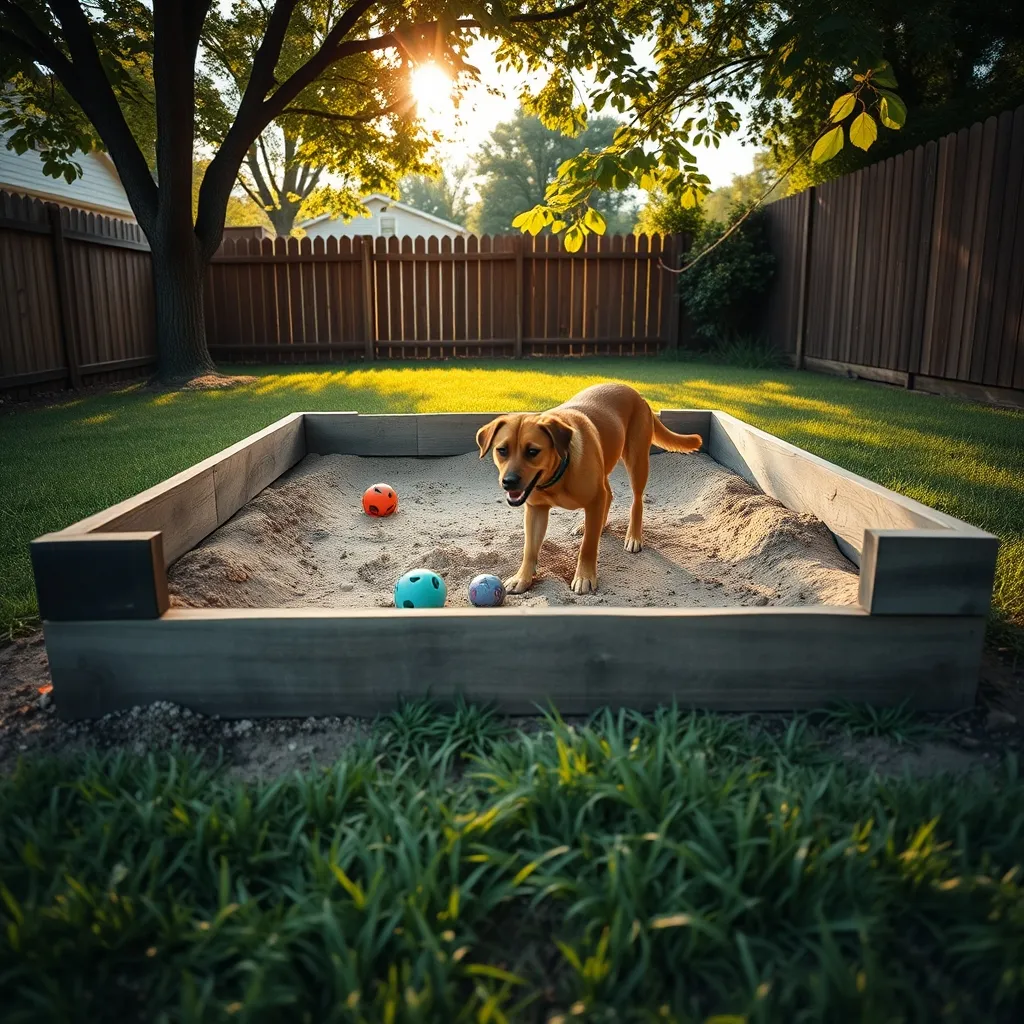
Creating a Designated Digging Zone
One of my favorite solutions, and the one with the highest success rate in my practice, is giving the dog a legal place to dig. A designated digging zone is essentially a sandbox for your dog, and it works beautifully because it satisfies the instinct without destroying your garden.
Here is how to set one up:
- Choose a shaded location in your yard, roughly 4 by 6 feet for a medium-sized dog. Larger or more enthusiastic diggers may need a bigger area.
- Define the borders with landscape timbers, pavers or a simple wooden frame to create a clear visual boundary.
- Fill it with loose, diggable material. A mixture of sand and soil works well. Avoid pure sand, which can get uncomfortably hot in direct sun. The depth should be at least 12 to 18 inches.
- Seed it with treasures. Bury treats, favorite toys and chews just below the surface. Make the digging zone the most rewarding spot in the entire yard.
- Redirect consistently. Every time your dog starts digging elsewhere, calmly interrupt and guide them to the designated zone. When they dig there, praise generously and periodically refresh the buried rewards.
Most dogs learn the new rule within two to three weeks of consistent practice. The key is making the designated spot far more rewarding than anywhere else. I have seen this approach reduce unwanted digging by 80 to 90 percent in cases where the motivation is instinct or boredom. It is less effective for anxiety-driven digging, which requires a different treatment plan.
When Digging Signals a Deeper Problem
Most digging is normal behavior expressed in an inconvenient context. But sometimes digging is a red flag that something more serious is going on. Here are the situations where I recommend seeking professional help.
Sudden onset in an adult dog. If your five-year-old dog has never been a digger and suddenly starts tearing up the yard or scratching at floors compulsively, something has changed. Medical causes, including pain, cognitive dysfunction, thyroid imbalance and neurological conditions, should be ruled out first. A veterinary exam is always my first recommendation in sudden-onset cases.
Compulsive, repetitive digging. If your dog digs to the point of injury, cannot be interrupted, or returns to the same spot obsessively even when the original trigger is removed, you may be dealing with canine compulsive disorder (CCD). This is a clinical condition that often requires a combination of behavior modification and veterinary-prescribed medication. The UC Davis School of Veterinary Medicine outlines when digging crosses from normal behavior into compulsive territory.
Digging paired with other anxiety signs. If your dog digs at doors, crate pans or floors and also paces, drools, vocalizes, refuses food when alone or has house-training regressions, separation anxiety is a strong possibility. This is a condition I specialize in, and I can tell you from experience that it does not resolve on its own. A qualified behavior consultant can design a desensitization protocol tailored to your dog. Understanding reactive and anxious behavior in dogs is a helpful first step.
Self-injury from digging. Broken or bleeding nails, raw paw pads and abraded skin on the legs are signs that digging has escalated beyond normal. This warrants immediate veterinary attention and a behavior modification plan. Our dog first aid guide covers how to manage minor paw injuries at home while you arrange professional care.
If you have recently adopted a dog who digs excessively, keep in mind that rescue dogs may carry unresolved stress from their previous environment. Our dog adoption guide includes tips for supporting newly adopted dogs through the decompression period, which typically lasts three to four weeks.
Key Points
- Keep a digging diary for one week to identify patterns in timing, location and context before choosing a strategy
- Provide at least 30 to 60 minutes of daily exercise plus 15 minutes of mental enrichment to reduce boredom-driven digging
- Build a designated digging zone (4 by 6 feet minimum) and seed it with buried treats to redirect the instinct
- If your dog digs to cool down, add shade, a kiddie pool or a cooling mat rather than punishing the behavior
- Schedule a veterinary exam if digging appears suddenly in an adult dog or is accompanied by signs of pain, anxiety or compulsive repetition
Frequently Asked Questions
Are dogs happy when they dig?
In most cases, yes. Digging releases endorphins and satisfies natural instincts like prey chasing, denning and caching. A dog who digs with a loose, waggy body and relaxed face is generally enjoying the activity. However, digging driven by anxiety or compulsion is not a sign of happiness. Look at your dog’s overall body language: a stiff posture, whale eyes, panting without exertion or an inability to stop when called are signals that the digging is stress-related rather than joyful.
What breeds of dogs dig the most?
Terrier breeds top the list because they were specifically bred to pursue prey underground. Jack Russell Terriers, Cairn Terriers and Fox Terriers are among the most persistent diggers. Dachshunds, originally bred to dig into badger setts, are also prolific excavators. Nordic breeds like Siberian Huskies and Alaskan Malamutes dig for temperature regulation and denning. Even within these breeds, individual variation is significant, so training and enrichment matter more than breed alone.
Should I let my dog dig?
That depends on the context. Digging is a normal, healthy behavior, and suppressing it entirely can lead to frustration and redirected problems. If the digging is not destructive and your dog is doing it in an appropriate area, there is no reason to stop it. I recommend creating a designated digging zone where your dog can dig freely. The goal is not to eliminate digging but to channel it to a location that works for both of you.
Why has my dog started digging all of a sudden?
Sudden-onset digging in a previously calm dog usually has a specific trigger. Common causes include new underground critter activity in the yard (moles, gophers, grubs), a change in routine or household composition that causes anxiety, seasonal temperature changes or an underlying medical issue such as pain or cognitive decline. If you cannot identify an obvious environmental trigger, a veterinary exam is the smartest first step to rule out physical causes before addressing behavior.
How do I stop my dog from digging up the garden?
Start by identifying the motivation using the Four W’s framework: when, where, what and who. Then match the solution to the cause. For boredom, increase exercise and enrichment. For prey drive, manage pest populations and redirect to a digging zone. For temperature, provide shade and cooling options. In all cases, avoid punishment, which does not address the root cause and often increases anxiety. A designated digging area filled with loose soil and buried rewards is the most effective long-term solution for instinct-driven garden diggers.
Why does my dog dig at the carpet or floor inside the house?
Indoor floor scratching is usually either nesting behavior (preparing a resting spot), temperature-seeking (trying to reach a cooler surface) or anxiety-related (digging at doorways when owners leave). Occasional scratching before lying down is completely normal and harmless. Persistent, intense scratching that damages flooring or causes paw injuries warrants a closer look at your dog’s anxiety levels and overall enrichment. Providing a comfortable, supportive dog bed and ensuring your dog feels secure when alone can significantly reduce indoor digging.