
Key Takeaways
- Most dogs pull on the leash because forward movement is self-reinforcing; every step they gain while pulling teaches them that pulling works
- Start leash training indoors or in your backyard where distractions are minimal before progressing to busier environments
- The “be a tree” method, where you stop all forward motion when the leash goes tight, is one of the most effective force-free techniques for loose leash walking
- Puppies can begin wearing a collar and lightweight leash as early as 8 weeks old, with formal walking practice starting around 10 to 12 weeks
- Consistent leash training sessions of 5 to 10 minutes produce faster results than one long, frustrating walk per day
- Using a front-clip harness as a management tool can reduce pulling by up to 60% while you work on training
In This Guide
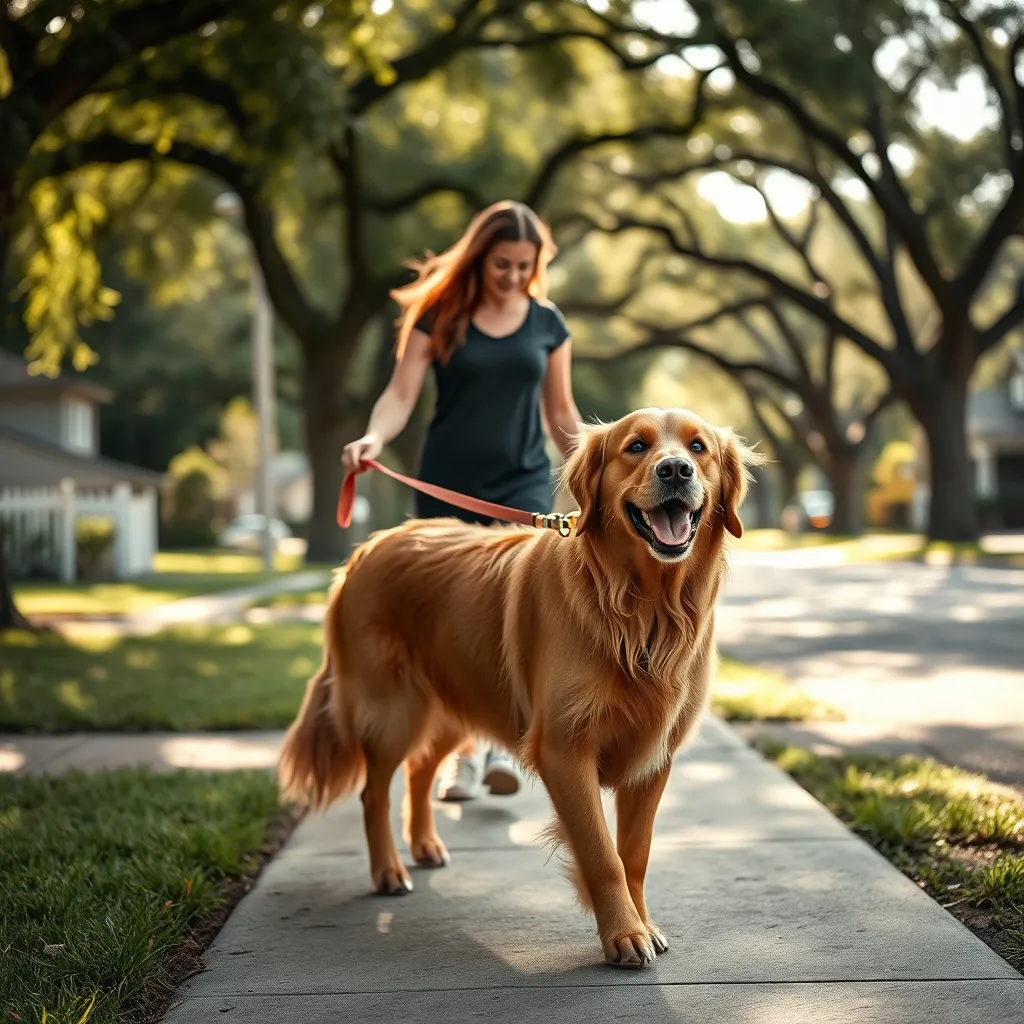
If your daily walks feel more like a tug-of-war than a pleasant stroll, you are not alone. Leash pulling is the single most common complaint I hear from dog owners in my Austin training practice, and after more than a decade of working with dogs of every size and temperament, I can tell you this: pulling is not a sign of a “bad” dog. It is a completely natural behavior that we, as handlers, need to redirect. In this guide, I will walk you through exactly how I approach leash training with my clients, from the first indoor session to confident, relaxed walks through busy neighborhoods.
Why Dogs Pull on the Leash
Before we fix pulling, we need to understand why it happens. Dogs explore the world primarily through their noses, and their natural walking pace is significantly faster than ours. When a dog hits the end of the leash and keeps moving forward, something powerful occurs: the environment rewards the pulling. They reach the interesting smell, the other dog, the squirrel, or simply cover more ground. Every single time pulling “works,” the behavior gets stronger.
According to the American Kennel Club’s training guidelines, leash walking is not an instinctive skill for dogs. It is a learned behavior that requires patience and consistency from the handler. Dogs do not come pre-programmed to match our pace or stay on one side. That is our job to teach.
There are a few key reasons your dog pulls:
- Opposition reflex: When dogs feel pressure on their chest or neck, many instinctively push into it rather than away from it. This is the same reflex that makes sled dogs so effective.
- Excitement and arousal: The outdoors is a sensory buffet. Smells, sounds, other animals, and people all spike your dog’s arousal level, making impulse control harder.
- Unintentional reinforcement: If you have ever let your dog reach a fire hydrant or greet another dog while the leash was tight, you taught them that pulling pays off.
- Lack of alternative training: Many owners never explicitly teach their dog what they want them to do on leash. The dog is left to figure it out, and pulling is their default solution.

Essential Gear for Leash Training
The right equipment will not train your dog for you, but the wrong equipment can absolutely slow your progress. Here is what I recommend to every client starting a leash training program.
| Equipment | Best For | Pros | Cons |
|---|---|---|---|
| Front-clip harness | Dogs that pull moderately to heavily | Redirects dog toward you when they pull; no neck pressure | Can cause chafing if poorly fitted; does not teach the skill alone |
| Flat collar | Dogs already making progress; low-pull dogs | Simple, lightweight, easy to fit | All pressure goes to the neck; not ideal for strong pullers |
| Back-clip harness | Small breeds; dogs with trachea concerns | Comfortable; no neck pressure | Can actually encourage pulling due to opposition reflex |
| Head halter | Very strong pullers; reactive dogs (with conditioning) | Maximum steering control; reduces lunging | Requires slow desensitization; dogs often resist initially |
| 6-foot flat leash | All dogs in training | Consistent length; good communication through leash | None significant |
| Retractable leash | Not recommended for training | Allows distance in open areas | Teaches pulling; inconsistent leash length; safety risks |
My go-to setup for new clients is a front-clip harness paired with a standard 6-foot leash. I avoid retractable leashes entirely during training because they teach the exact opposite of what we want: the dog learns that pulling extends their range. A fixed-length leash gives your dog a clear, consistent boundary.
For treats, use something small, soft, and high-value. Think tiny pieces of cooked chicken, cheese, or commercial training treats that your dog can eat in under two seconds. If your dog has to stop and chew for ten seconds, you lose the training moment. If you are looking for ways to keep your dog engaged between training sessions, enrichment through interactive dog toys can help burn mental energy and support overall impulse control.
How to Start Leash Training Indoors
One of the biggest mistakes I see is owners trying to teach loose leash walking in the most distracting environment possible: the real world. I always start leash training inside the home, where your dog is calm and can actually think.
Step 1: Collar and leash desensitization. For puppies or dogs new to leash walking, let them wear the collar and drag a lightweight leash around the house (supervised) for short periods. Pair the leash with treats and praise. You want the equipment to predict good things, not trigger excitement or anxiety. This is especially important for young puppies who are still adjusting to new experiences during their teething phase, when everything feels a bit overwhelming.
Step 2: Reward the position you want. Stand in your living room with your dog on leash. Every time your dog happens to be near your side with the leash loose, mark the moment with a “yes” or a clicker, and deliver a treat at your hip. You are teaching your dog that the area beside you is the most rewarding place to be.
Step 3: Add movement. Take a few steps. If your dog walks with you and the leash stays loose, mark and reward. If they forge ahead, simply stop. Wait for them to look back at you or return to your side, then mark and reward. At this stage, you might only cover a few feet in five minutes, and that is perfectly fine.
Step 4: Introduce turns. Practice left turns, right turns, and about-turns in your hallway or living room. Reward your dog every time they follow you through a direction change. This builds the habit of checking in with you rather than charging ahead blindly.
I recommend practicing these indoor sessions for 5 to 10 minutes, two to three times per day, for at least three to five days before moving outdoors. Rushing this phase is one of the fastest ways to stall your progress.
The “Be a Tree” Method for Outdoor Walks
Once your dog understands that staying near your side earns rewards indoors, it is time to take the show on the road. My favorite technique for outdoor leash training is the “be a tree” method, and it works beautifully for dogs of all sizes.
Here is how it works:
- Start walking at a normal pace with your dog on a loose leash.
- The instant the leash goes tight, stop moving completely. Plant your feet and become a tree. Do not pull back, jerk the leash, or say anything.
- Wait. Your dog will likely look around, sniff, and eventually turn back toward you or take a step in your direction, creating slack in the leash.
- The moment the leash loosens, mark with “yes” and start walking again. The reward here is forward movement itself.
- Repeat every single time the leash goes tight.
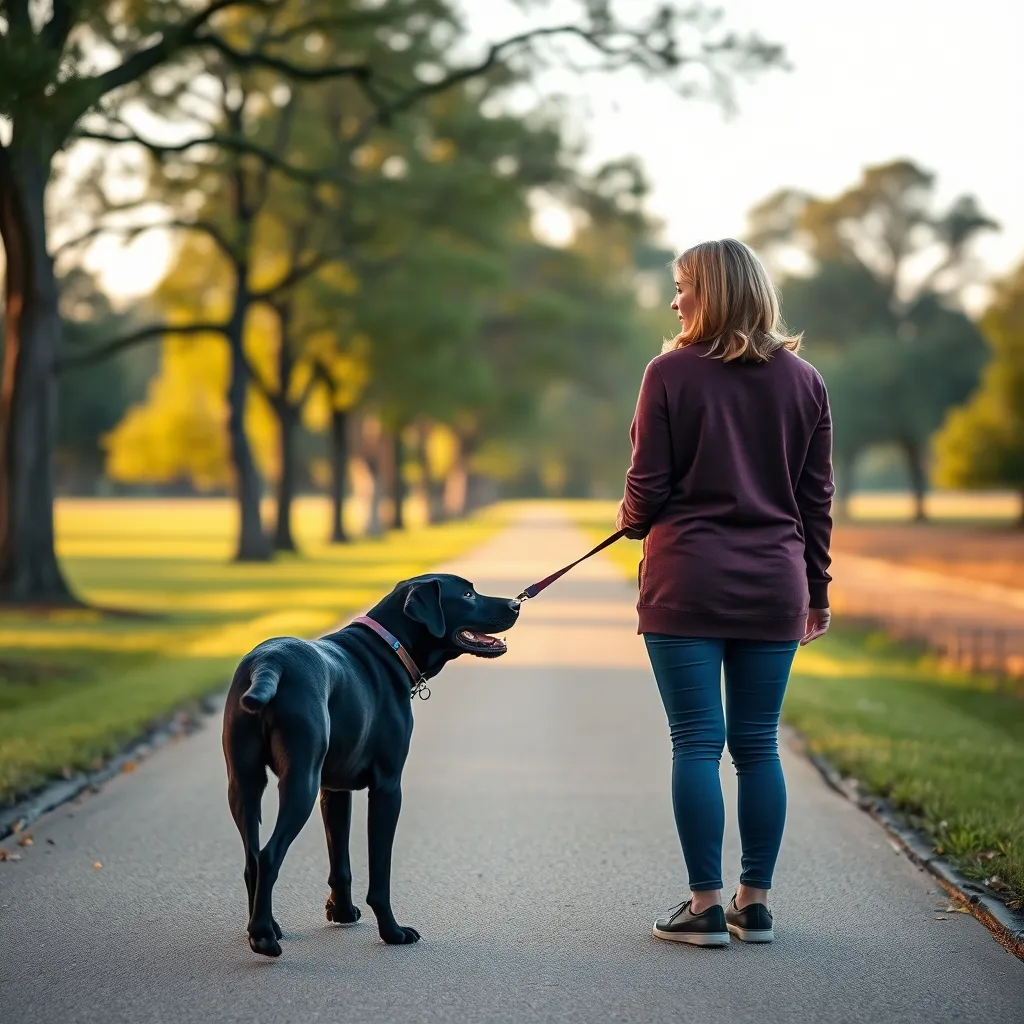
The first few walks using this method will be slow. You might cover half a block in 15 minutes. That is normal and expected. What you are teaching your dog is a simple cause-and-effect relationship: tight leash means everything stops; loose leash means we keep going. Most dogs begin to show noticeable improvement within 7 to 14 days of consistent practice.
An important note: if your dog is highly reactive or shows signs of aggression toward other dogs or people, the “be a tree” method alone may not be sufficient. Reactivity requires a more layered approach, and I would recommend working with a certified trainer.
Loose Leash Walking: Step-by-Step
Let me give you the complete protocol I use with my private clients. This is the same program that has helped hundreds of dogs in my practice learn to walk politely.
Week 1: Foundation (indoors only). Practice reward-based positioning inside the house. Your dog learns that standing or walking by your side earns treats. Use a high rate of reinforcement: one treat every two to three steps initially. Train for 5 to 10 minutes, three times daily.
Week 2: Low-distraction outdoor practice. Move to your backyard, driveway, or a quiet cul-de-sac. Apply the “be a tree” method. Continue treating every few steps for a loose leash. When your dog pulls, stop. When the leash is loose, walk and reward. Keep sessions under 15 minutes.
Week 3: Add moderate distractions. Walk on your regular neighborhood route but at a quieter time of day (early morning or late evening). Begin spacing out treats gradually. Instead of every two to three steps, reward every five to eight steps. Continue stopping for any pulling.
Week 4: Increase the challenge. Walk during busier times. Practice walking past common triggers like other dogs, joggers, and bicycles at a distance your dog can handle. Use “find it” (toss a treat on the ground) to redirect attention when you see a trigger approaching. This is also a great time to reinforce calm behavior around stimuli, much like the impulse control work that forms the foundation of crate training.
Weeks 5 and beyond: Generalize the skill. Practice in new locations: pet stores, parks, downtown areas. The more environments your dog succeeds in, the more solid the behavior becomes. Gradually reduce treat frequency, but never stop rewarding entirely. I still praise and occasionally treat my own dogs for good leash manners, and they have been walking politely for years.
The Animal Humane Society recommends that owners remain patient and consistent throughout this process, noting that it often takes several weeks of daily practice before loose leash walking becomes reliable in all environments.
Leash Training a Puppy vs. an Adult Dog
The principles of leash training are the same regardless of your dog’s age, but the practical details differ. Here is how I adjust my approach.
Leash Training a Puppy
Puppies can start getting comfortable with a collar and leash as early as 8 weeks old. At this age, I am not asking for structured walking. I simply let the puppy drag a lightweight leash around the house to build a positive association. Formal leash walking sessions can begin around 10 to 12 weeks, keeping them extremely short: 2 to 3 minutes maximum.
Puppies have short attention spans, so I use an extremely high rate of reinforcement. I am talking about a treat nearly every step for the first few sessions. The goal is to make walking near you the most fun game your puppy has ever played. Puppies who are still adjusting to their vaccination schedule can practice leash skills in safe, controlled environments like your backyard or indoors until they are fully protected.
One advantage of starting with puppies is that you are building the habit from scratch. There is no pulling history to undo, which makes the process considerably faster.
Leash Training an Adult Dog
Adult dogs who have spent months or years pulling have a deeply ingrained habit. The good news is that dogs are always capable of learning. The adjustment is that you need more patience and higher-value rewards to compete with years of reinforcement history.
For adult dogs, I almost always recommend starting with a front-clip harness as a management tool while training. This reduces the physical challenge of handling a strong puller and prevents the walks from becoming a battle. I also recommend temporarily shortening your walks and focusing on quality over distance. A 10-minute training walk where your dog practices good habits is worth more than a 45-minute walk where they pull the entire time.
With adult dogs, I also pay close attention to their overall arousal level before the walk even begins. If your dog goes into a frenzy the moment you pick up the leash, we need to address pre-walk excitement first. Practice picking up the leash and putting it down without going anywhere. Only clip the leash on when your dog is relatively calm. Only open the door when they are not lunging toward it. This teaches your dog that calmness is the key that unlocks the walk.
Common Leash Training Mistakes
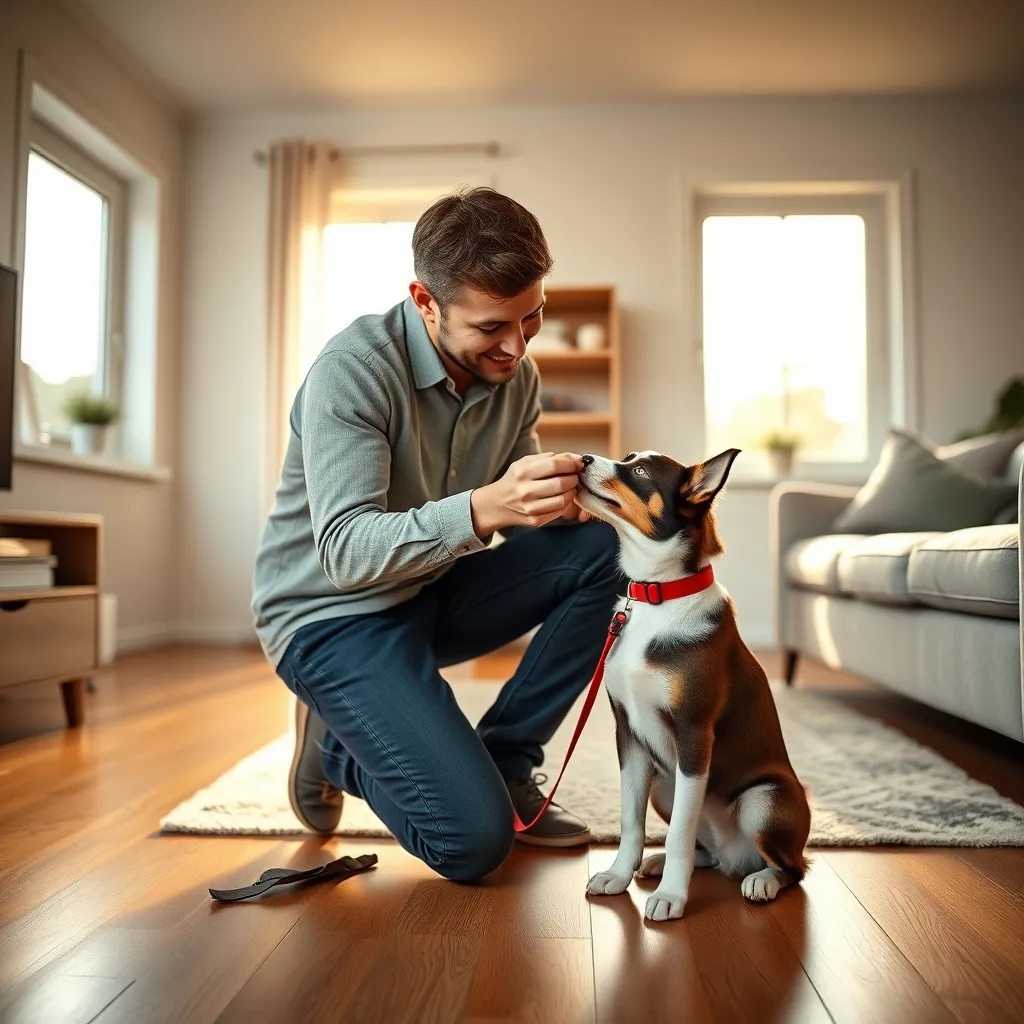
After working with hundreds of dogs and their owners, I have identified the mistakes that slow down leash training progress the most. Avoiding these will save you weeks of frustration.
1. Inconsistency. This is the number one killer of leash training progress. If you stop when your dog pulls during “training walks” but let them drag you to the park the rest of the time, your dog learns that pulling works sometimes. And behaviors that are intermittently reinforced are the hardest to eliminate. Every walk needs to follow the same rules.
2. Using punishment-based tools. Prong collars, choke chains, and shock collars may suppress pulling in the short term, but they do so through pain and intimidation. The RSPCA advises against aversive training tools, noting that they can cause physical injury, increase fear and anxiety, and damage the bond between dog and owner. Force-free methods take a bit longer but produce lasting results without fallout.
3. Training sessions that are too long. A 30-minute training walk with a dog who pulls is exhausting for both of you, and frustration creeps in fast. Keep dedicated training sessions to 10 to 15 minutes. You can always do a second session later in the day.
4. Forgetting to reward the good stuff. Owners tend to notice pulling (the problem) but ignore loose leash walking (the goal). If your dog is walking nicely and you say nothing, you are missing a huge opportunity to reinforce exactly the behavior you want. Catch your dog being good.
5. Skipping the indoor phase. Jumping straight to outdoor walks is like asking a student to take the final exam without attending any classes. The indoor foundation teaches your dog the basic concept in a low-distraction setting, making outdoor success far more likely.
6. Pulling back on the leash. When your dog pulls, the natural human response is to pull back. But this triggers the opposition reflex and actually makes your dog pull harder. Instead, stop moving or change direction. Let your movement be the consequence, not a leash correction.
If your dog’s pulling is accompanied by excessive barking or vocalization, the underlying issue may be anxiety or reactivity rather than simple excitement, and you may need a more targeted behavior modification plan.
When to Call a Professional Trainer
Most dogs can learn loose leash walking with the protocol outlined above. However, there are situations where working with a certified professional dog trainer is the smartest move.
- Your dog lunges, growls, or barks at other dogs or people on walks. This is reactivity, not just pulling, and it requires a specialized desensitization and counter-conditioning plan.
- Your dog panics on leash. Some dogs shut down, freeze, or try to escape from the leash entirely. This fear response needs gentle, systematic desensitization, similar to the gradual approach we use when helping dogs overcome fear in other contexts, like getting comfortable with bath time.
- You have a very large, strong dog and a physical limitation. Safety comes first. A professional can help you implement management strategies while the training takes effect.
- You have been consistent for four or more weeks with no improvement. Something in the approach may need adjusting, and fresh eyes can make a big difference.
- Your dog has a history of aggression. Leash aggression can escalate quickly, and professional guidance protects both your dog and the public.
When choosing a trainer, look for certifications such as CPDT-KA (Certified Professional Dog Trainer, Knowledge Assessed) or CAAB (Certified Applied Animal Behaviorist). Verify that they use force-free, science-based methods. If a trainer recommends tools or techniques that cause your dog pain or fear, find a different trainer. Your dog’s wellbeing during the training process matters just as much as the outcome.
For dogs who struggle with being away from their owners, combining leash training with other confidence-building exercises is often helpful. If your dog also has difficulty settling when left alone, teaching crate comfort can complement your leash work by building independence and emotional resilience. And if you are planning to travel with your dog, solid leash manners become even more essential in unfamiliar environments.
Key Points
- Start all leash training indoors with 5 to 10 minute sessions, rewarding your dog for walking beside you before practicing outdoors
- Use a front-clip harness and a 6-foot flat leash for the best combination of management and training communication
- Apply the “be a tree” method consistently: stop all forward movement the instant the leash goes tight and resume only when it is loose
- Never allow pulling to “work” on any walk; inconsistency is the single biggest reason leash training stalls
- Seek a CPDT-KA or CAAB certified trainer if your dog shows reactivity, fear, or aggression on leash, or if you see no progress after four weeks
Frequently Asked Questions
What age should you start leash training a puppy?
Puppies can begin wearing a collar and lightweight leash at 8 weeks old for desensitization purposes. Formal leash walking practice, with short 2 to 3 minute sessions, can start around 10 to 12 weeks. Keep sessions playful and positive, using a high rate of treat reinforcement to build a strong foundation before the puppy develops any pulling habits.
Leash training is the process of teaching your dog to walk calmly on a leash without pulling, lunging, or lagging behind. The goal is loose leash walking, where the leash hangs in a relaxed J-shape between you and your dog. Effective leash training uses positive reinforcement to teach the dog that staying near your side is more rewarding than forging ahead.What is leash training?
Most dogs show noticeable improvement within 7 to 14 days of consistent daily practice. However, building reliable loose leash walking in various environments typically takes 4 to 8 weeks. Puppies with no pulling history often learn faster than adult dogs with years of ingrained pulling behavior. Consistency is the single most important factor in determining how quickly your dog progresses.How long does it take to leash train a dog?
For dogs that pull, I recommend a front-clip harness as a management tool during training. Front-clip harnesses redirect the dog toward you when they pull, reducing the physical struggle without causing pain. Flat collars work well for dogs that are already making progress or that naturally walk without much tension. Avoid back-clip harnesses during active training, as they can encourage pulling through the opposition reflex.Should I use a harness or collar for leash training?
The 5-second rule is a guideline for exercising puppies safely. It suggests limiting structured walks to 5 minutes of exercise per month of your puppy’s age, twice per day. For example, a 3-month-old puppy would get two 15-minute walks daily. This rule helps protect developing joints and bones from overexertion. It applies to sustained walking on hard surfaces, not to free play in the yard or short indoor training sessions.What is the 5-second rule for walking dogs?
Dogs are typically at their highest arousal level at the start of a walk. The excitement of leaving the house, the rush of new smells, and pent-up energy all contribute to initial pulling. As the walk continues and your dog has a chance to process the environment, their arousal drops and pulling often decreases. To address this, practice calm leash-up routines and spend the first few minutes of every walk in a familiar, low-distraction area before heading to more exciting locations.Why does my dog only pull at the beginning of the walk?