
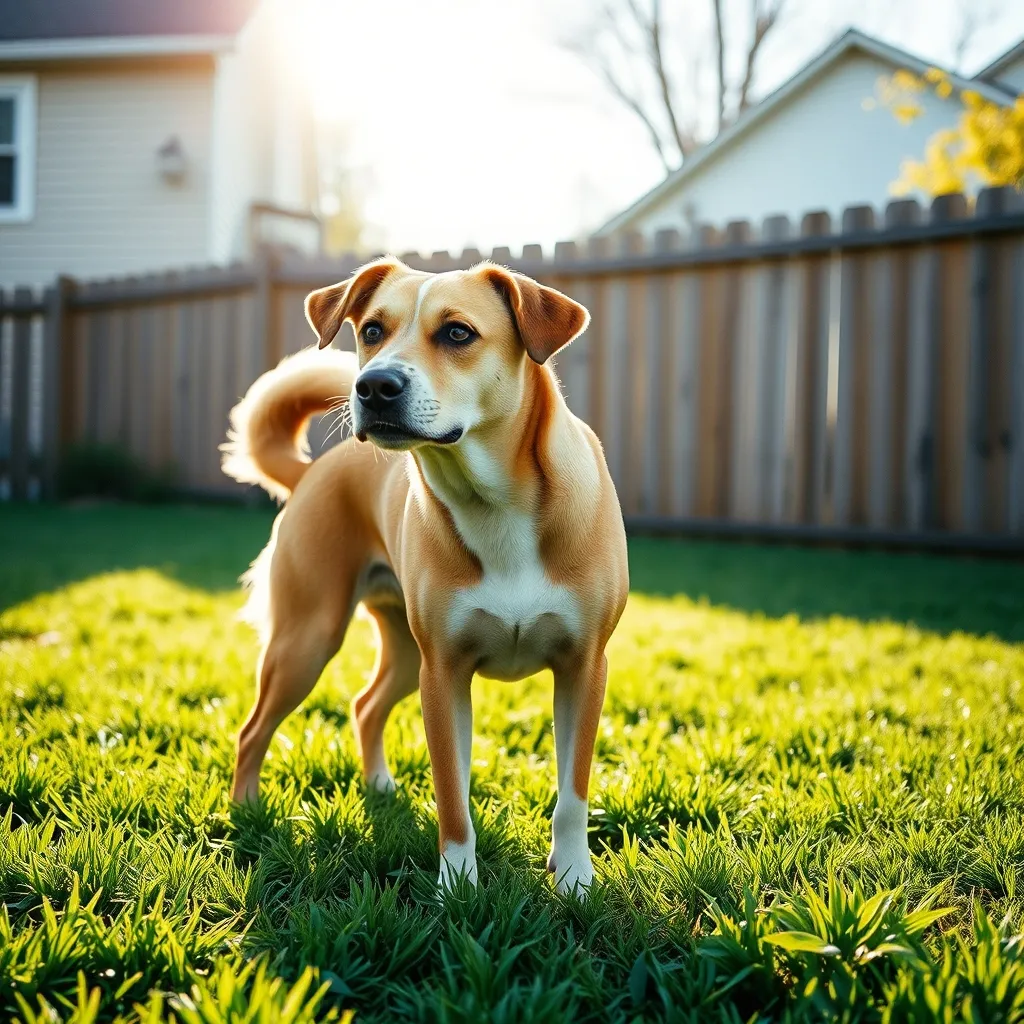
After more than a decade of working with fearful, reactive and anxious dogs in Austin, I can tell you that dog body language is the single most important skill any owner can develop. Dogs are constantly broadcasting how they feel through their tails, ears, eyes, mouths and overall posture. The problem is that most of us were never taught to listen. I have watched countless misunderstandings between dogs and humans unfold simply because a wagging tail was assumed to mean happiness or a yawn was dismissed as tiredness. In this guide, I am going to walk you through every signal your dog sends, explain what each one actually means in context and give you the confidence to respond before a situation escalates.
Key Takeaways
- Dogs communicate primarily through body language, using over 30 distinct signals that owners should learn to recognize
- A wagging tail does not always mean a happy dog; tail height, speed and stiffness must all be evaluated together
- Whale eye (visible white sclera) is one of the top 5 stress indicators that frequently precedes a bite
- Calming signals like lip licking, yawning and turning away are a dog’s first attempt to de-escalate tension before aggression
- Reading body language in clusters rather than isolated signals improves accuracy by an estimated 80% or more
- Puppies should be exposed to body-language observation exercises during the critical socialization window of 3 to 14 weeks
In This Guide
Why Dog Body Language Matters
Dogs do not have words, but they are far from silent communicators. According to the RSPCA’s guide to understanding dog behavior, dogs use a complex system of visual signals to express fear, excitement, discomfort, confidence and affection. When we miss these signals, we put both our dogs and the people around them at risk.
In my practice I work with many dogs who have been labeled “aggressive” or “unpredictable.” In almost every case, the dog had been sending clear warning signals for weeks or months before the incident that prompted the referral. The owners simply did not know what to look for. Learning to read dog body language is not just a nice skill; it is a safety skill. It helps you intervene before your dog reaches a point of no return, and it strengthens the bond between you because your dog feels genuinely understood.
This knowledge is especially important if you are leash training a reactive dog, introducing a new puppy to your household or managing aggression and reactive behavior. Every one of these scenarios demands that you read your dog accurately and respond quickly.
Reading Your Dog’s Tail
The tail is probably the most misunderstood part of a dog’s communication toolkit. Most people assume a wagging tail equals a happy dog. That assumption has led to more bites than I can count. What matters is not whether the tail is wagging but how it is wagging.
There are four variables to watch: height, speed, stiffness and direction. A tail held at a neutral or slightly below-spine level with a loose, sweeping wag usually indicates a relaxed, friendly dog. A tail held high and stiff, vibrating rapidly at the tip, is a dog in a state of high arousal. This could tip toward excitement or aggression depending on the rest of the body. A tail tucked firmly between the hind legs signals fear or extreme submission.
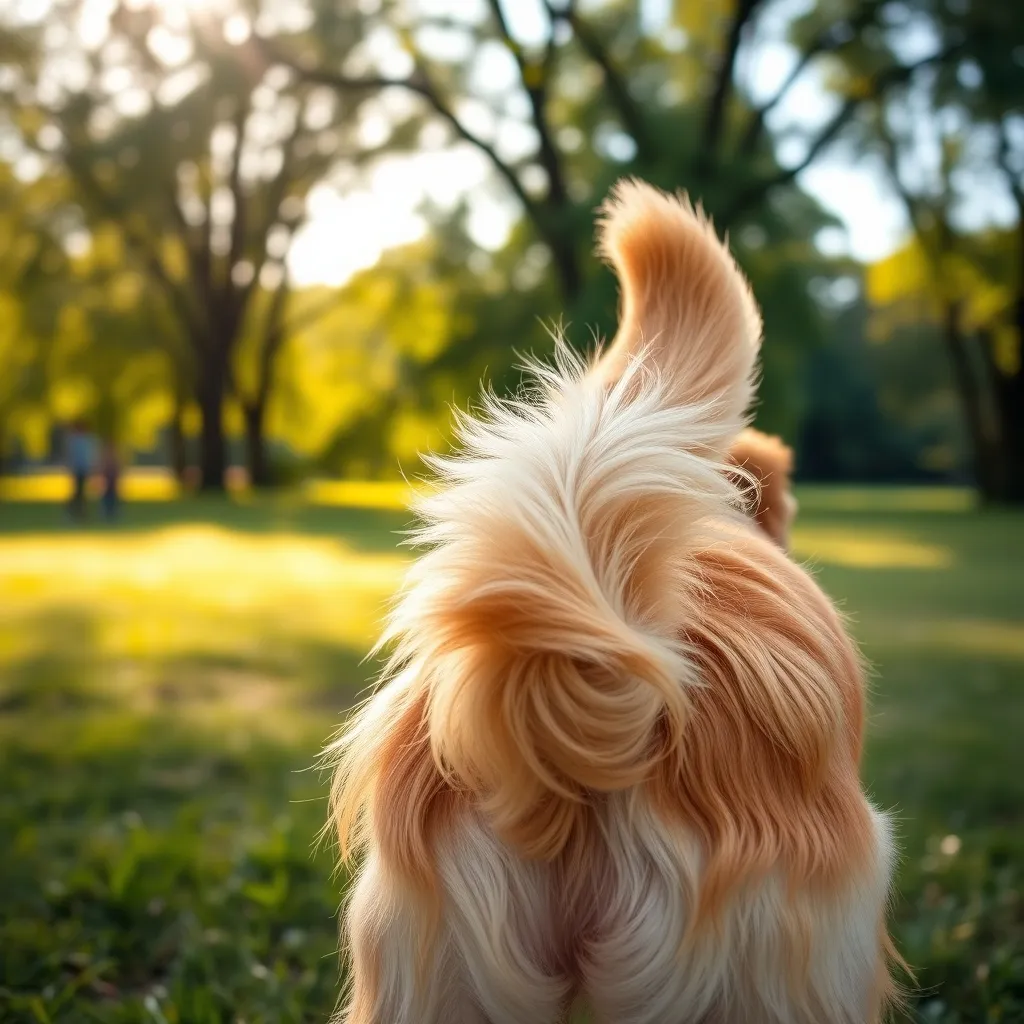
Research has also shown that the direction of the wag carries meaning. A 2013 study published in Current Biology found that dogs wag more to the right when experiencing positive emotions and more to the left when feeling negative ones. While this is subtle, it is one more data point to consider when you are reading your dog in a challenging situation.
Breed anatomy matters too. A Greyhound’s natural tail carriage is low, so a tail at spine level for a Greyhound might actually signal alertness. Meanwhile, breeds like Akitas and Shiba Inus carry their tails in a tight curl over the back, which limits the range of movement you can observe. For certain breeds with distinctive physical traits, you will need to calibrate your reading to their baseline posture.
| Tail Position | Speed and Stiffness | Likely Meaning |
|---|---|---|
| Neutral (spine level) | Loose, wide sweeps | Relaxed, friendly, open to interaction |
| High (above spine) | Stiff, rapid vibration | High arousal; could be excitement or aggression |
| High (above spine) | Loose, fast wag | Excited, confident, eager to engage |
| Low (below spine) | Slow, tentative wag | Uncertain, slightly nervous |
| Tucked between legs | Still or slight tremor | Fear, anxiety, extreme submission |
| Straight out (horizontal) | Stiff, motionless | Focused, alert, possibly stalking or assessing a threat |
What Ears Reveal About Mood
Ears are another powerful indicator that many owners overlook. Dogs with erect ears, such as German Shepherds and Belgian Malinois, offer the clearest signals. Ears pricked forward indicate alertness and focused attention. Ears rotated slightly to the side suggest the dog is relaxed. Ears pinned flat against the skull are a strong indicator of fear, anxiety or submission.
For floppy-eared breeds like Basset Hounds, Beagles and Cocker Spaniels, you need to watch the base of the ear rather than the tip. When the ear base lifts or tenses, the dog is becoming alert. When the base pulls backward, the dog is likely feeling stressed.
One thing I always tell my clients: ears never lie, but they speak quickly. An ear position can change in a fraction of a second, so you need to observe in real time rather than relying on a snapshot. This is particularly important during greetings at the dog park or when you are working on crate training and your dog is adjusting to a new space.
Eyes: The Window to Emotional State
A dog’s eyes communicate volumes. There are three primary signals to watch for: soft eyes, hard eyes and whale eye.
Soft eyes have relaxed lids and normal-sized pupils. The dog may blink slowly or look at you with a gentle, unfocused gaze. This is a calm, happy dog. Hard eyes are the opposite. The gaze is fixed, the pupils may be dilated and the dog stares without blinking. This is a dog that is either intensely focused on prey or feels threatened. A hard stare directed at a person or another dog is a serious warning signal.
Whale eye, sometimes called “half-moon eye,” is when the dog turns its head slightly away but keeps its eyes fixed on whatever is bothering it. You see a crescent of white sclera at the outer edge of the eye. According to VCA Animal Hospitals’ guide to canine communication, this is one of the most reliable indicators that a dog is uncomfortable and may escalate to a snap or bite if the stressor is not removed. I see whale eye frequently in dogs who are being hugged, cornered or having their nails trimmed. If you are learning how to trim your dog’s nails safely, watching for whale eye is essential.
Pupil dilation is also worth noting. When a dog is scared or aroused, the pupils expand to let in more light, part of the fight-or-flight response. Combined with a hard stare or whale eye, dilated pupils confirm that the dog is in a heightened emotional state.
Mouth and Facial Expressions
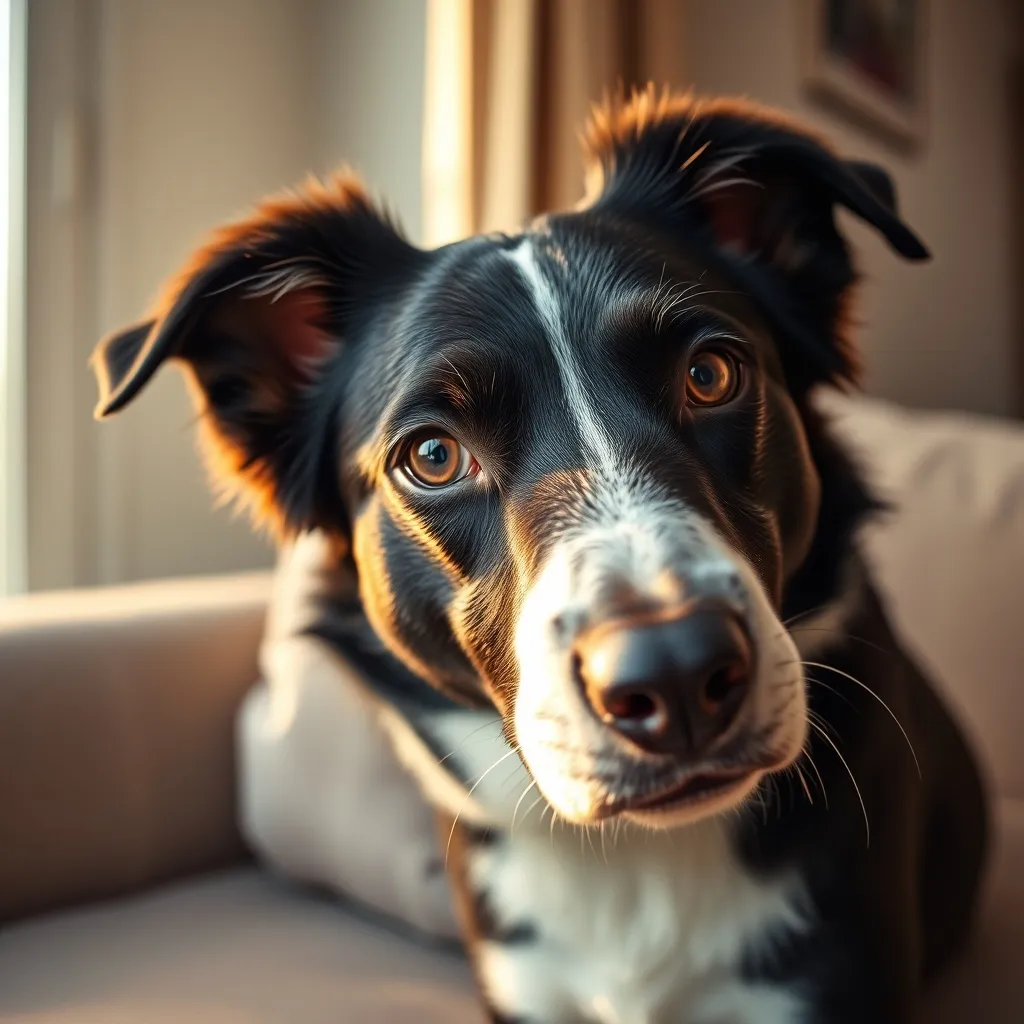
Dogs have remarkably expressive faces, and the mouth area is where some of the most nuanced signals appear. A relaxed, slightly open mouth with the tongue loosely hanging out is the classic “happy dog” face. The lips are soft, the jaw is loose and there is no tension around the muzzle.
When a dog’s mouth closes tightly and the lips draw forward to reveal the front teeth, this is a clear warning. Known as a short-lip retraction, it often precedes a snap. A longer lip retraction that reveals the canine teeth and wrinkles the muzzle is a full snarl, and it means the dog is ready to bite if pushed further.
Subtler mouth signals include:
- Lip licking (quick tongue flick over the nose): a calming signal indicating mild stress or appeasement
- Yawning outside of tiredness: a displacement behavior showing tension or discomfort
- Panting when not hot or exercised: a sign of anxiety or pain
- Chattering teeth: often linked to excitement, anticipation or, in some cases, anxiety
One scenario where I see a lot of mouth-based signals is during puppy teething. Puppies who are in pain from erupting teeth may lip-lick, pant and yawn more frequently. Providing appropriate toys for chewing and enrichment can reduce this stress considerably.
Posture, Weight Distribution and Overall Body Shape
While individual signals from the tail, ears, eyes and mouth are important, it is the overall posture that gives you the most complete picture. I teach my clients to take a “full-body snapshot” before interpreting any single signal.
A relaxed, confident dog carries its weight evenly across all four legs. The body is loose, the head is at a natural height and the movements are fluid. Compare this to a fearful dog, which will shift its weight onto the back legs, lower its body, tuck its tail and potentially crouch or cower. The dog is literally preparing to flee.
An assertive or offensive dog does the opposite: weight shifts forward onto the front legs, the body appears taller, the head is raised and the hackles (piloerection along the spine and shoulders) may be raised. Raised hackles do not always mean aggression; they can indicate excitement or arousal too. Think of it like goosebumps in humans. Context determines the meaning.
The PDSA’s canine ladder of communication provides an excellent visual framework showing how body language escalates from subtle calming signals at the bottom to overt aggression at the top. Understanding this ladder helps you see that a bite is never the first signal; it is the last one in a long chain of warnings.
Key posture signals to watch:
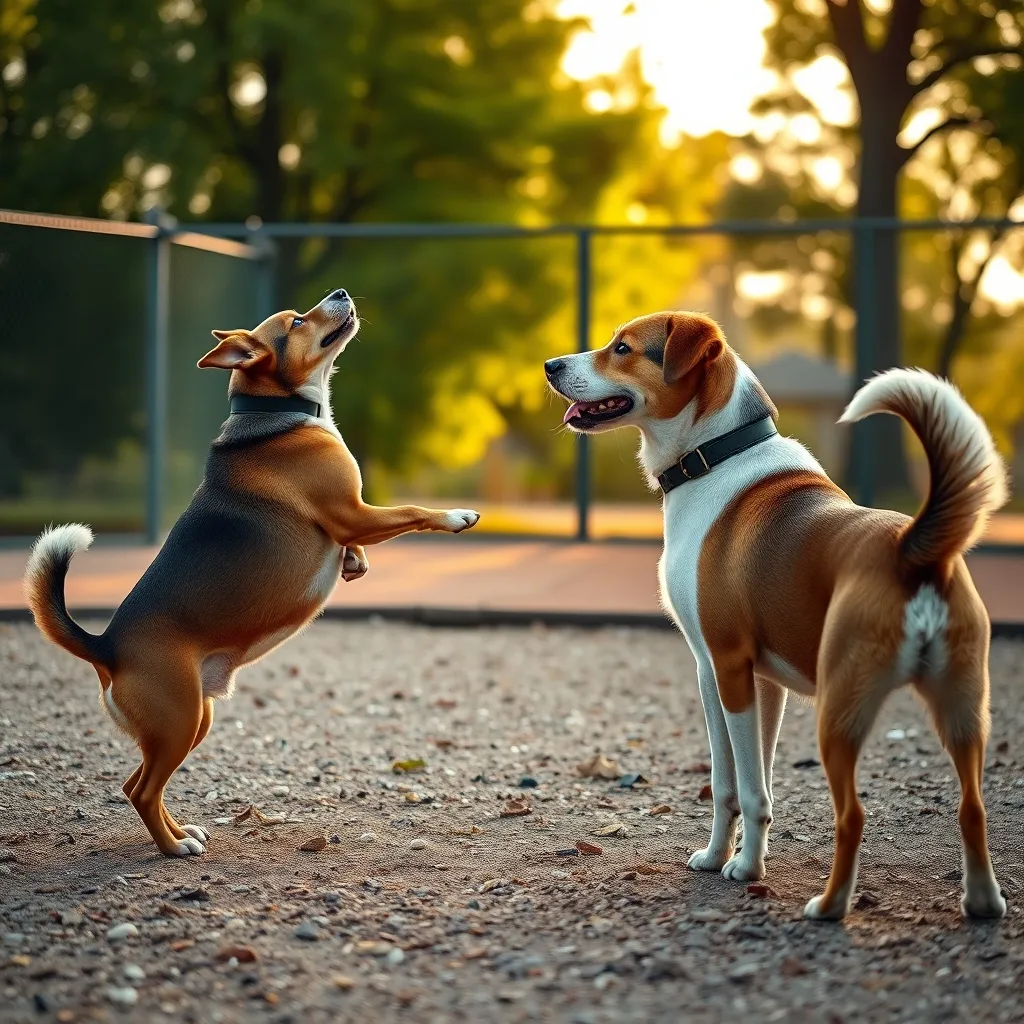
- Play bow (front legs extended, chest lowered, rear up): an invitation to play; one of the most universally understood signals
- Freezing (sudden stillness): the dog is deciding its next move; this can precede a bite or simply indicate uncertainty
- Rolling over: can signal submission and trust, but also appeasement under pressure; watch the rest of the body
- Shake-off (full body shake when not wet): a reset behavior after a stressful moment; the dog is releasing tension
Calming Signals and Stress Indicators
Norwegian dog trainer Turid Rugaas popularized the term “calming signals” to describe the subtle behaviors dogs use to prevent conflict and communicate peaceful intent. As a force-free trainer, I consider her work foundational to everything I do. These signals include:
- Turning the head away from a perceived threat
- Turning the entire body sideways to appear non-threatening
- Sniffing the ground when there is nothing obvious to smell
- Walking in a curve rather than directly toward another dog
- Sitting or lying down when another dog approaches too fast
- Slow, exaggerated movements when approaching a nervous dog
These signals are a dog’s first line of communication. When we ignore them, or worse, when we punish them (for example, forcing a dog to “face” what scares it), we remove the dog’s ability to communicate peacefully. This is how dogs learn that the only way to be heard is to escalate to growling, snapping or biting.
Stress indicators go beyond calming signals. They are signs that the dog’s nervous system is overwhelmed. Watch for:
- Excessive drooling outside of food contexts
- Sweaty paw prints on hard floors (dogs sweat through their paw pads)
- Dandruff-like flaking that appears suddenly during a stressful event
- Dilated pupils combined with panting
- Refusal to eat (even high-value treats) in a situation where the dog normally eats
If your dog is refusing food during training or in a new environment, that is a clear sign that the stress level is too high for learning to occur. This is especially relevant if you are dealing with excessive barking or working through reactive behavior. You will need to increase distance from the trigger or reduce the intensity of the situation before progress can happen.
Common Body Language Clusters
I always emphasize that reading dog body language accurately means looking at the whole picture. A single signal taken in isolation can be misleading. A yawn might mean the dog is tired. But a yawn combined with lip licking, pinned ears and a lowered body? That dog is stressed. Here are the most common clusters I see in my work:
Happy and relaxed: Loose, wiggly body. Tail at neutral height with wide, sweeping wag. Soft eyes with slow blinks. Mouth relaxed and slightly open. Ears in a neutral position. Weight evenly distributed. The dog approaches with a curved body path.
Playful and excited: Play bow. Bouncy, exaggerated movements. Fast tail wag, often circular (the “helicopter tail”). Wide open mouth, sometimes with “play face” (pulled-back lips revealing teeth but without tension). High-pitched barks or playful growls. Weight shifts rapidly between front and back.
Fearful and anxious: Body lowered or crouched. Tail tucked. Ears pinned back. Whale eye or averted gaze. Lip licking, yawning, panting. Weight shifted to the rear legs. May freeze, then attempt to flee. Refusing treats. Sweaty paw prints.
Aggressive (offensive): Forward weight distribution. Tall, stiff posture. Hackles raised. Hard, fixed stare. Tail high and stiff with a tight, rapid wag. Lips drawn back in a snarl. Ears pricked forward. Low, rumbling growl. The dog may lunge or charge.
Aggressive (defensive): Similar to the fearful cluster but the dog has decided to fight rather than flee. Body may alternate between crouching and lunging. Tail tucked but teeth bared. Ears pinned back. Snapping or biting may be preceded by a freeze. This dog feels cornered and is extremely dangerous.
According to the American Kennel Club’s training resources on reading dog body language, distinguishing between offensive and defensive aggression is critical because the management strategies differ significantly.
How to Practice Reading Your Dog
Like any skill, reading dog body language improves with deliberate practice. Here is the system I recommend to my clients:
Step 1: Observe at home first. Before you try to read your dog in a high-stakes environment like the dog park, practice in your living room. Watch your dog during everyday moments: napping, eating, greeting family members, hearing a noise outside. Note their baseline posture, ear position, tail carriage and facial expression when they are clearly relaxed. This gives you a reference point for comparison.
Step 2: Film short videos. Our brains process body language in real time, which means we often miss subtle signals. Recording your dog for 30 to 60 seconds during different activities and then replaying the footage in slow motion is one of the most effective learning tools I know. You will catch micro-expressions you never noticed before.
Step 3: Narrate what you see. When you are out on a walk or at the park, quietly describe your dog’s body language to yourself. “Ears forward, tail high, weight shifting forward, he’s focused on that squirrel.” This forces you to actively observe rather than passively watch. If you are working on leash training, this practice will help you anticipate pulling, lunging or freezing before it happens.
Step 4: Learn your dog’s individual quirks. Every dog has personal signals that fall outside the textbook. One of my own dogs does a very specific ear twitch before she decides to chase a squirrel. Another client’s Labrador always licks his lips exactly three times before he whines at the door. These individual patterns are just as valuable as the universal ones.
Step 5: Practice with other dogs. Once you feel confident reading your own dog, start observing other dogs. Visit a dog park and sit on a bench. Watch interactions from a distance and try to predict what will happen next based on body language alone. This exercise builds your observational speed and helps you generalize the skills beyond your own pet.
If you are a new dog owner, pairing body language observation with other foundational skills like understanding proper feeding portions and keeping up with your puppy’s vaccination schedule will set you and your dog up for success from day one.
Key Points
- Always evaluate tail height, speed, stiffness and direction together rather than assuming any wag means happiness
- Watch for whale eye (visible sclera) as an early warning that your dog is uncomfortable and may escalate
- Read body language in clusters of 3 or more signals rather than relying on any single indicator
- Practice at home by filming your dog and replaying footage in slow motion to catch subtle signals you miss in real time
- Never punish calming signals like growling, lip licking or turning away; these are your dog’s way of communicating before resorting to aggression
Frequently Asked Questions
What is the 7 7 7 rule for dogs?
The 7 7 7 rule is a guideline suggesting that a newly adopted dog needs roughly 7 days to decompress, 7 weeks to learn your routine and 7 months to feel fully settled. During each phase the dog’s body language shifts noticeably. In the first week you will see a lot of stress signals such as tucked tails, pinned ears, lip licking and avoidance. By seven weeks the dog begins to show more relaxed postures. By seven months you should see confident, loose body language in most everyday situations.
How do dogs say “I love you” through body language?
Dogs express affection through several body language signals. Soft, relaxed eye contact with slow blinks (sometimes called “soft eyes”) mirrors the bonding gaze seen between parents and infants. Leaning their body weight into you, a loose full-body wiggle when greeting you, resting their chin on your lap and exposing their belly in a relaxed posture are all signals of trust and attachment. A gentle, sweeping tail wag at a neutral height while the rest of the body stays loose is one of the clearest signs your dog is genuinely happy to be near you.
What are the most common dog body language signs of stress?
The most common stress signals are lip licking, yawning, panting when not hot, whale eye, pinned-back ears, a tucked tail, freezing, turning away and refusing food. These are often called calming signals because the dog is attempting to self-soothe or communicate discomfort. If you see three or more of these signals at the same time, your dog is telling you that the situation is too much and you should calmly remove them from the stressor.
How do you say “I’m sorry” in dog language?
Dogs do not process apologies the way humans do, but you can communicate non-threatening intent through your own body language. Avoid direct eye contact, turn your body slightly sideways, lower yourself to their level and speak in a soft, calm voice. These actions mirror the calming signals dogs use with each other. Offering a treat from an open palm and allowing the dog to approach you on their own terms also communicates that you are safe and non-threatening. The key is patience; let the dog decide when they are ready to re-engage.
Why does my dog show its teeth but not growl?
This could be either a submissive grin or a silent warning, and context determines which one. A submissive grin features pulled-back lips, a low or wiggly body, squinting eyes and usually appears during greetings. It is a sign of appeasement and is harmless. A silent teeth display with a stiff body, hard eyes, forward weight and raised hackles is a serious warning. The dog has skipped the growl, which sometimes happens in dogs who have been punished for growling in the past. This makes them more unpredictable, so consult a certified professional trainer if you see this pattern.
Can dog body language vary between breeds?
Yes. Breed anatomy significantly affects how body language presents. Brachycephalic breeds (flat-faced dogs like Bulldogs and Pugs) have limited facial expressiveness. Breeds with curled tails (Akitas, Huskies) cannot lower their tails the way a Labrador can, so fear must be read from other signals. Heavily coated breeds may hide hackle raising. Cropped ears eliminate a major communication channel entirely. Owners of these breeds need to rely more heavily on overall posture, weight distribution and eye signals to read their dog accurately.