
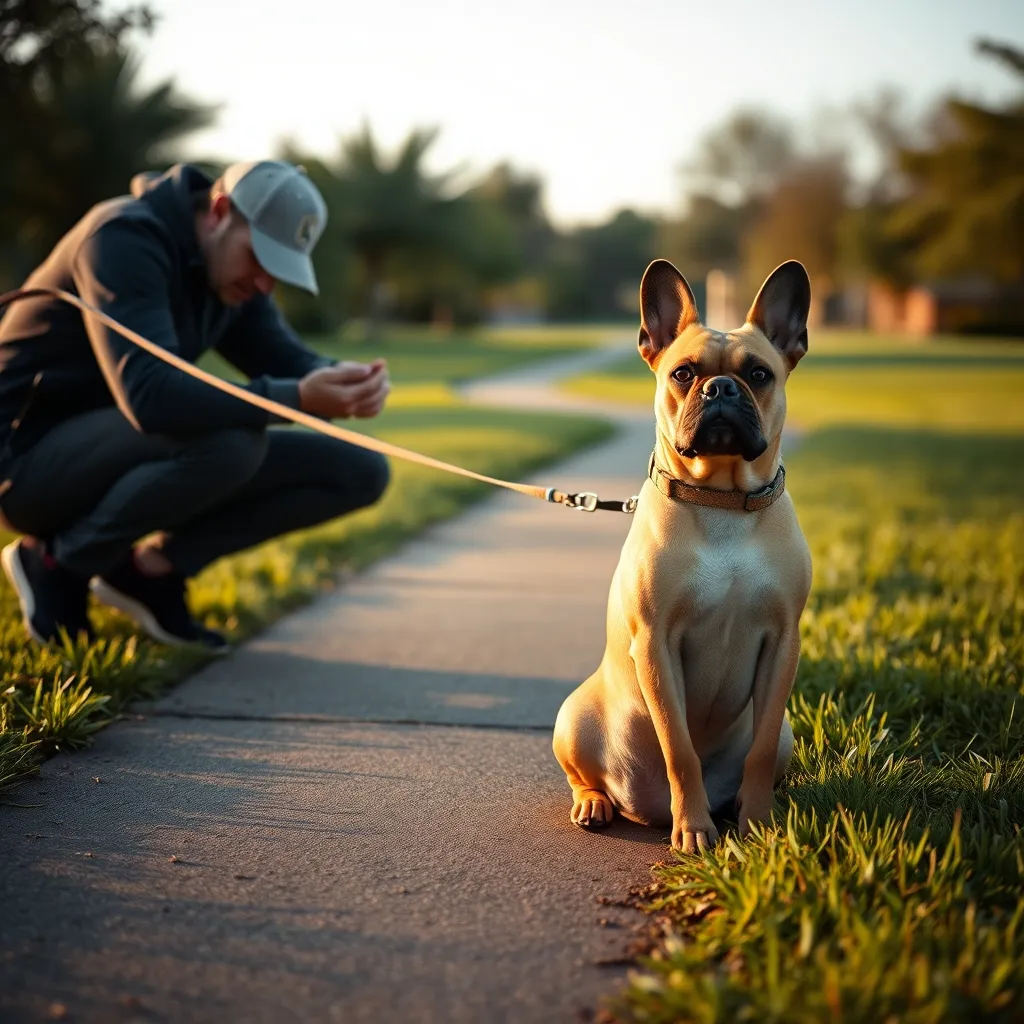
Key Takeaways
- French Bulldog dog aggression is almost always fear-based or pain-related, not a sign of a “dominant” personality
- Up to 72% of aggression cases in brachycephalic breeds have an underlying medical component, according to veterinary behaviour research
- Early warning signs like lip licking, whale eye and body stiffening appear seconds before a bite and should never be ignored
- Force-free counter-conditioning can produce measurable improvement within 4 to 6 weeks when applied consistently
- Neutering alone reduces aggression in only about 25 to 30% of male dogs; it is not a standalone solution
- A veterinary behaviour consultation is recommended whenever aggression escalates to biting or causes injury
In This Guide
- Understanding French Bulldog Dog Aggression
- Common Causes of Aggression in French Bulldogs
- Recognising the Warning Signs Early
- Pain and Medical Triggers
- How to Stop French Bulldog Aggression Towards Other Dogs
- Managing Aggression Towards Humans and Strangers
- Neutering and French Bulldog Aggression
- When to Call a Professional
I have worked with hundreds of French Bulldogs over my decade-plus career as a Certified Professional Dog Trainer, and I can tell you this: french bulldog dog aggression is one of the most misunderstood behaviour problems in the breed. Frenchies are consistently ranked among the most popular companion dogs in the world, yet many owners are caught off guard when their affectionate little clown suddenly lunges, snaps or growls at another dog or a stranger. If that sounds familiar, you are not alone, and the situation is almost certainly more fixable than you think.
In this guide, I will walk you through exactly why French Bulldogs develop aggressive behaviour, how to spot the earliest warning signs, and the practical, force-free steps I use with my own clients to turn things around. Whether your Frenchie is snarling at dogs on walks or guarding their food bowl from your toddler, the approach I outline here will give you a clear path forward.
Understanding French Bulldog Dog Aggression
First, let me be absolutely clear: French Bulldogs are not an inherently aggressive breed. They were originally bred as companion dogs in 19th-century France and England, selected specifically for a sociable, easygoing temperament. The American Kennel Club breed standard describes them as adaptable, playful and alert. So when a Frenchie starts showing aggression, something has gone wrong in the environment, the socialisation history, or the dog’s physical health.
Aggression in dogs is not a character flaw. It is a communication strategy. When a French Bulldog growls, snaps or bites, they are telling you they feel threatened, in pain, or overwhelmed. Our job as owners and trainers is to listen to that message and address the root cause, not punish the messenger.
I often see owners confuse reactivity with true aggression. A reactive Frenchie barks and lunges on the lead because they are frustrated or frightened. True aggression involves a deliberate intent to cause harm, and it is far less common. Both problems are serious, both require professional guidance, but the training approach differs. Understanding where your dog falls on this spectrum is the first step toward a solution. If you are also dealing with lead-related issues, my colleague’s breakdown of leash training methods offers additional context.

Common Causes of Aggression in French Bulldogs
In my experience, french bulldog dog aggression almost always traces back to one or more of the following triggers. Let me walk through each one so you can start narrowing down what is happening with your own dog.
Fear and Poor Socialisation
This is the number one cause I see in my practice. French Bulldogs who were not properly socialised between 3 and 14 weeks of age often develop fear-based aggression as adolescents or adults. A puppy who never encountered other dogs, unfamiliar people, or new environments during that critical window learns to treat novelty as a threat. The aggression you see on walks is their way of saying, “Stay away from me.”
Pandemic puppies are especially vulnerable. Many Frenchies purchased between 2020 and 2022 missed out on puppy classes, park visits and normal household foot traffic. I am still seeing the fallout from that period in my client base today.
Resource Guarding
French Bulldogs can be surprisingly possessive over food, toys, sleeping spots and even their favourite human. Resource guarding is a normal canine behaviour that becomes a problem when it escalates to snapping or biting. It is not about dominance; it is about anxiety over losing something valuable.
Frustration and Barrier Reactivity
A Frenchie who adores other dogs at the dog park may turn into a snarling mess when they see a dog from behind a fence or at the end of a tight lead. This is barrier frustration, and it mimics aggression so convincingly that many owners (and some trainers) mistake it for the real thing. The fix is entirely different from treating fear-based aggression.
Redirected Aggression
When a French Bulldog is aroused by one stimulus but cannot reach it, they may redirect that energy onto the nearest target, which could be your other dog or even your hand. This is especially common in multi-dog households when one dog reacts to a delivery driver at the window.
Territorial and Protective Behaviour
Some Frenchies become overly protective of their home or their owner. While a certain amount of alerting is normal, escalation to growling, lunging or biting requires intervention.
| Type of Aggression | Common Triggers | Body Language Clues | Typical Onset Age |
|---|---|---|---|
| Fear-based | Unfamiliar dogs, strangers, new environments | Cowering, tucked tail, whale eye, then lunge | 6 to 18 months |
| Resource guarding | Food bowl, toys, beds, owner proximity | Stiffening, hard stare, low growl | Any age |
| Barrier frustration | Lead, fence, car window, baby gate | Intense pulling, high-pitched barking, spinning | 6 to 12 months |
| Pain-related | Touch, movement, being picked up | Sudden snap, yelp, avoidance of contact | Any age |
| Territorial | Visitors entering home, doorbell, delivery drivers | Charging at door, hackles raised, barking | 1 to 3 years |
| Redirected | High-arousal moments, restrained access to stimulus | Sudden bite toward nearest person or animal | Any age |
Recognising the Warning Signs Early
One of the most dangerous myths in dog training is that aggression “comes out of nowhere.” It never does. Every bite I have ever investigated was preceded by a ladder of escalating warning signals that the dog’s humans missed or misread. Learning to read your French Bulldog’s body language is the single most important skill I can teach you.
Here is the escalation ladder, from subtlest to most severe:
- Displacement behaviours: yawning, lip licking, sniffing the ground when it is clearly not interesting
- Avoidance: turning the head away, moving behind your legs, trying to increase distance
- Freezing: the dog goes completely still. This is the moment many owners miss. A still dog is not a calm dog; they are deciding what to do next
- Hard stare: direct, unblinking eye contact with dilated pupils
- Whale eye: the whites of the eyes become visible as the dog turns their head but keeps their gaze locked on the threat
- Growling: this is a gift. A dog who growls is communicating before they escalate. Never punish a growl
- Air snap: a deliberate bite that misses on purpose. This is the dog’s final warning
- Bite: contact with skin, varying in intensity from an inhibited nip to a full-pressure bite
If you learn to spot steps one through three and immediately create distance or remove the trigger, you can prevent the vast majority of aggressive incidents. I teach all my clients to play “spot the signal” games by watching short videos of dogs interacting and identifying these cues in real time. The ASPCA’s aggression resource page is an excellent starting point for understanding these patterns more deeply.
Pain and Medical Triggers

This is the section I wish every Frenchie owner would read twice. French Bulldogs are predisposed to several painful health conditions that can directly cause or worsen aggressive behaviour. Before you invest a single penny in training, your dog needs a thorough veterinary examination.
The breed’s brachycephalic anatomy means they are more likely to suffer from:
- Intervertebral disc disease (IVDD): spinal pain that can make a dog snap when touched, lifted or jostled. Early signs include reluctance to jump, a hunched posture and sensitivity along the back
- Hip dysplasia: joint pain that worsens with exercise and can make a Frenchie irritable after walks
- Brachycephalic obstructive airway syndrome (BOAS): chronic breathing difficulty that creates physiological stress and lowers the dog’s threshold for reactive behaviour
- Skin fold dermatitis: painful infections in the facial wrinkles that can make head handling extremely unpleasant
- Ear infections: French Bulldogs’ narrow ear canals trap moisture, and chronic otitis is a common hidden pain source
I have lost count of the number of “aggressive” Frenchies I have been called in to assess, only to find that the dog was in undiagnosed pain. Once the medical issue was treated, the aggression resolved entirely, sometimes within days. If your French Bulldog’s aggression appeared suddenly or worsened without an obvious trigger, schedule a vet visit before anything else. Consider hydrotherapy for dogs as a gentle way to manage pain while you work on behaviour, especially for Frenchies with joint or spinal issues.
How to Stop French Bulldog Aggression Towards Other Dogs
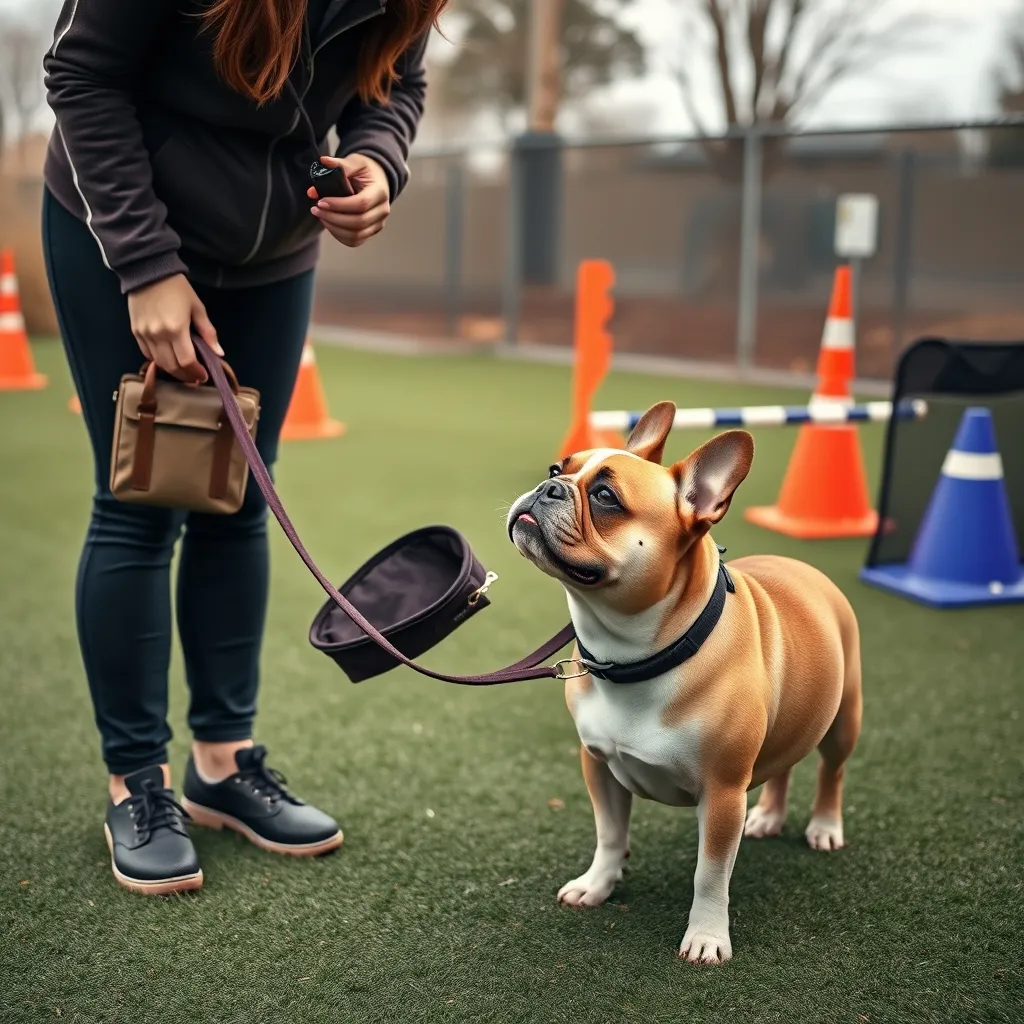
Dog-directed aggression is the complaint I hear most often from French Bulldog owners. The good news is that it responds well to systematic desensitisation and counter-conditioning when you follow a structured plan. Here is the protocol I use with my clients.
Step 1: Identify the Threshold Distance
Take your Frenchie to a location where you can see other dogs at a distance. Note the exact point at which your dog first shows any stress signal: a head turn, a stiffened body, fixated staring. That is your starting distance. For most of my Frenchie clients, this is somewhere between 15 and 30 metres.
Step 2: Classical Counter-Conditioning
Every time your dog notices another dog at or beyond threshold distance, immediately feed a high-value treat (roast chicken, cheese, freeze-dried liver). The sequence is: dog appears, treat appears. Dog disappears, treats stop. You are building an automatic emotional association: other dog equals wonderful things happen.
Do not ask for any obedience commands during this phase. You are changing how your dog feels, not how they perform. This is purely classical conditioning, the same principle Pavlov demonstrated with his famous experiment.
Step 3: Gradual Distance Reduction
Over 4 to 6 weeks, gradually decrease the distance between your Frenchie and the trigger dogs. Only reduce the distance when your dog is consistently offering relaxed body language and looking to you expectantly at the current distance. If your dog reacts, you have moved too fast. Back up and rebuild.
Step 4: Introduce Controlled Parallel Walks
Once your Frenchie can remain relaxed at closer distances, begin parallel walking with a known, calm helper dog. Both dogs walk in the same direction with a buffer of at least 3 metres between them. Over multiple sessions, you can gradually reduce the gap. This technique builds positive associations through shared movement without the pressure of face-to-face greetings.
Step 5: Structured Greetings (If Appropriate)
Not every dog needs to greet other dogs. Many Frenchies do best as “look but don’t touch” dogs, and that is perfectly acceptable. If your dog does show genuine interest in greeting after completing the previous steps, keep initial interactions to three seconds maximum, then cheerfully call your dog away and reward.
For owners who want to understand how professional training costs break down, our guide to obedience class pricing provides useful benchmarks. A reactive dog programme typically costs more than basic obedience due to the smaller class sizes and specialised instruction involved.
Managing Aggression Towards Humans and Strangers
When a French Bulldog shows aggression towards people, the stakes are higher and the management needs to be tighter. Human-directed aggression can result in a bite report, a liability claim, or worse. Here is how I approach it.
Safety First: Management Tools
While you work on the underlying behaviour, you need to prevent rehearsal. Every time your dog practises the aggressive behaviour, the neural pathway gets stronger. Use these management strategies:
- A well-fitted basket muzzle for any situation where a bite is possible. Muzzle training should be done gradually using positive association so the dog is comfortable and can pant, drink and take treats while wearing it
- Baby gates to prevent your Frenchie from rushing the front door when guests arrive
- A lead and harness during all outdoor excursions, even in your own garden if there are neighbours your dog reacts to
- Clear household rules so that all family members respond consistently to early warning signals
The Behaviour Modification Protocol
The same principles of desensitisation and counter-conditioning apply. The key difference is that you will need human helpers who can follow instructions precisely. I typically recruit friends or family members who are willing to act as “strangers” in controlled set-ups.
Begin with the helper at a distance where your Frenchie notices but does not react. Feed high-value treats. Over sessions, reduce the distance. Eventually, the helper can begin tossing treats toward (not to) the dog, building an association between unfamiliar people and good outcomes.
Never force your French Bulldog to interact with someone they are uncomfortable around. Flooding, which means exposing a fearful dog to the full intensity of their trigger, almost always makes aggression worse. I have seen far too many cases where well-meaning owners invited a crowd over to “get the dog used to people,” only to end up with a dog who is now aggressive in their own home. If you are considering pet insurance to cover potential incidents, our breakdown of what dog insurance actually covers is worth reading.
Neutering and French Bulldog Aggression
This question comes up in nearly every consultation I do with Frenchie owners. “Will neutering fix the aggression?” The short answer is: probably not on its own.
Research shows that castration reduces inter-male aggression in approximately 25 to 30% of cases, and the effect is strongest when the aggression is clearly linked to sexual competition. For fear-based aggression, neutering can actually make things worse by removing the calming influence of testosterone on an already anxious dog.
I always recommend discussing the timing and necessity of neutering with your veterinarian in the context of your dog’s specific behaviour profile. A chemical castration implant (such as Suprelorin) can provide a reversible trial period so you can assess the behavioural impact before committing to surgery. For a deeper dive into the evidence, our articles on whether neutering helps with aggression and castration and canine aggression cover the research thoroughly.
When to Call a Professional
I am a firm believer in empowering owners to handle as much as possible themselves. But aggression is the one area where DIY training can go wrong fast. Here are the situations where I strongly recommend bringing in a qualified professional:
- Your French Bulldog has bitten a person or another dog and broken skin
- The aggression is escalating in frequency or intensity despite your efforts
- You feel unsafe handling your dog in certain situations
- There are children under 10 in the household
- The aggression appeared suddenly with no obvious environmental change
- You have been told to use punishment-based methods (prong collars, e-collars, alpha rolls) and want a science-based alternative
When choosing a trainer or behaviourist, look for credentials such as CPDT-KA, CAAB, or veterinary behaviourist (Dip ACVB). Ask about their approach to aggression. If they talk about dominance, pack leadership, or “showing the dog who’s boss,” walk away. Modern behavioural science has thoroughly debunked the dominance model, and punishment-based methods are especially dangerous with aggressive dogs because they suppress warning signals without changing the underlying emotion, making a bite more likely, not less.
For those managing both aggression and the costs that come with professional help, understanding regional pet insurance options may help offset veterinary behaviourist fees, which can run from $200 to $500 per session.
If your Frenchie has also been diagnosed with digestive issues, addressing gut health alongside behaviour modification is important, since chronic gastrointestinal discomfort is another hidden pain trigger that can lower a dog’s tolerance threshold.
Key Points
- Book a full veterinary examination before starting any behaviour modification to rule out pain-related causes
- Learn to read the escalation ladder of warning signals, especially freezing, whale eye and lip licking
- Use classical counter-conditioning at your dog’s threshold distance, pairing the sight of triggers with high-value treats for 4 to 6 weeks
- Never punish growling; instead, increase distance from the trigger and reward calm behaviour
- Seek a CPDT-KA or veterinary behaviourist if the aggression involves biting, escalation, or if children are in the home
Frequently Asked Questions
Is it common for French Bulldogs to be aggressive?
French Bulldogs are not considered an aggressive breed overall. However, individual Frenchies can develop aggressive behaviour due to poor socialisation, underlying pain, fear, or resource guarding. Studies suggest that small and brachycephalic breeds are actually reported for aggression more often than many larger breeds, partly because owners are less likely to invest in early training. With proper socialisation and force-free behaviour modification, most cases of french bulldog dog aggression can be significantly improved or resolved.
The earliest signs are subtle and often missed. Watch for lip licking, yawning out of context, turning the head away, body stiffening and whale eye (showing the whites of the eyes). These displacement and avoidance behaviours appear well before growling or snapping. If you notice your Frenchie freezing and staring at a trigger, that is a critical warning sign that the dog is about to escalate.What are the first signs of aggression in a French Bulldog?
Neutering alone resolves aggression in only about 25 to 30% of cases, primarily those driven by inter-male sexual competition. For fear-based aggression, which is the most common type in French Bulldogs, neutering may actually increase anxiety by removing testosterone’s calming effect. A chemical castration implant offers a reversible way to test the behavioural impact before committing to surgery. Read more in our guide on whether neutering reduces aggression.Can neutering stop French Bulldog aggression?
Sudden onset aggression in a previously friendly Frenchie is almost always linked to undiagnosed pain or illness. French Bulldogs are prone to IVDD (spinal disc disease), hip dysplasia, ear infections and skin fold dermatitis, all of which cause significant discomfort. A full veterinary examination, including orthopaedic and neurological assessment, should be your first step. Hormonal changes, a traumatic experience, or a change in household dynamics can also trigger sudden behavioural shifts.Why is my French Bulldog suddenly aggressive?
With consistent, daily counter-conditioning work, most owners see measurable improvement within 4 to 6 weeks. However, a complete behaviour change typically takes 3 to 6 months, and some dogs require ongoing management for life. The timeline depends on the severity, duration and root cause of the aggression, as well as how consistently the owner follows the training plan. Pain-related aggression can sometimes resolve within days once the medical issue is treated.How long does it take to fix aggression in a French Bulldog?
True rage syndrome (also called idiopathic aggression) is extremely rare and involves sudden, explosive, unprovoked attacks with no identifiable trigger, followed by the dog appearing confused or disoriented. The dog’s pupils often dilate fully and the episode ends as abruptly as it began. This condition has a suspected genetic component and has been documented primarily in Springer Spaniels and Cocker Spaniels. If you suspect rage syndrome in your Frenchie, consult a board-certified veterinary behaviourist immediately, as the diagnosis requires ruling out all other medical and behavioural causes first.What are the signs of rage syndrome in French Bulldogs?