
Key Takeaways
- Most puppies can begin potty training as early as 8 weeks old, but full reliability typically takes 4 to 6 months of consistent practice
- A young puppy can hold its bladder for roughly one hour per month of age, so a 3-month-old needs a trip outside every 3 hours at minimum
- Rewarding your puppy within 3 seconds of eliminating outdoors is the single most effective way to build a lasting habit
- Crate training reduces potty training time by up to 50 percent when used correctly, because puppies instinctively avoid soiling their sleeping area
- Punishing accidents after the fact has zero training value and can create anxiety that actually slows progress
- Establishing a consistent feeding schedule makes elimination patterns predictable, turning potty training from guesswork into a reliable routine
In This Guide
- Why Potty Training a Puppy Early Matters
- Essential Supplies You Will Need
- Building a Potty Training Schedule
- The Step-by-Step Potty Training Method
- How Crate Training Supports Potty Training
- Potty Training Timelines by Age and Breed Size
- Common Potty Training Mistakes to Avoid
- Handling Accidents the Right Way
- Night-Time Potty Training
- When to Seek Professional Help
Potty training a puppy is one of the very first challenges every new dog owner faces, and I know from a decade of working with families in Austin that it can feel completely overwhelming. You are not alone if you have found yourself standing in the garden at 2 a.m. in your pyjamas, wondering whether your puppy will ever “get it.” The good news is that with the right method, a solid schedule and a generous supply of patience, virtually every healthy puppy can learn where to go. In this guide, I will walk you through the exact process I use with my clients, from the first day home to full reliability.
Why Potty Training a Puppy Early Matters
Puppies begin forming habits from the moment they arrive in your home. Every time a puppy eliminates indoors without consequence, that behaviour gets a little more ingrained. Conversely, every successful trip outside builds the neural pathways that tell your puppy, “This is where I go.” Starting potty training on day one is not about being strict; it is about giving your puppy the clearest possible information about what you expect.
Research from the American Veterinary Medical Association (AVMA) confirms that early positive-reinforcement training leads to better long-term behavioural outcomes. Puppies who learn house manners early are less likely to develop anxiety-related elimination problems later. If you have just welcomed a new puppy, pair this guide with our first 48 hours survival guide to cover all your bases during those critical early days.
I also want to be honest: potty training is a marathon, not a sprint. Most puppies need between 4 and 6 months to become fully reliable, and some breeds take even longer. Setting realistic expectations from the start will save you a great deal of frustration.
Essential Supplies You Will Need
Before you begin, gather the following items. Having everything ready means you can respond quickly when your puppy signals that it is time to go.
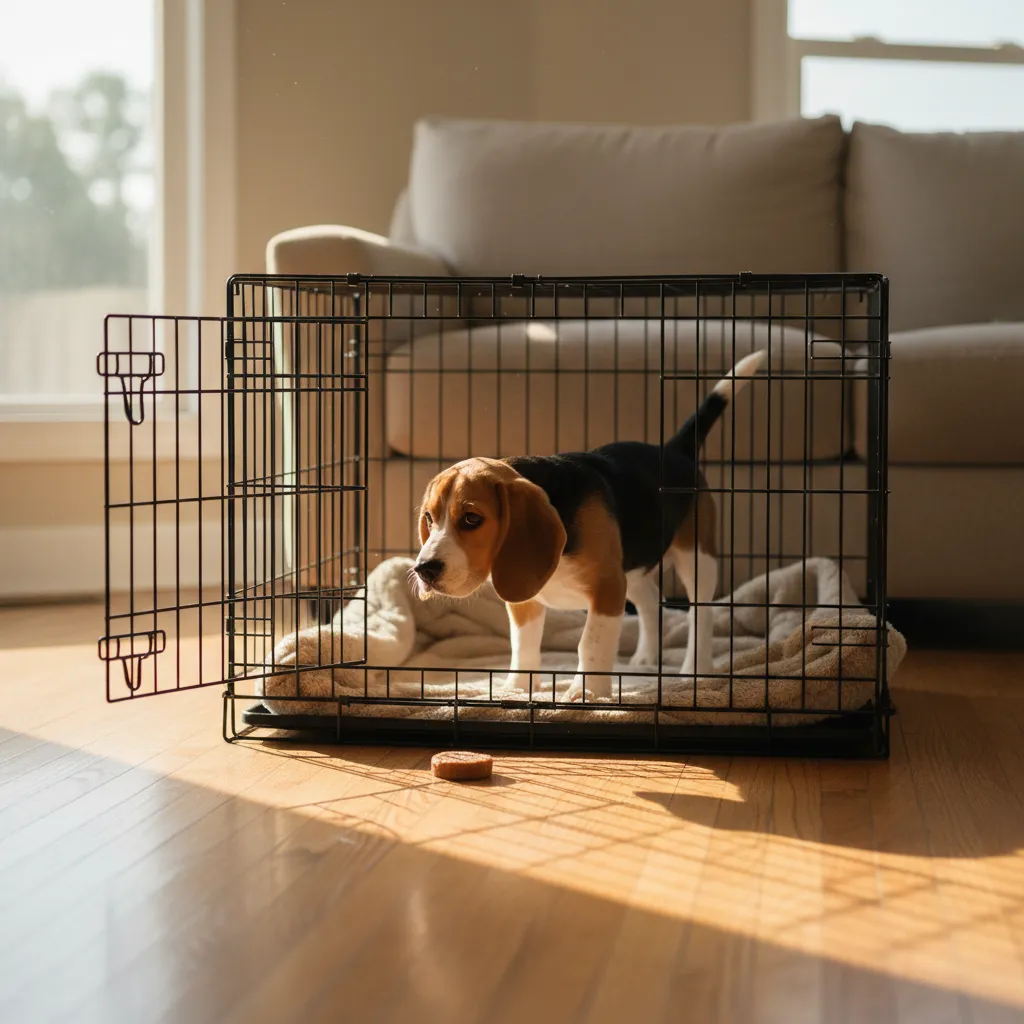
- An appropriately sized crate. The crate should be just large enough for your puppy to stand, turn around and lie down. Too much space defeats the purpose, as your puppy may use one end as a toilet. Many crates come with a divider panel you can adjust as your puppy grows. For help choosing the right bed to place inside, see our guide to choosing the right dog bed.
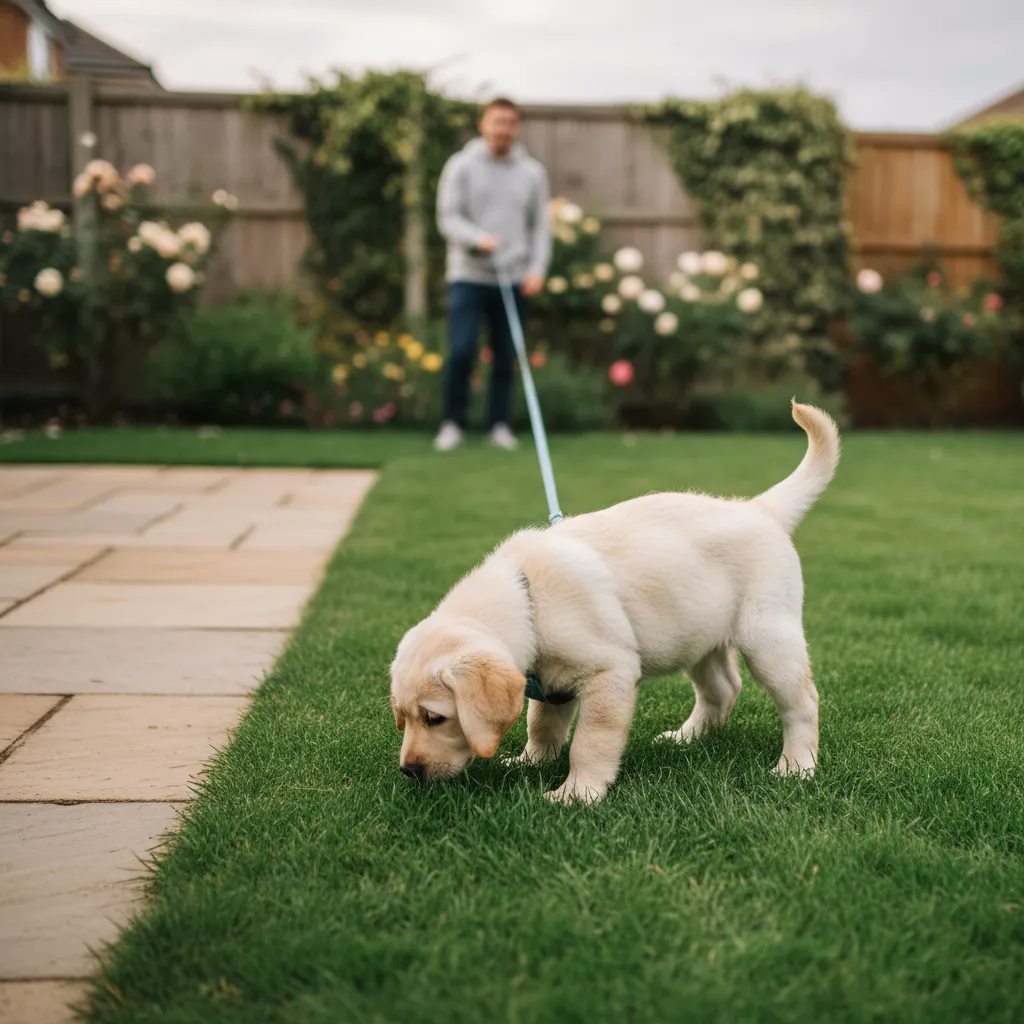
- A lead and collar or harness. You will use the lead to guide your puppy to the designated potty spot, even in a fenced garden. Keeping your puppy on lead prevents wandering and sniffing distractions.
- High-value training treats. Small, soft treats that your puppy can eat in one second are ideal. I recommend treats no larger than the tip of your little finger.
- Enzymatic cleaner. Standard household cleaners do not fully break down urine proteins. Enzymatic cleaners eliminate the scent at a molecular level, removing the invisible “Go here again” sign your puppy’s nose detects.
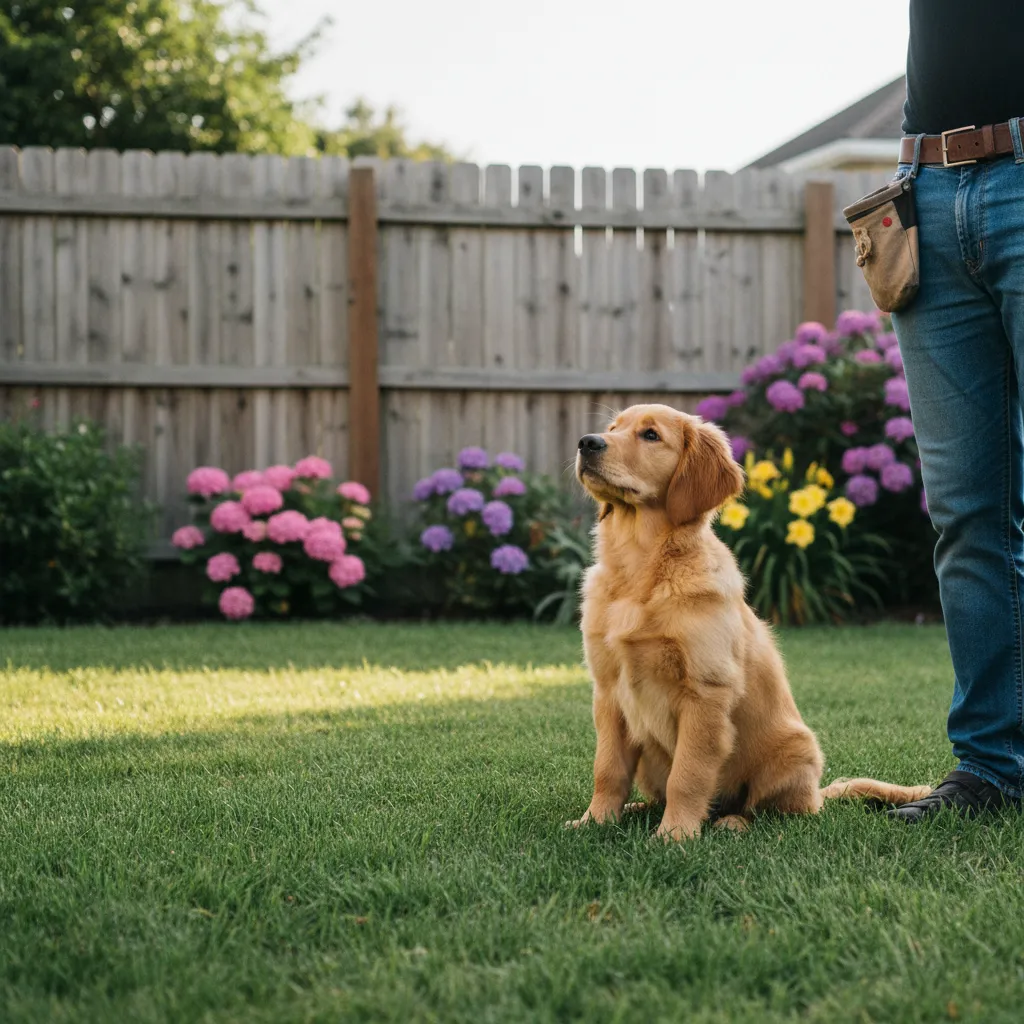
- A treat pouch. Timing matters enormously in potty training. Wearing a treat pouch means rewards are always within reach.
- Puppy pads (optional). I generally prefer to skip pads and go straight to outdoor training, but they can be useful for flat dwellers or owners who cannot get outside quickly.
Building a Potty Training Schedule
Consistency is the single most powerful tool in potty training a puppy. Dogs are creatures of routine, and a predictable schedule makes elimination patterns predictable too. Here is the framework I give every client.
The Golden Rule: One Hour Per Month of Age
A puppy’s bladder capacity is directly linked to age. As a general rule, a puppy can hold its bladder for one hour per month of age, up to about 8 hours maximum for an adult dog. So a 2-month-old puppy needs to go outside at least every 2 hours, a 4-month-old every 4 hours, and so on. This is a maximum; many puppies need to go more frequently, especially during play or after meals.
High-Priority Potty Times
Regardless of age, always take your puppy outside at these moments:
- Immediately after waking up (morning and naps)
- Within 5 to 15 minutes after eating or drinking
- After every play session or period of excitement
- After being released from the crate
- Before bedtime
- Any time your puppy sniffs the floor, circles or moves towards the door
I recommend setting phone alarms for the first few weeks. It sounds tedious, but it prevents the “I forgot and now there is a puddle” cycle that slows progress. A consistent feeding schedule is equally important; if you feed your puppy at the same times each day, you will quickly learn when elimination is most likely. Our guide to choosing the right dog food can help you select an appropriate diet that supports digestive regularity.
The Step-by-Step Potty Training Method
This is the exact protocol I teach in my puppy classes. It works for all breeds, all sizes and all living situations.
Step 1: Choose a Designated Potty Spot
Pick one specific area in your garden or near your building’s entrance. Take your puppy to this exact spot every single time. The accumulated scent will act as a natural prompt. Use a phrase like “Go potty” or “Get busy” as you arrive at the spot. Over time, this verbal cue will become a signal your puppy associates with eliminating.
Step 2: Wait Calmly
Stand still and give your puppy 3 to 5 minutes to sniff and settle. Do not play, chat on your phone or walk around. Boring is good. You want your puppy to understand that this trip has one purpose.
Step 3: Reward Immediately
The moment your puppy finishes, mark the behaviour with an enthusiastic “Yes!” and deliver a treat within 3 seconds. Timing is everything. If you wait until you are back inside, your puppy will think it is being rewarded for coming indoors, not for eliminating outside. Many owners make this mistake and wonder why progress stalls.
Step 4: Allow Free Time
After a successful outdoor potty break, your puppy earns 15 to 30 minutes of supervised free time indoors. This is when you can play, practise basic commands (our guide to essential commands is a great companion resource) or simply enjoy being together.
Step 5: Return to Management
When supervised free time is over, your puppy goes back into its crate, into a pen or on a tether attached to you. This prevents unsupervised accidents and keeps your puppy in a position where you can spot pre-potty signals.
How Crate Training Supports Potty Training
Crate training and potty training go hand in hand. Puppies have a natural instinct to keep their sleeping area clean, which means a properly sized crate discourages indoor accidents and gives you a reliable management tool when you cannot actively supervise.
I want to be clear: the crate is not a punishment. It is your puppy’s den, a safe, cosy space where it can rest. When introduced correctly, most puppies learn to love their crate within a week. Here are my guidelines:
- Never leave a puppy in a crate longer than it can physically hold its bladder.
- Make the crate comfortable with a washable bed or blanket.
- Feed meals inside the crate to build positive associations.
- Cover the crate with a light blanket to create a den-like feeling, but ensure adequate ventilation.
If your puppy has an accident in the crate, the crate may be too large, the puppy may have been left too long, or there may be an underlying health issue worth discussing with your veterinarian. Our guide to separation anxiety covers how to distinguish normal crate distress from a deeper anxiety problem.
Potty Training Timelines by Age and Breed Size
Not all puppies learn at the same pace. Breed size, individual temperament and your consistency all play a role. The table below reflects what I typically see in my practice.
| Puppy Age | Small Breeds (under 10 kg) | Medium Breeds (10 to 25 kg) | Large Breeds (over 25 kg) |
|---|---|---|---|
| 8 to 10 weeks | Frequent accidents; outside every 1 to 1.5 hours | Frequent accidents; outside every 1.5 to 2 hours | Frequent accidents; outside every 2 hours |
| 10 to 12 weeks | Starting to show pre-potty signals | Beginning to understand routine | Learning cue words; fewer accidents |
| 3 to 4 months | May still struggle; bladder capacity is limited | Noticeable improvement; 3 to 4 hour intervals | Holding well during the day; 4 hour intervals |
| 4 to 6 months | Improvement but occasional lapses | Mostly reliable with supervision | Largely reliable; rare accidents |
| 6 to 12 months | Reliable if schedule is maintained; small breeds may take up to 12 months | Fully reliable in most cases | Fully reliable in most cases |
As you can see, small breeds generally take longer to potty train. This is partly because they have smaller bladders relative to their metabolism and partly because accidents from a tiny puppy are less noticeable, meaning owners often miss opportunities to redirect. If you own a small breed, be prepared for extra patience and even more frequent outings. For breed-specific guidance, our articles on small dog breeds for apartments and large dog breeds include relevant care tips.
Common Potty Training Mistakes to Avoid
After training hundreds of puppies, I can tell you that most setbacks are caused by a handful of predictable mistakes. Avoiding these will save you weeks of frustration.
1. Punishing Accidents
Rubbing a puppy’s nose in a mess, shouting or using physical corrections does not teach your puppy where to go. It teaches your puppy to fear eliminating in front of you, which means it will start sneaking behind the sofa or waiting until you leave the room. The American Kennel Club strongly advises against punishment-based potty training for this reason.
2. Giving Too Much Freedom Too Soon
A common pattern I see is an owner who has a great first week, then relaxes supervision because the puppy “seems to get it.” The puppy immediately has several accidents, and the owner feels like they are back at square one. Increase freedom gradually, room by room, only after your puppy has gone at least two full weeks without an accident in the current space.
3. Inconsistent Schedules
If your puppy eats at different times every day, the elimination schedule becomes unpredictable. Feed at the same times, take your puppy out at the same times and use the same potty spot. Consistency is not optional; it is the foundation of the entire process.
4. Rewarding Too Late
If you wait to give a treat until your puppy is back inside, the reward is linked to coming indoors, not to going to the toilet outside. Always carry treats with you and reward at the potty spot, within seconds.
5. Relying Solely on Puppy Pads
Puppy pads teach a puppy that it is acceptable to go indoors. If your ultimate goal is outdoor elimination, pads can create confusion. If you must use pads, place them near the door and gradually move them outside over the course of a week.
Handling Accidents the Right Way
Accidents will happen. They are a normal part of the learning process, not a sign of failure. How you respond makes all the difference.
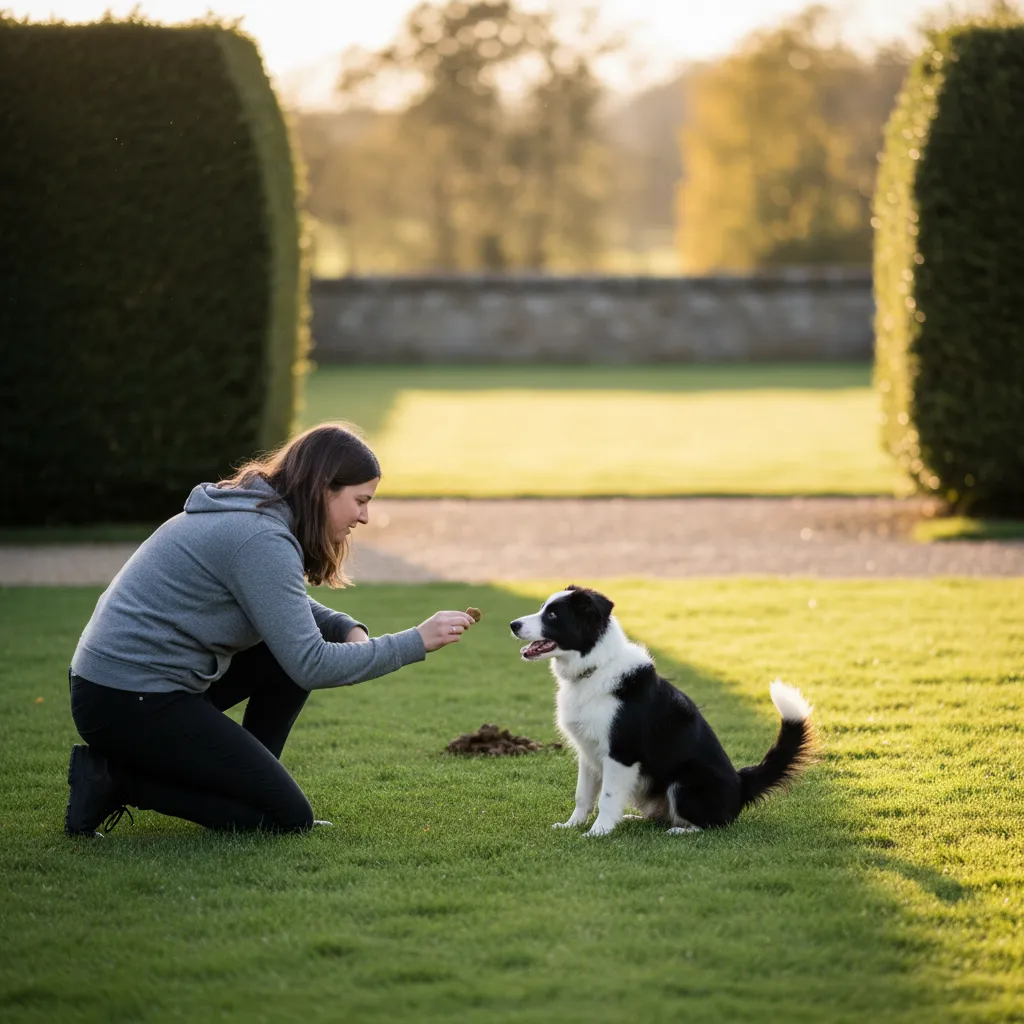
If you catch your puppy mid-accident: calmly interrupt with a gentle “Oops!” or clap your hands lightly. Pick up your puppy (or guide it on lead) and go straight to the designated potty spot outside. If your puppy finishes outside, reward enthusiastically. If not, that is fine; simply bring your puppy back in and clean up.
If you find an accident after the fact: clean it up without comment. Your puppy cannot connect a past event to your current reaction. Any scolding at this point will only confuse your puppy and damage trust. Use an enzymatic cleaner to remove all traces of scent, then make a mental note to increase supervision or adjust your schedule.
Keep a simple log of accidents: note the time, location and what happened beforehand. Patterns will emerge. Maybe your puppy always has an accident at 3 p.m. because you forgot the post-nap outing, or perhaps accidents cluster in the hallway because it looks like the outdoor area. Data turns frustration into problem-solving.
Night-Time Potty Training
Night-time is often the part owners dread most, but it is actually simpler than daytime training because your puppy is sleeping and its metabolism slows down.
Setting Up for Success
- Remove water bowls 2 to 3 hours before bedtime (ensure your puppy has had plenty of water earlier in the day).
- Take your puppy out for a final potty break right before you go to bed.
- Place the crate in or near your bedroom so you can hear whimpering, which often signals a need to go out.
Middle-of-the-Night Outings
For puppies under 4 months, expect at least one night-time outing. Set an alarm for halfway through the night, take your puppy out quietly, reward if it goes, and return to the crate without fuss. No play, no lights, no excitement. You want your puppy to understand that night-time outings are business only.
By around 4 to 5 months of age, most puppies can sleep through the night (6 to 8 hours) without needing a break. If your older puppy suddenly starts having night-time accidents after weeks of dryness, consult your veterinarian to rule out urinary tract infections or other health issues. Our vaccinations schedule guide covers when your puppy should be seeing the vet, which is a good opportunity to discuss any potty training concerns.
When to Seek Professional Help
Most potty training challenges resolve with patience and consistency. However, there are situations where professional guidance is warranted.
- Your puppy is over 6 months old and still having daily accidents despite following a consistent protocol.
- Your puppy eliminates in the crate regularly, which may suggest the crate is too large, or there may be a medical or emotional issue.
- You notice blood in urine, straining, excessive frequency or other signs of a possible urinary tract infection or digestive problem.
- Your puppy only has accidents when left alone, which could indicate separation anxiety rather than a house-training gap.
- You have followed this guide for 8 or more weeks with no improvement.
A certified professional dog trainer (look for the CPDT-KA credential) or a veterinary behaviourist can identify issues that are not obvious to the untrained eye. The Certification Council for Professional Dog Trainers maintains a directory of qualified trainers. Your veterinarian is also an essential partner; conditions like juvenile diabetes, kidney problems and urinary tract infections can all mimic house-training failure, and these need medical treatment, not more training.
If your puppy is showing signs of general nervousness or stress during the potty training process, our guide to recognising and treating dog anxiety may help you address the underlying cause.
A Note on Adolescent Regression
Many owners contact me in a panic when their 7- or 8-month-old puppy, previously reliable, starts having accidents again. This is adolescent regression, and it is extremely common. Hormonal changes, increased independence and a developing brain all contribute. The solution is simple: go back to basics. Tighten the schedule, increase supervision and reward outdoor successes generously. Most puppies work through this phase within 2 to 4 weeks.
For a broader view of what to expect during your puppy’s first year, including training milestones beyond potty training, I recommend our week-by-week puppy training plan and our complete first-year checklist. These resources will help you see potty training as one piece of a larger, rewarding journey.
Potty training a puppy requires patience, consistency and a genuine commitment to setting your puppy up for success rather than waiting for it to fail. Every puppy I have worked with has eventually learned, and yours will too. Trust the process, celebrate the small victories and remember that those midnight garden trips will soon be a distant memory.
Key Points
- Take your puppy to the same outdoor spot every time and reward within 3 seconds of elimination
- Follow the one hour per month of age rule for maximum time between potty breaks
- Use an enzymatic cleaner for all indoor accidents to fully remove scent markers
- Increase indoor freedom gradually; wait for two full accident-free weeks before expanding access to new rooms
- If your puppy is over 6 months old with persistent daily accidents, consult a veterinarian or certified trainer to rule out medical causes
Frequently Asked Questions
How long does it take to potty train a puppy?
Most puppies become reliably house-trained between 4 and 6 months of age with consistent training. Small breeds often take longer, sometimes up to 12 months, because of their smaller bladder capacity. The key factors that influence timing are consistency of your schedule, how quickly you reward outdoor elimination and how well you manage your puppy’s access to unsupervised indoor spaces.
I recommend outdoor training from the start whenever possible. Puppy pads can create confusion because they teach your puppy that eliminating indoors is acceptable. However, pads are a practical option for flat dwellers, owners with mobility limitations or during extreme weather. If you use pads, place them near the door and gradually move them outside over the course of a week to transition to full outdoor training.Should I use puppy pads or go straight to outdoor training?
This usually happens because your puppy did not fully empty its bladder during the outdoor trip. Puppies are easily distracted by sights, sounds and smells. Give your puppy a full 3 to 5 minutes at the potty spot without interaction, and wait for it to go a second time before heading back inside. Some puppies urinate twice in quick succession, so patience at the potty spot pays off.Why does my puppy have accidents even after going outside?
Yes. Adolescent regression is very common between 6 and 10 months of age. Hormonal changes and increased independence can temporarily disrupt established habits. Return to the basics of your training schedule, increase supervision and reward outdoor successes. Most puppies work through this phase within 2 to 4 weeks. If accidents persist or are accompanied by changes in urine colour or frequency, consult your veterinarian to rule out a urinary tract infection.Is it normal for a potty-trained puppy to start having accidents again?
Yes, though crate training does make the process faster and easier. Without a crate, you will need to rely more heavily on direct supervision, tethering your puppy to you with a lead indoors and using baby gates to restrict access to rooms. The core principles remain the same: frequent outdoor trips, immediate rewards, consistent scheduling and careful management of indoor freedom. A playpen with a washable floor can serve as an alternative to a crate for confinement periods.Can I potty train a puppy without using a crate?
Some puppies feel overwhelmed outdoors, especially in the first few weeks in a new home. Choose a quiet, low-traffic potty spot and stand still without talking or making eye contact. If your puppy does not go within 5 minutes, return inside and place it in the crate for 10 to 15 minutes, then try again. Repeat until successful, and then reward generously. Avoid the temptation to play or walk around, as this teaches your puppy that outdoor time is for exploration rather than elimination.What should I do if my puppy will not go to the toilet outside?