
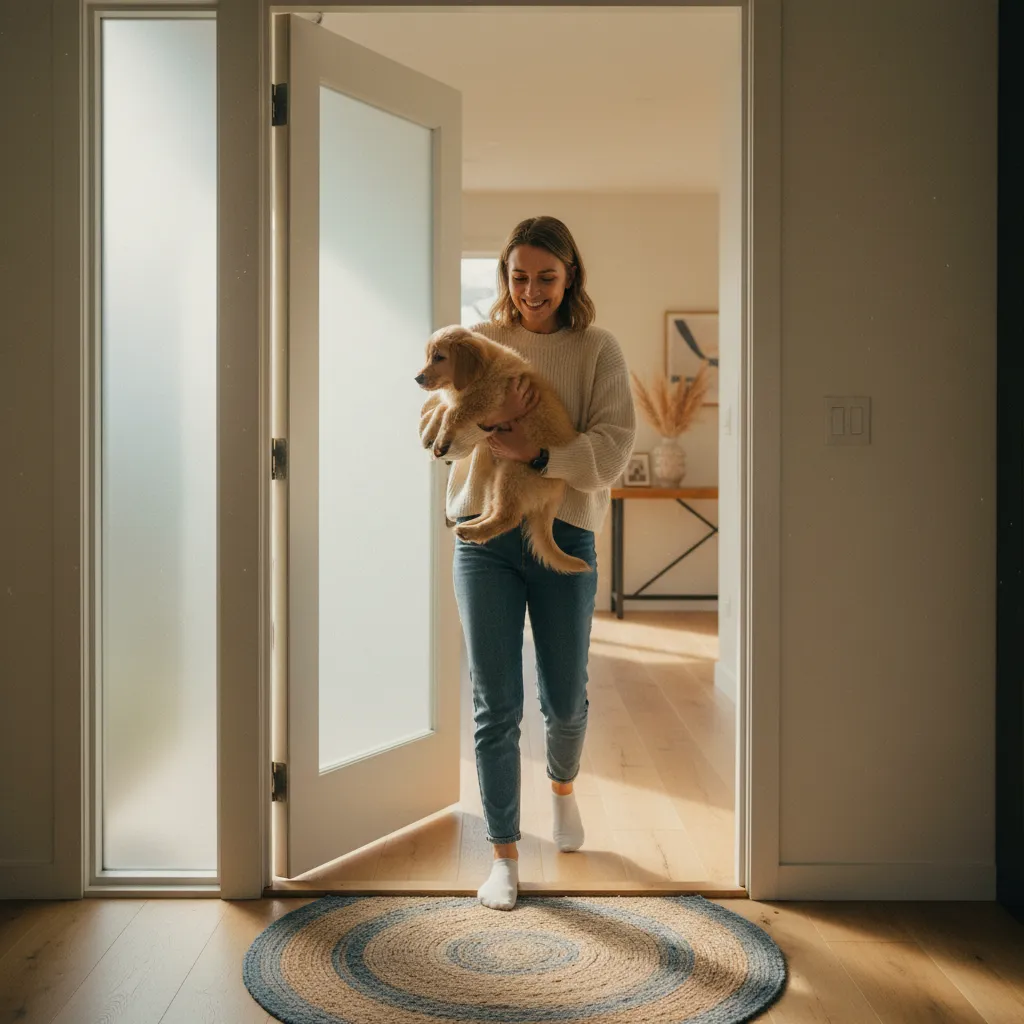
I still remember the first puppy I brought home as a professional trainer. Despite ten years of canine behaviour experience, my hands were shaking and my checklist was three pages long. Bringing puppy home is one of the most exciting moments in any dog owner’s life, but those first 48 hours set the emotional and behavioural foundation for everything that follows. Get them right, and you will have a calmer, more confident companion for years to come. Get them wrong, and you may spend months undoing fear, confusion or poor habits that took root in a single weekend.
In this guide, I walk you through every step, from the car journey to the second morning, so you can give your new puppy the smoothest possible start.
Key Takeaways
- Set up a puppy-safe zone with a crate, water bowl and bedding before your puppy arrives
- Limit exploration to one or two rooms during the first 24 hours to prevent overwhelm
- Expect your puppy to need a toilet break every 30 to 60 minutes while awake on day one
- Place a warm water bottle and ticking clock near the crate to mimic littermate comfort on night one
- Avoid inviting guests for at least 48 hours so your puppy can bond with the household first
- Begin a consistent feeding, sleeping and toilet schedule from the very first morning
In This Guide
Why the First 48 Hours Matter
When a puppy leaves their litter, they lose every familiar scent, sound and social bond in a single car ride. Research published by the RSPCA shows that early experiences during the critical socialisation window (roughly 3 to 14 weeks of age) have an outsized impact on adult temperament. The first 48 hours in a new home fall squarely within this window for most puppies collected at eight weeks old.
I have worked with hundreds of families dealing with separation anxiety in dogs, and a surprising number of those cases trace back to a chaotic first day. Puppies that are overwhelmed by noise, strangers or too much space often develop lasting fearfulness. On the other hand, puppies that experience calm, structured introductions tend to bounce back from new experiences faster and show fewer stress signals as adults.
Think of these 48 hours as a trust-building window. Your puppy is asking one question on repeat: “Am I safe here?” Every calm interaction, every predictable routine and every gentle handling session answers that question with a reassuring yes.
Essential Supplies Before Bringing Puppy Home
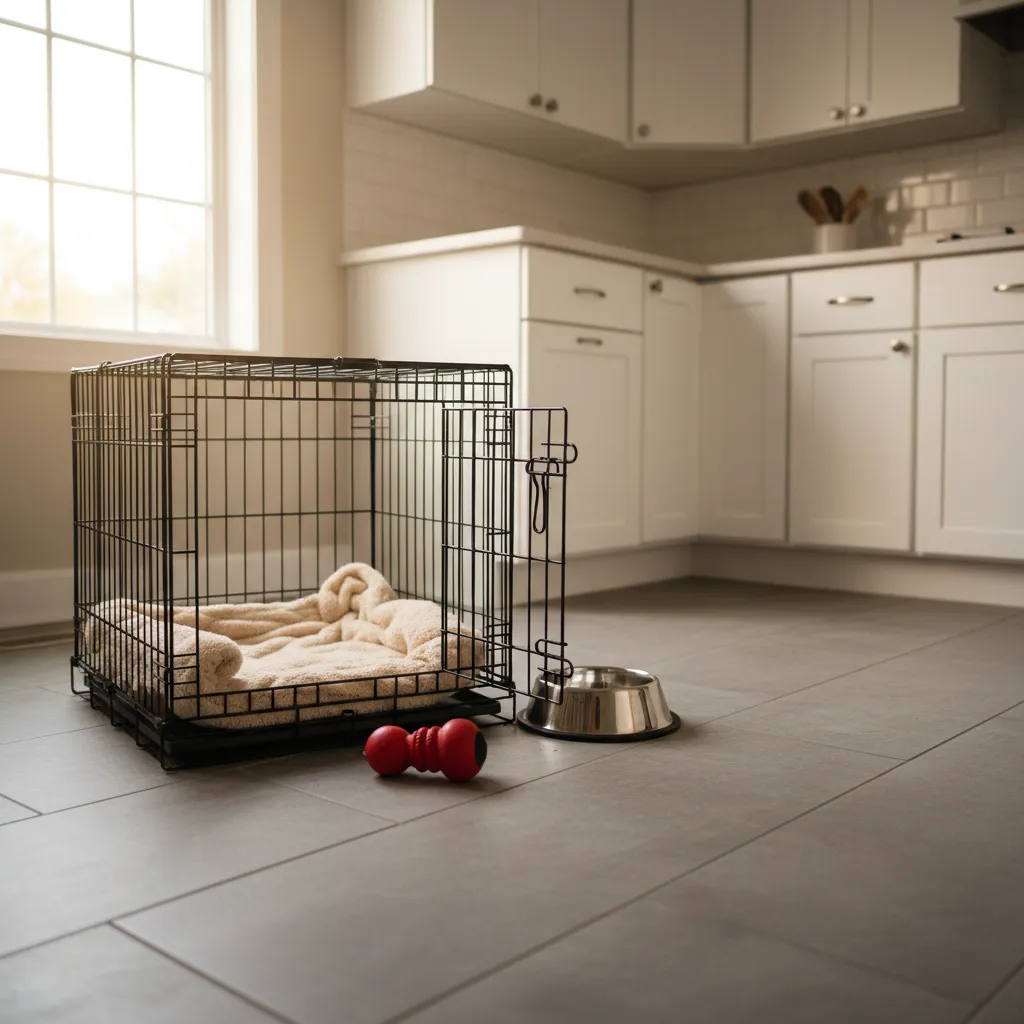
Before bringing puppy home, make sure every essential item is already in place. Scrambling to find a water bowl while a confused puppy piddles on your rug is not the start anyone wants. Here is what I recommend to every client.
Crate or playpen. Choose a crate just large enough for your puppy to stand, turn around and lie down. Many crates come with dividers so you can adjust the space as your puppy grows. A playpen works as an alternative if you want a slightly larger safe zone during the day.
Bedding and comfort items. A washable fleece blanket is ideal. Ask the breeder or rescue centre for a small cloth that smells like the litter; this single item can reduce first-night crying by up to 50 percent, according to guidance from the PDSA.
Food and water bowls. Stainless steel or ceramic bowls are easiest to clean. Have at least two sets so one can go through the dishwasher while the other is in use. Check our guide on how to choose the right diet for your dog to select an age-appropriate food.
Puppy food. Always start with the same food the puppy has been eating. Switching brands abruptly is one of the fastest ways to trigger stomach upset. If you plan to transition, do so gradually over seven to ten days once your puppy has settled in.
Collar, lead and ID tag. Even though your puppy will not be going on proper walks until their vaccination schedule is complete, a lightweight collar with an ID tag is a legal requirement in many areas and a good safety net from day one.
Enzymatic cleaner. Accidents are guaranteed. Standard household cleaners often contain ammonia, which smells like urine to a puppy and actually encourages them to toilet in the same spot again. An enzymatic formula breaks down the proteins completely.
Chew toys and a Kong. Puppies chew to soothe teething pain and to explore their world. Offer a variety of textures: rubber, rope and soft plush toys. A Kong stuffed with a small amount of wet puppy food and frozen is a lifesaver during quiet time.
The Car Journey Home
For most puppies, the car ride home is their first time in a vehicle. This experience matters more than people realise. A frightening journey can create a lasting car phobia that makes every future vet visit a battle.
I advise bringing a second person whenever possible. One drives; the other sits beside the puppy. Place the puppy in a secure travel crate or use a crash-tested puppy harness attached to the seatbelt. Lay a towel in the crate in case of motion sickness, which is common in puppies under 12 weeks.
Keep the radio low, the temperature comfortable and the windows cracked slightly for fresh air. Avoid sudden braking. If the journey is longer than 30 minutes, plan a brief stop in a safe, grassy area (away from places frequented by unvaccinated dogs) to let the puppy relieve themselves.
Bring kitchen roll, spare towels, a small bag of treats and a water bottle with a portable bowl. Speak to the puppy in a calm, upbeat voice. If they whimper, a gentle hand resting near the crate is more reassuring than picking them up, which can reinforce the panic.
The First Hour in Your Home
The moment you arrive, carry your puppy straight to your chosen toilet spot in the garden. Stand quietly and wait. Most puppies will need to go after the journey. When they do, praise them warmly and offer a tiny treat. This is the very first deposit in your potty-training bank account.
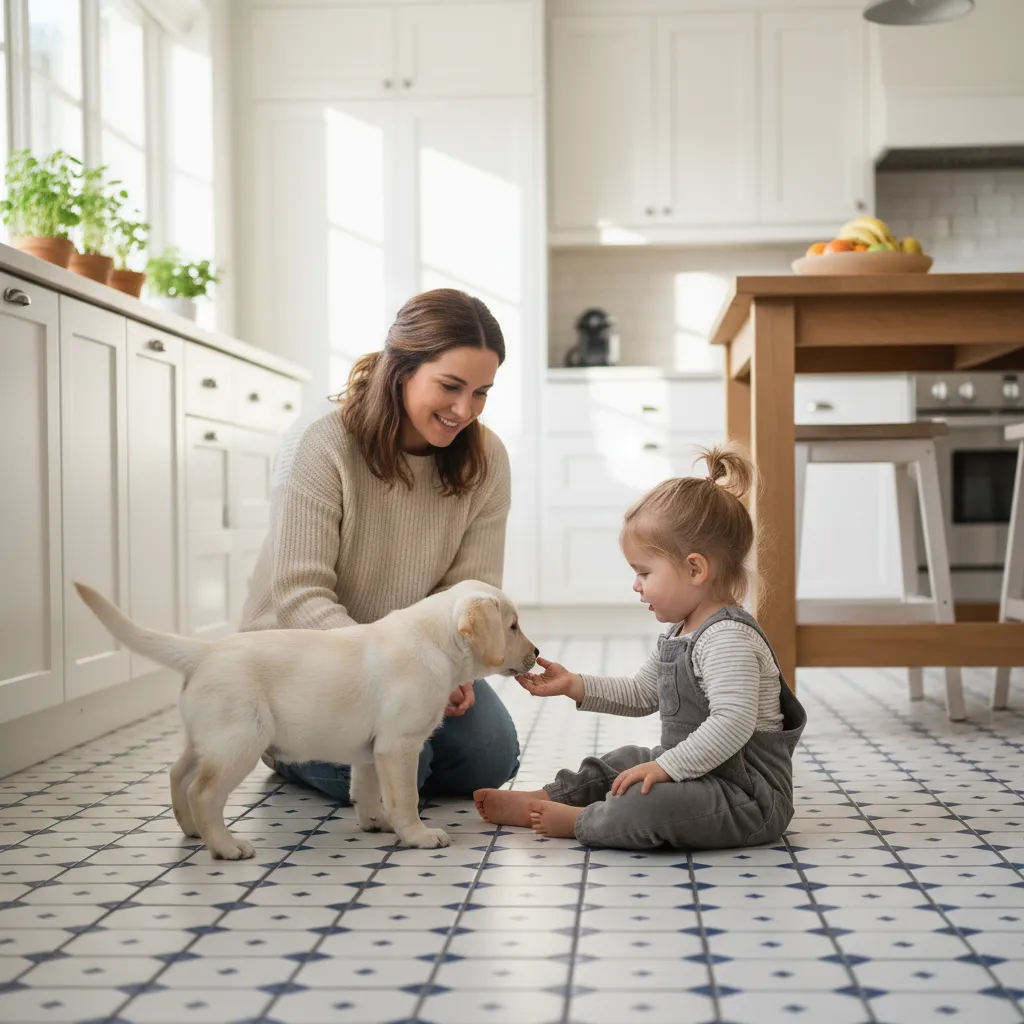
Next, bring the puppy inside and let them explore one room only. I usually recommend the kitchen or a utility room: somewhere with easy-to-clean flooring and no dangling cables. Close doors to other rooms. A whole house is as overwhelming to an eight-week-old puppy as dropping an adult into a foreign city with no map.
Place the crate in the corner of this room with the door open and a treat inside. Do not force the puppy in; let curiosity do the work. Put the water bowl nearby and sit on the floor at the puppy’s level. Avoid picking them up repeatedly. Let the puppy approach you, sniff your hands, climb into your lap if they choose. These early voluntary interactions build trust far more effectively than forced cuddles.
If you have children, I follow a strict rule: one child at a time, seated on the floor, with an adult supervising. Excited children running, squealing and grabbing at a puppy can create a fear response that takes weeks to undo. For more on child-dog dynamics, read our guide to the best dog breeds for families with children.
Keep other pets separated for now. A face-to-face introduction with a resident dog or cat can wait until day two, after the puppy has had time to decompress.
Feeding and Potty Training Basics
Your puppy’s stomach is tiny, and their metabolism is fast. Most puppies aged eight to twelve weeks need three to four meals a day, evenly spaced. I recommend feeding at roughly 7am, 12pm, 5pm and (if you are doing four meals) 9pm. Consistent meal times produce consistent toilet times, which makes house training dramatically easier.
Measure portions according to the food manufacturer’s guidelines, then adjust based on your puppy’s body condition. Overfeeding is common and leads to loose stools, which makes potty training a nightmare. If you are unsure about portion sizes, check our article on the complete first-year puppy care checklist for detailed guidance.
For potty training, I use a simple rhythm during the first 48 hours: take the puppy outside every 30 to 60 minutes while they are awake, plus immediately after eating, drinking, playing and waking from a nap. Stand in your chosen toilet spot, wait up to three minutes, and praise the moment they go. If nothing happens, return inside and try again in 15 minutes.
Never punish accidents. Rubbing a puppy’s nose in a mess is not only cruel; it teaches the puppy to hide when they need to go, which makes training harder. Simply clean it up with enzymatic cleaner and resolve to watch more closely next time. According to the Blue Cross, most puppies can be reliably house trained by four to six months with consistent, force-free methods.
If your puppy has dietary sensitivities or you are considering a special diet, our guide to dog food for allergies covers hypoallergenic options in detail.
Surviving the First Night
Let me be honest: the first night is usually the hardest part of bringing puppy home. Your puppy has never slept without littermates before. They will almost certainly cry, whimper or howl. This is normal, and it does not mean you are doing something wrong.
Here is the approach I recommend to every client. Place the crate beside your bed for the first few nights. Being able to hear your breathing and reach down to offer a reassuring hand makes an enormous difference. Once the puppy settles into a routine over the following weeks, you can gradually move the crate to its permanent location.
Before bed, take the puppy outside for a final toilet trip. Remove water about an hour before bedtime to reduce overnight accidents. Place the litter-scented cloth, a warm (not hot) water bottle wrapped in a towel, and a ticking clock or heartbeat toy in the crate. These mimic the warmth and rhythmic heartbeat of littermates.
When the puppy cries, wait a moment. If the crying continues for more than two to three minutes, take them outside for a quick, boring toilet trip: no play, no fuss, minimal light. Then return them to the crate. Resist the temptation to bring them into your bed. While it feels kind in the moment, it teaches the puppy that crying earns access to the bed, and reversing that habit is far more distressing for everyone. For more on managing distress behaviours, see our in-depth guide to recognising and treating dog anxiety.
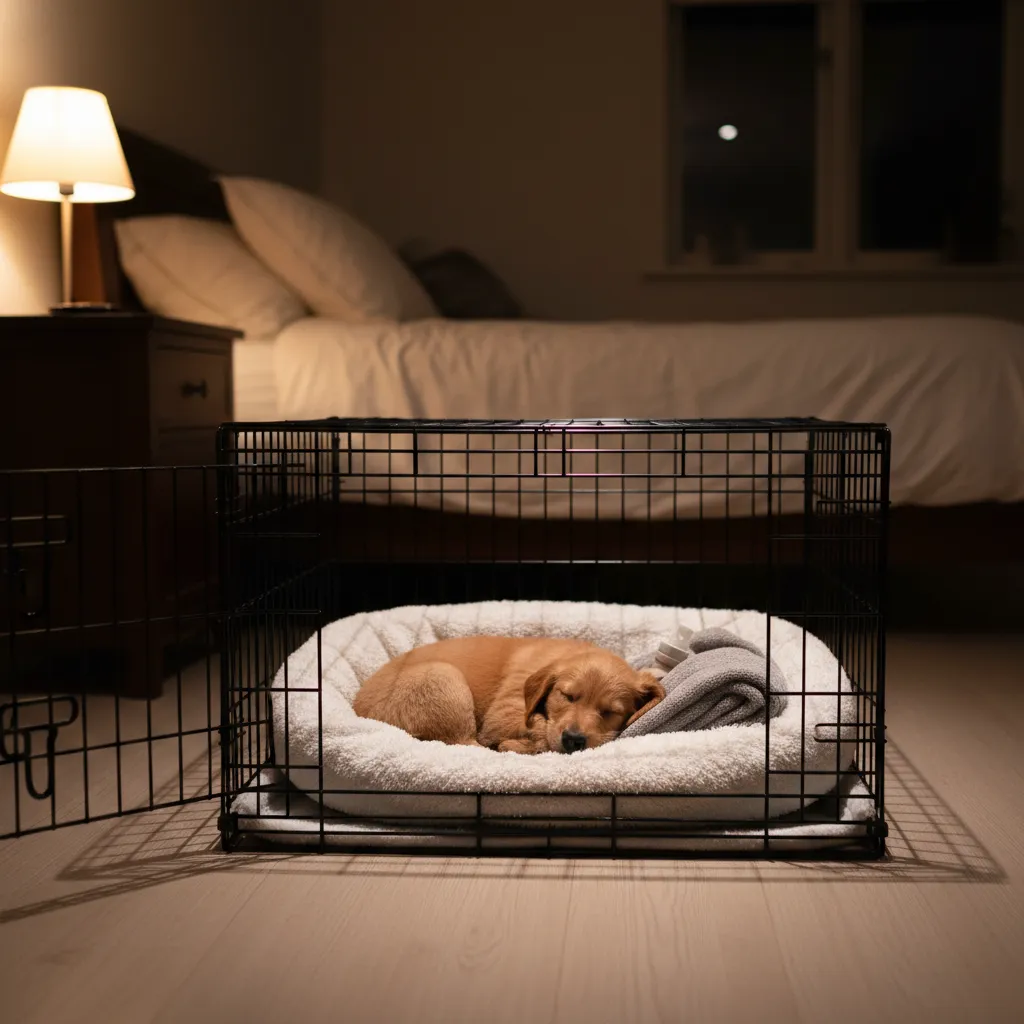
Most puppies under 12 weeks will need one or two toilet breaks during the night. Set a quiet alarm rather than waiting for the puppy to cry; this prevents them from practising the cry-and-reward cycle.
Day Two: Building Routine and Confidence
Congratulations: you survived night one. Day two is about reinforcing the routine you started and gently expanding your puppy’s world.
Begin the morning with an immediate toilet trip, then breakfast, then another toilet trip. This eat-toilet-play-sleep cycle becomes the backbone of your puppy’s daily structure for the next several months. Consistency is not optional; it is the single most powerful training tool you have.
On day two, you can open up one additional room for supervised exploration. Walk with the puppy, letting them sniff at their own pace. Introduce household sounds gradually: run the dishwasher, turn on the television at low volume, use the vacuum in a distant room with the door closed. Pair each new sound with a treat so the puppy forms a positive association.
Start very short handling exercises. Gently touch your puppy’s paws, ears, mouth and tail, offering a small treat after each touch. These five-second sessions lay the groundwork for stress-free vet visits, nail trims and grooming throughout their life. Our guide to essential dog grooming tools explains which brushes and clippers you will need as your puppy grows.
If you have a resident dog, day two is the time for a controlled introduction. Choose a neutral outdoor space, keep both dogs on loose leads, and let them sniff at their own pace. Watch for relaxed body language: soft eyes, loose tail wags, play bows. If either dog stiffens, growls or avoids eye contact, calmly increase the distance and try again later.
Begin introducing the concept of alone time in tiny increments. Step out of the room for 10 to 30 seconds, then return calmly. Do not make a fuss when you leave or arrive. This quiet practice is the earliest foundation for preventing separation anxiety.
First 48 Hours Schedule at a Glance
Pinning a schedule to the fridge is something I recommend to every new puppy owner. Here is a template based on what I use with my own clients.
| Time | Day One | Day Two |
|---|---|---|
| 7:00 am | Toilet trip, breakfast, toilet trip | Toilet trip, breakfast, toilet trip |
| 8:00 am | Supervised play in puppy zone (15 min), then crate nap | Supervised play, introduce second room |
| 10:00 am | Toilet trip, gentle handling (5 min), crate nap | Toilet trip, handling exercises, sound exposure |
| 12:00 pm | Toilet trip, lunch, toilet trip | Toilet trip, lunch, toilet trip |
| 1:00 pm | Short play, then long crate nap | Brief alone-time practice, then crate nap |
| 3:00 pm | Toilet trip, exploration of puppy zone | Toilet trip, gentle introduction to resident pets |
| 5:00 pm | Toilet trip, dinner, toilet trip | Toilet trip, dinner, toilet trip |
| 6:30 pm | Calm family time on the floor, no visitors | Calm family time, one short visitor if puppy is relaxed |
| 8:00 pm | Final meal (if 4 meals), toilet trip | Final meal (if 4 meals), toilet trip |
| 9:30 pm | Remove water, last toilet trip, crate with comfort items | Remove water, last toilet trip, crate for bed |
| 2:00 am | Set alarm, quiet toilet trip, back to crate | Set alarm, quiet toilet trip, back to crate |
Puppies need 18 to 20 hours of sleep per day at eight weeks old, so do not worry if your schedule seems to be mostly naps. That is exactly right. Overtired puppies become nippy, hyperactive and harder to train. If you are curious about how activity needs change with age, read our guide on how much exercise your dog really needs.
Common Mistakes to Avoid
After a decade of coaching new puppy owners, I see the same handful of mistakes on repeat. Avoiding these will save you weeks of remedial training.
Too much freedom, too soon. Giving a puppy access to the whole house on day one almost always leads to accidents, chewed furniture and a stressed puppy. Expand their territory gradually, one room at a time, over the first two weeks.
Hosting a welcome party. Friends and family will be desperate to meet the new arrival. I know it is hard to say no, but a revolving door of visitors in the first 48 hours overwhelms most puppies. Keep things quiet. There will be plenty of time for introductions once your puppy has found their feet.
Skipping crate training. Some owners feel guilty about using a crate, but when introduced correctly, a crate becomes your puppy’s safe haven, not a prison. The Kennel Club recommends crate training as a positive tool for house training and emotional security.
Punishing accidents or crying. Force-based corrections during the first 48 hours can permanently damage the trust you are trying to build. If your puppy makes a mistake, it means you need to adjust the environment or your supervision, not that the puppy needs to be told off.
Neglecting sleep. New owners often keep puppies awake to play, post photos or show them off. An eight-week-old puppy that misses naps becomes the canine equivalent of an overtired toddler: bitey, frantic and unable to learn. Enforce regular nap times in the crate.
Forgetting about their own wellbeing. Puppy blues are real. If you feel overwhelmed, anxious or regretful during those first 48 hours, you are not a bad owner; you are a normal one. Step outside for five minutes, call a friend, or remind yourself that this intense phase is temporary.
For a structured plan that picks up where the first 48 hours leave off, follow our week-by-week puppy training plan through the first six months. And when your puppy is ready for formal obedience work, our guide on the seven essential commands every dog should learn is the perfect next step.
Key Points
- Prepare a single-room puppy zone with crate, bedding, bowls and enzymatic cleaner before collection day
- Take your puppy to the designated toilet spot every 30 to 60 minutes while awake, praising every success
- Place the crate beside your bed for the first few nights and use a warm water bottle to mimic littermate warmth
- Practise 5-second handling exercises on day two, touching paws, ears and mouth with a treat reward
- Keep the first 48 hours visitor-free so your puppy can bond with household members and decompress safely
Frequently Asked Questions
How long does it take for a puppy to settle into a new home?
Most puppies begin to relax within three to five days, but full adjustment to a new routine, household sounds and family members typically takes two to four weeks. Maintaining a consistent schedule during this period speeds the process significantly. If your puppy still shows signs of distress after a month, consult a certified trainer or behaviourist.
I advise against it. While having the puppy close is important, a crate beside your bed offers the same reassurance without creating a habit that is difficult to reverse. Puppies that learn to sleep in a crate from night one typically develop better independence and are less prone to separation-related distress later on.Should I let my puppy sleep in my bed on the first night?
Training begins the moment you bring your puppy home. Every time you reward a toilet trip outside or praise calm behaviour in the crate, you are training. Formal, short sessions of two to three minutes can start on day two with simple cues like “sit” using a treat lure. Avoid overwhelming the puppy with too many new cues in the first week.When can I start training my new puppy?
Feed the same food the puppy was eating with the breeder or rescue. A sudden diet change causes digestive upset, which makes house training much harder. If you plan to switch foods, wait until the puppy has settled (usually after one to two weeks) and transition gradually over seven to ten days by mixing increasing amounts of the new food with the old.What should I feed my puppy during the first 48 hours?
Some crying on the first night is completely normal. Most puppies will settle within 20 to 40 minutes if they have a comfortable crate, a litter-scented cloth and the sound of your breathing nearby. Persistent crying beyond the first two nights, or crying that worsens rather than improves, may indicate a health issue or extreme distress that warrants a veterinary check.Is it normal for a puppy to cry all night?
Wait until day two, once the puppy has had time to decompress. Introduce the dogs in a neutral outdoor area on loose leads. Let them sniff at their own pace and watch for relaxed body language such as play bows and soft eyes. Never force the interaction, and always supervise the first few weeks of shared time indoors.How do I introduce my puppy to an older dog already in the home?