
Key Takeaways
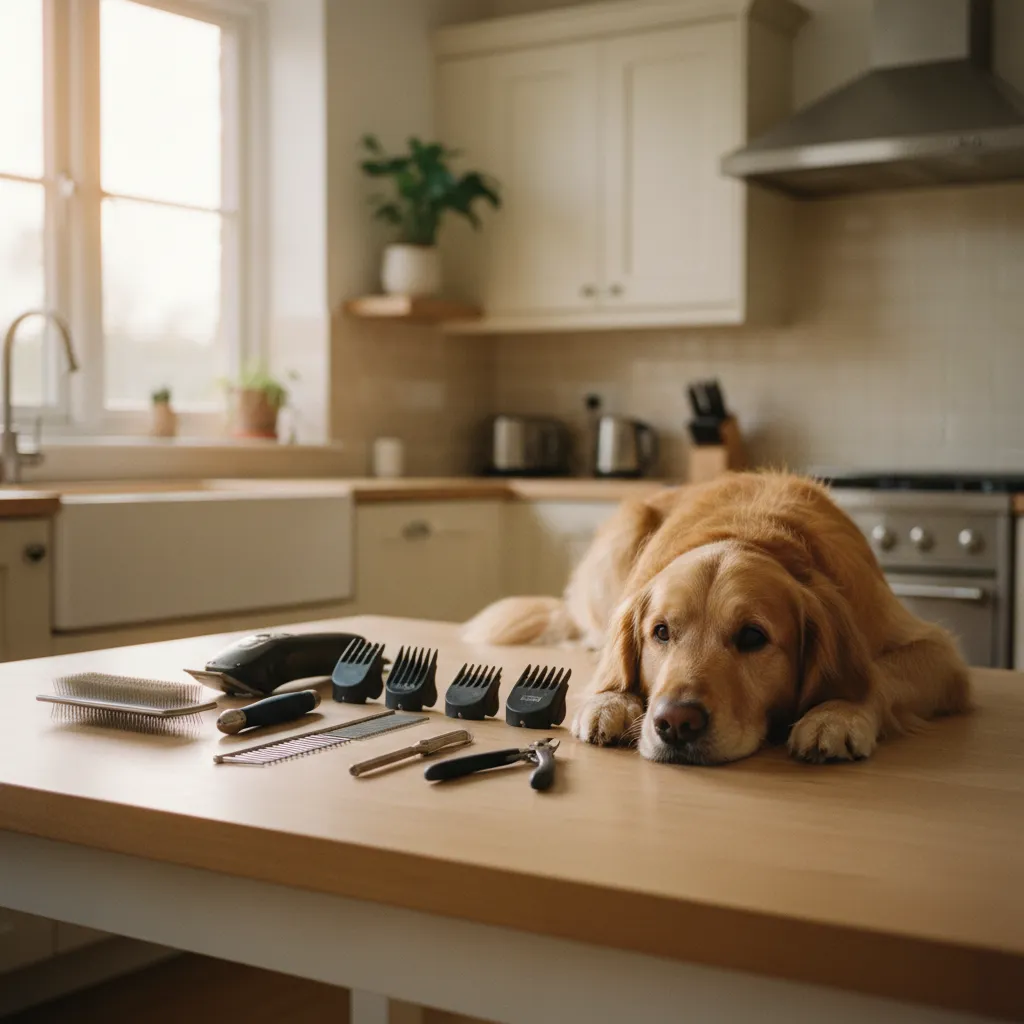
- A basic dog grooming tools kit should include a breed-appropriate brush, nail trimmer, comb, and pair of clippers
- Slicker brushes suit over 70% of coat types, making them the most versatile brush for home groomers
- Clipper blade numbers matter: a #10 blade is the standard all-purpose choice for body work, while a #30 blade is reserved for sanitary trims
- Guillotine-style nail trimmers work best on small to medium dogs under 20 kg, while scissor-style trimmers handle larger, thicker nails
- Introducing grooming tools gradually with positive reinforcement over 2 to 3 weeks dramatically reduces stress and fear responses
- Deshedding tools should only be used once or twice per week on double-coated breeds to avoid skin irritation
In This Guide
- Why the Right Grooming Tools Matter
- Brushes and Combs for Every Coat Type
- Clippers and Trimmers Explained
- Nail Trimmers: Guillotine, Scissor and Grinder
- Deshedding Tools and Undercoat Rakes
- Grooming Tables, Dryers and Accessories
- Introducing Grooming Tools to a Nervous Dog
- Building Your Complete Grooming Kit
I have spent more than a decade helping owners feel confident about handling their dogs at home, and one of the most common questions I hear is: “Which dog grooming tools do I actually need?” Walk into any pet shop and you will find walls of brushes, clippers, combs, rakes, and trimmers, each promising to be the one tool that does it all. It can be genuinely overwhelming, and buying the wrong tool often means wasted money, a frustrated owner, and a dog who learns to dread grooming sessions.
This guide breaks down every major category of grooming tool, explains which coat types and situations each one suits, and gives you a clear path to building a kit that works for your specific dog. Whether you are caring for a small apartment companion or a large double-coated breed, the principles are the same: match the tool to the coat, invest in quality where it counts, and teach your dog that grooming is a positive experience.
Why the Right Grooming Tools Matter
Grooming is not just about keeping your dog looking tidy. Regular brushing distributes natural oils, removes dead hair before it mats, and gives you a chance to spot lumps, ticks, or skin irritation early. According to the RSPCA, routine grooming is a fundamental part of responsible dog ownership, and using the correct tools is essential for preventing discomfort and injury.
Using the wrong brush on a sensitive coat can scratch the skin, pull out healthy fur, or simply fail to reach the undercoat where mats begin. Blunt nail trimmers crush rather than cut, causing pain and making dogs resistant to future nail care. Cheap clippers overheat quickly, risking clipper burn on delicate areas. In my experience, most grooming-related behaviour problems trace back to a tool that was wrong for the job or was used incorrectly. If you have ever struggled with a dog who runs at the sight of a brush, the solution often starts with choosing better equipment and reintroducing it properly.
Good tools also save money over time. A quality pair of clippers with replaceable blades will outlast five budget sets, and a well-made slicker brush keeps its pins for years. Think of your grooming kit as a long-term investment in your dog’s home grooming routine.
Brushes and Combs for Every Coat Type
Brushes are the foundation of any grooming kit, and choosing the right one depends almost entirely on your dog’s coat type. Here is a breakdown of the main options.
Slicker Brushes
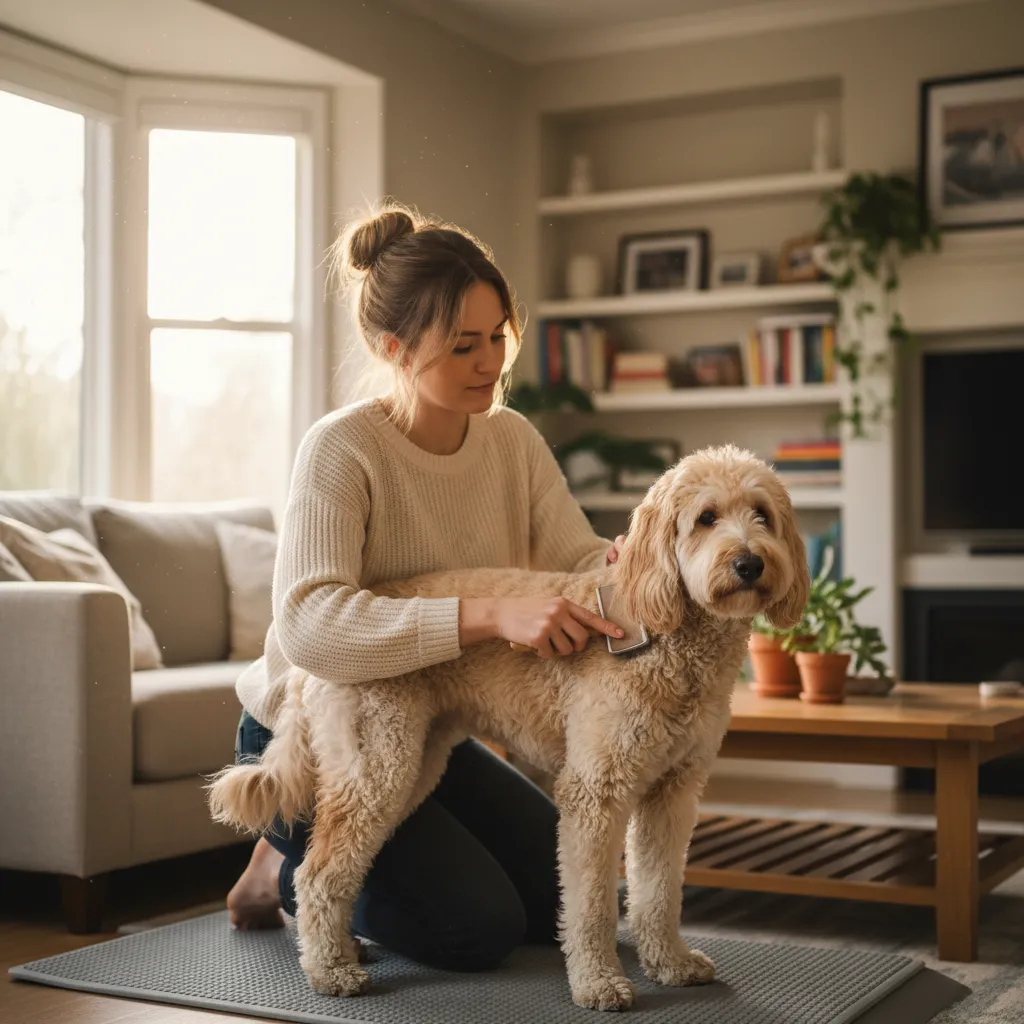
The slicker brush is the workhorse of the grooming world. It features a flat or slightly curved pad covered in fine, short wire pins angled to glide through the coat. Slicker brushes excel at removing tangles, loose hair, and light mats from medium to long coats. They work beautifully on breeds like Cocker Spaniels, Golden Retrievers, Poodle mixes, and most terriers. Use gentle, short strokes and avoid pressing too hard, as the wire pins can scratch the skin if you apply excessive pressure.
Bristle Brushes
Bristle brushes have soft, natural or synthetic bristles packed closely together. They are best suited for short, smooth coats like those on Beagles, Boxers, Dalmatians, and Greyhounds. They remove surface dirt and loose hair while distributing oils for a healthy shine. A bristle brush alone will not detangle a long coat, so think of it as a finishing tool for smooth-coated breeds.
Pin Brushes
Pin brushes look similar to human hairbrushes, with widely spaced pins tipped with small balls. They are gentle enough for long, silky coats found on breeds like Maltese, Yorkshire Terriers, and Afghan Hounds. Pin brushes are less effective on thick or double coats because the pins do not penetrate deeply enough to reach the undercoat.
Rubber Curry Brushes
These flexible rubber tools are fantastic for short-coated dogs during bath time. The rubber nubs massage the skin, loosen dead hair, and help distribute shampoo evenly. Dogs tend to enjoy the sensation, which makes curry brushes a brilliant choice for dogs who are still learning to accept grooming.
Metal Combs
A stainless steel Greyhound comb with both wide and fine teeth is indispensable. Use the wide-toothed end to work through the body coat and the fine-toothed end around ears, faces, and feet. Combing after brushing lets you check for hidden mats that the brush may have glossed over. I recommend every owner keeps a metal comb in their kit regardless of breed.
| Brush Type | Best Coat Type | Key Benefit | Example Breeds |
|---|---|---|---|
| Slicker brush | Medium to long, curly, wavy | Detangling and mat removal | Golden Retriever, Poodle mix, Cocker Spaniel |
| Bristle brush | Short, smooth | Shine and loose hair removal | Beagle, Boxer, Dalmatian |
| Pin brush | Long, silky | Gentle daily brushing | Maltese, Yorkshire Terrier, Afghan Hound |
| Rubber curry brush | Short, smooth (bath use) | Massage and shampoo distribution | Labrador, Pug, French Bulldog |
| Metal comb | All coat types | Final check for hidden tangles | All breeds |
| Deshedding tool | Double coat | Undercoat removal | Husky, German Shepherd, Akita |
Clippers and Trimmers Explained
Clippers allow you to maintain your dog’s coat length between professional grooming appointments, or handle the job entirely at home. Understanding the differences between clipper types, blade sizes, and motor power will help you make a confident purchase.
Corded vs Cordless Clippers
Corded clippers deliver consistent power and never run out of battery, making them ideal for full-body clips on thick coats. The downside is reduced manoeuvrability. Cordless clippers offer freedom of movement and are quieter, which is a real advantage for anxious dogs. Modern lithium-ion batteries provide 60 to 120 minutes of run time, enough for most home sessions. For general home grooming, I recommend a quality cordless clipper with at least 90 minutes of battery life.
Blade Numbers and Lengths
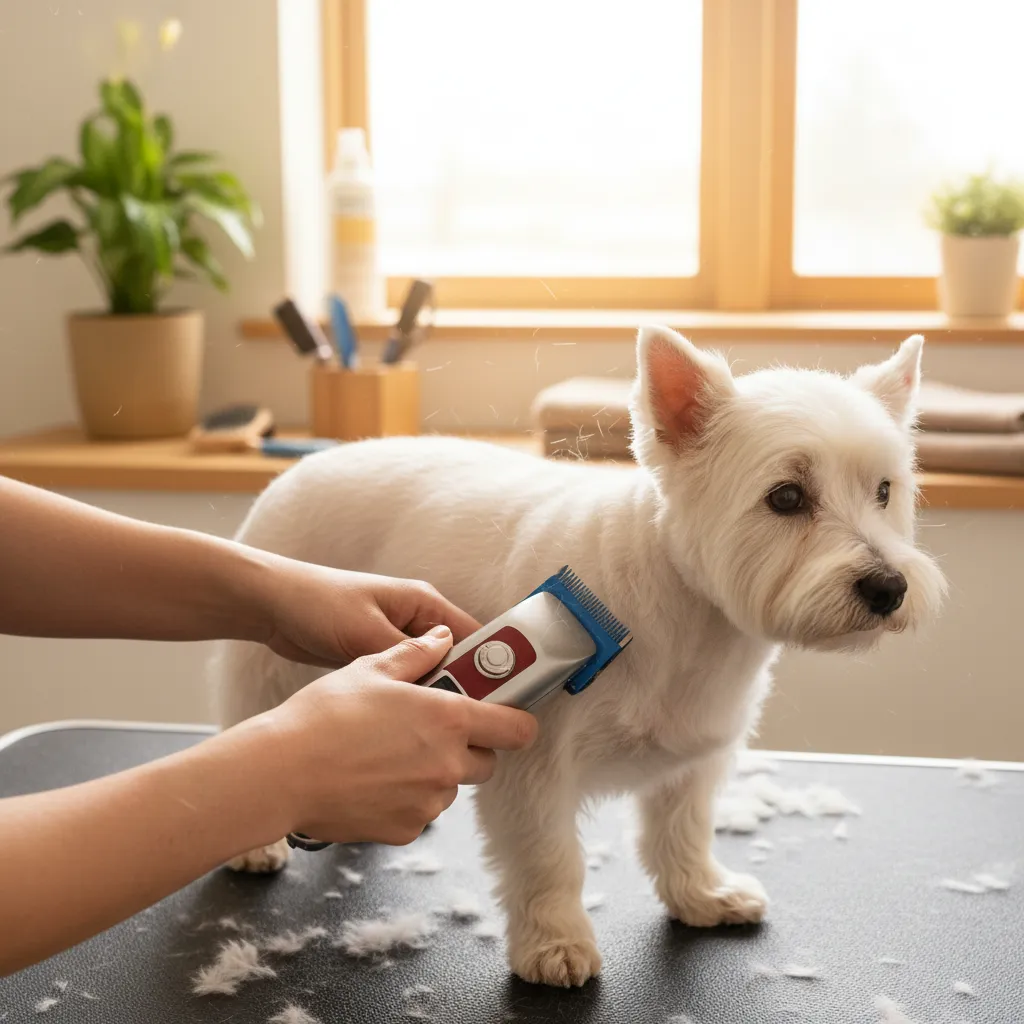
Clipper blades are numbered, and this is where many owners get confused. The higher the blade number, the shorter the cut. A #10 blade leaves about 1.5 mm of coat and is the standard body blade used by most groomers. A #7 blade leaves roughly 3 mm for a slightly longer finish. A #30 blade cuts very close to the skin and should only be used for sanitary trims and paw pads. Snap-on guide combs attach over a #10 or #30 blade to leave longer lengths, ranging from 3 mm up to 25 mm or more.
Clipper Maintenance
Blades must be cleaned, oiled, and cooled during use. A hot blade causes clipper burn, a painful irritation that can take days to heal. I keep a can of blade coolant spray within arm’s reach during every session. After each use, brush hair from the blades, apply a drop of clipper oil, and run the clipper for a few seconds to distribute it. Sharp blades are safer blades; have them professionally sharpened or replaced when they begin to pull or snag.
Trimmers for Detail Work
Smaller, pen-style trimmers handle delicate areas like around the eyes, ears, between toes, and along the sanitary region. They are significantly quieter than full-size clippers and produce less vibration. If your dog is sensitive to noise, consider using a trimmer for face and paw work even if you send them to a professional groomer for the body clip. A good trimmer paired with a regular dental care routine can turn a stressful grooming day into a manageable one.
Nail Trimmers: Guillotine, Scissor and Grinder
Nail care is arguably the most dreaded grooming task for both dogs and owners. The right trimmer makes a genuine difference in safety and comfort.
Guillotine Trimmers
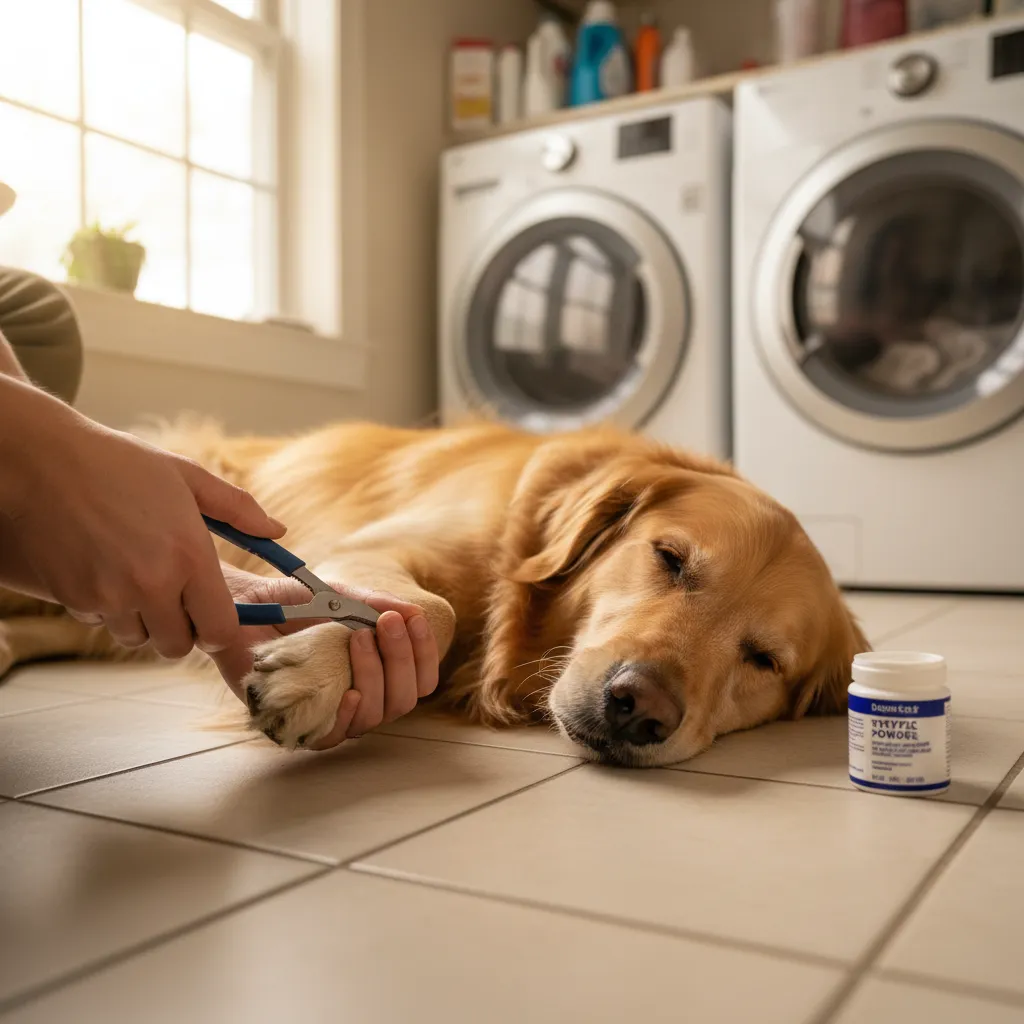
These feature a hole where you insert the nail tip and a blade that slides across to cut when you squeeze the handle. Guillotine trimmers work well on small to medium dogs with thinner nails. They require periodic blade replacement because a dull blade will crush rather than slice, which is painful. I find them best suited for dogs under about 20 kg.
Scissor-Style (Plier) Trimmers
Scissor trimmers resemble small pruning shears and use two blades that close together. They generate more cutting force, making them the preferred choice for medium to large dogs with thicker, harder nails. Many professional groomers use scissor-style trimmers exclusively because they offer better control and can be used at various angles. Look for a pair with a built-in safety guard to prevent over-cutting.
Nail Grinders (Dremels)
Electric nail grinders file the nail down gradually rather than cutting in one motion. This approach reduces the risk of hitting the quick (the blood vessel inside the nail), which makes grinders popular with owners who are nervous about clipping. The trade-off is noise and vibration, which some dogs find unsettling. Grinders also take longer per nail. I recommend introducing the grinder sound and sensation over several short sessions before attempting a full nail trim. The Kennel Club provides a helpful visual guide to safe nail trimming technique.
Styptic Powder
Regardless of which trimmer you choose, always keep styptic powder on hand. If you accidentally cut into the quick, styptic powder stops the bleeding within seconds. I carry a small container in every grooming kit I own. Cornflour can work in a pinch, but dedicated styptic powder is faster and more reliable.
Deshedding Tools and Undercoat Rakes
If you share your life with a double-coated breed like a Husky, German Shepherd, Labrador Retriever, or Akita, you already know about the seasonal “coat blow” that fills your home with tumbleweeds of fur. Deshedding tools are specifically designed to reach past the topcoat and remove loose undercoat hair before it ends up on your sofa.
Deshedding Blades and Tools
Tools like the popular FURminator feature a stainless steel edge that grips and pulls out loose undercoat without cutting the topcoat. These are remarkably effective, but they must be used with restraint. Over-deshedding strips too much undercoat, which your dog needs for temperature regulation. Limit use to once or twice per week during heavy shedding periods and once every two weeks during the rest of the year. Each session should last no more than 15 to 20 minutes.
Undercoat Rakes
Undercoat rakes have long, rounded teeth designed to penetrate dense fur and gently loosen the undercoat. They are less aggressive than deshedding blades, making them a safer everyday option for thick-coated breeds. A wide-toothed rake works through heavy coat while a narrow-toothed version handles finer undercoat. Rakes are also useful for working through tangles in feathered areas on breeds like Border Collies and Rough Collies.
Understanding your dog’s coat type is particularly important during your puppy’s first year, when the adult coat begins to grow in and grooming needs change significantly.
Grooming Tables, Dryers and Accessories
Beyond brushes, clippers, and nail trimmers, several accessories can transform your home grooming setup from adequate to genuinely comfortable for both you and your dog.
Grooming Tables
A dedicated grooming table with a non-slip surface and an adjustable arm keeps your dog secure and at a comfortable working height. This saves your back and gives your dog a consistent, predictable grooming station. Many dogs who fidget on the floor will stand calmly on a raised table because the elevated position changes their mindset. Foldable tables are available for around £50 to £150 and are well worth the investment if you groom regularly at home.
High-Velocity Dryers
High-velocity dryers blow room-temperature air at high speed to push water out of the coat rather than relying on heat. This approach is safer for the skin and dramatically reduces drying time on thick or double coats. A quality dryer with variable speed control allows you to start on a low setting and gradually increase power, which is important for dogs who are sensitive to noise. According to the PDSA, drying your dog thoroughly after bathing is essential for preventing skin infections, particularly in breeds with dense undercoats.
Grooming Scissors
Straight scissors, curved scissors, and thinning shears each serve a specific purpose. Straight scissors create clean lines on legs and body. Curved scissors shape rounded areas like heads and tails. Thinning shears blend and reduce bulk without creating harsh lines. For home grooming, a pair of ball-tipped safety scissors is the safest starting point, as the rounded tips prevent accidental pokes around the face and ears.
Ear Cleaning and Eye Care Tools
Haemostat forceps (with rounded tips) help remove excess ear hair in breeds prone to ear infections, such as Poodles and Bichon Frises. Cotton pads and a veterinarian-recommended ear cleaning solution round out your ear care kit. For eye care, a fine-toothed flea comb gently removes tear stains and crust from around the eyes. Dogs with food allergies often experience increased tear staining, so addressing diet alongside grooming can improve results.
Introducing Grooming Tools to a Nervous Dog
This is where my background in anxiety rehabilitation intersects directly with grooming. Many dogs develop a genuine fear of grooming tools because of a single bad experience: a clipper that ran too hot, a nail trimmed too short, or simply being restrained too forcefully. The good news is that systematic desensitisation works remarkably well for grooming-related fears.
The Gradual Introduction Protocol
I use a simple protocol that I recommend to every client. Over two to three weeks, progress through these stages, only advancing when your dog is relaxed at the current level:
- Tool on the ground: Place the tool near your dog during treat time. Let them sniff and investigate on their own terms.
- Touch without turning on: For clippers and grinders, hold the tool against your dog’s body without switching it on. Pair each touch with a high-value treat.
- Sound introduction: Turn the tool on at a distance. Gradually bring it closer over multiple sessions while feeding treats.
- Brief contact: Use the tool for just two to three seconds, then stop and reward. Build duration slowly.
- Full session: Work up to a complete grooming session, always ending before your dog shows signs of stress.
This approach draws on the same positive reinforcement principles I use in all my training programmes. If your dog shows signs of separation anxiety, you may notice that grooming stress and general anxiety overlap. Addressing one often helps the other.
According to the British Veterinary Association, cooperative care during grooming supports better welfare outcomes and reduces the need for sedation during professional grooming appointments.
Building Your Complete Grooming Kit
You do not need every tool on the market. A thoughtfully assembled kit tailored to your dog’s coat type, size, and temperament will serve you far better than a drawer full of impulse purchases. Here is how I recommend building your kit in order of priority.
Starter Kit (All Breeds)
- One breed-appropriate brush (slicker for most dogs)
- A stainless steel comb
- Nail trimmer suited to your dog’s size
- Styptic powder
- Dog-specific shampoo and conditioner
Intermediate Kit (Add for Regular Home Grooming)
- Cordless clippers with a #10 blade and guide combs
- Ball-tipped safety scissors
- Ear cleaning solution and cotton pads
- Rubber curry brush for bath time
Advanced Kit (Add for Full Home Grooming)
- High-velocity dryer
- Grooming table with arm
- Thinning shears and curved scissors
- Deshedding tool or undercoat rake (for double-coated breeds)
- Detail trimmer for face, paws, and sanitary areas
I always tell clients that the best dog grooming tools are the ones you will actually use consistently. A simple routine performed weekly with the right tools does far more for your dog’s coat and skin health than an elaborate setup that sits untouched. If you are new to home grooming, start with the basics and add tools as your confidence and your dog’s comfort level grow. Pair your grooming routine with regular exercise before sessions, as a tired dog is typically a calmer dog on the grooming table.
Consistency matters more than perfection. My week-by-week puppy training plan includes early grooming handling exercises for exactly this reason: the earlier you start, the easier it becomes for both of you.
Key Points
- Start with a slicker brush, metal comb, and size-appropriate nail trimmer before investing in advanced tools
- Always match the clipper blade number to the task: #10 for body work, #30 for sanitary trims only
- Keep styptic powder in your kit and within reach during every nail trimming session
- Limit deshedding tool sessions to once or twice weekly for no more than 20 minutes to protect the undercoat
- Introduce every new grooming tool gradually over 2 to 3 weeks using treats and positive reinforcement
Frequently Asked Questions
What are the essential dog grooming tools for beginners?
Every beginner needs a breed-appropriate brush (a slicker brush works for most coat types), a stainless steel comb, a nail trimmer suited to their dog’s size, styptic powder, and a quality dog shampoo. This starter kit covers the basics of coat care, nail maintenance, and bathing. As you gain confidence, you can add clippers, scissors, and a grooming table to your collection.
Clipper blades should be sharpened or replaced every 3 to 6 months with regular use, or sooner if they begin to pull or snag. Slicker brush pins that become bent or loose indicate the brush needs replacing, typically every 1 to 2 years. Nail trimmer blades dull over time and should be replaced annually or when they start crushing rather than cleanly cutting the nail. Quality tools with proper maintenance last significantly longer than budget options.How often should I replace my dog grooming tools?
Human hair clippers are not recommended for dogs. Dog coats are thicker and denser than human hair, meaning human clippers overheat faster, lack sufficient power to cut through the coat efficiently, and their blades are not designed for the texture of dog fur. Using them can result in an uneven cut, clipper burn, and a stressful experience for your dog. Invest in clippers specifically designed for dog grooming.Can I use human hair clippers on my dog?
Start by placing the grinder near your dog during treat time without turning it on. Over several days, progress to touching the grinder to their paw while it is off, then turning it on at a distance while giving treats. Gradually bring the running grinder closer, and eventually touch it briefly to one nail before rewarding. This desensitisation process typically takes 2 to 3 weeks but creates lasting comfort. Never force a frightened dog through a nail grinding session, as this reinforces the fear.How do I stop my dog from being afraid of the nail grinder?
A deshedding tool uses a fine stainless steel edge to grip and remove loose undercoat efficiently, making it very effective during heavy shedding periods. An undercoat rake has long, rounded teeth that penetrate dense fur more gently, loosening the undercoat without the same intensity. Rakes are better for regular maintenance and are less likely to cause skin irritation with frequent use, while deshedding tools should be limited to once or twice per week.What is the difference between a deshedding tool and an undercoat rake?
Puppies benefit from softer, gentler tools during their first few months. A soft bristle brush or rubber curry brush is ideal for getting a puppy accustomed to the sensation of being groomed. As their adult coat grows in, usually between 6 and 12 months of age, transition to breed-appropriate tools like a slicker brush or pin brush. The priority with puppies is building a positive association with grooming rather than achieving a perfect coat.Should I groom my puppy with the same tools as an adult dog?