
Key Takeaways
- Up to 70% of dogs display at least one anxiety-related behaviour, making it one of the most common welfare concerns in companion animals
- The three main types of dog anxiety are separation anxiety, noise phobias and social or generalised fear, each requiring a different treatment approach
- Early warning signs such as lip licking, yawning and whale eye are often missed because owners mistake them for normal habits
- Force-free desensitisation and counter-conditioning remain the gold-standard behavioural treatments recommended by veterinary behaviourists worldwide
- Severe dog anxiety may require veterinary-prescribed medication alongside a behaviour modification plan for lasting improvement
- Starting socialisation before 14 weeks of age is the single most effective way to prevent anxiety from developing in puppies
In This Guide
In my ten years as a certified professional dog trainer, I have worked with hundreds of dogs whose lives were being limited by anxiety. From the Labrador who trembled through every thunderstorm to the rescue Staffie who destroyed door frames whenever her owner left for work, dog anxiety is something I see every single week. The good news is that with the right understanding and a structured plan, most anxious dogs can make remarkable progress.
In this guide I will walk you through exactly how to spot the early warning signs of dog anxiety, explain the different forms it takes, and share the force-free treatment strategies I use with my own clients. Whether your dog is mildly nervous or struggling with full-blown panic, this article will give you a clear path forward.
What Is Dog Anxiety?
Dog anxiety is an emotional state characterised by apprehension, unease or fear in response to a perceived threat, even when no real danger exists. It is not the same as normal caution. A healthy dog might hesitate before approaching a new object, investigate it and then move on. An anxious dog, by contrast, may freeze, flee, or show escalating stress signals that do not resolve even after the trigger has passed.
Research published in Scientific Reports found that 72.5% of dogs in a study of over 6,000 animals exhibited at least one anxiety-related behaviour. That figure surprised many owners I work with, but it matches what I observe in practice: anxiety is extraordinarily common, and it sits on a spectrum from mild unease to debilitating panic.
Understanding where your dog falls on that spectrum is the first step toward helping them. A dog who occasionally paces during firework season needs a very different intervention from a dog who cannot be left alone for five minutes without howling. Throughout this article, I will help you pinpoint what you are dealing with and match it to the most effective treatment.
Common Signs and Symptoms of Dog Anxiety
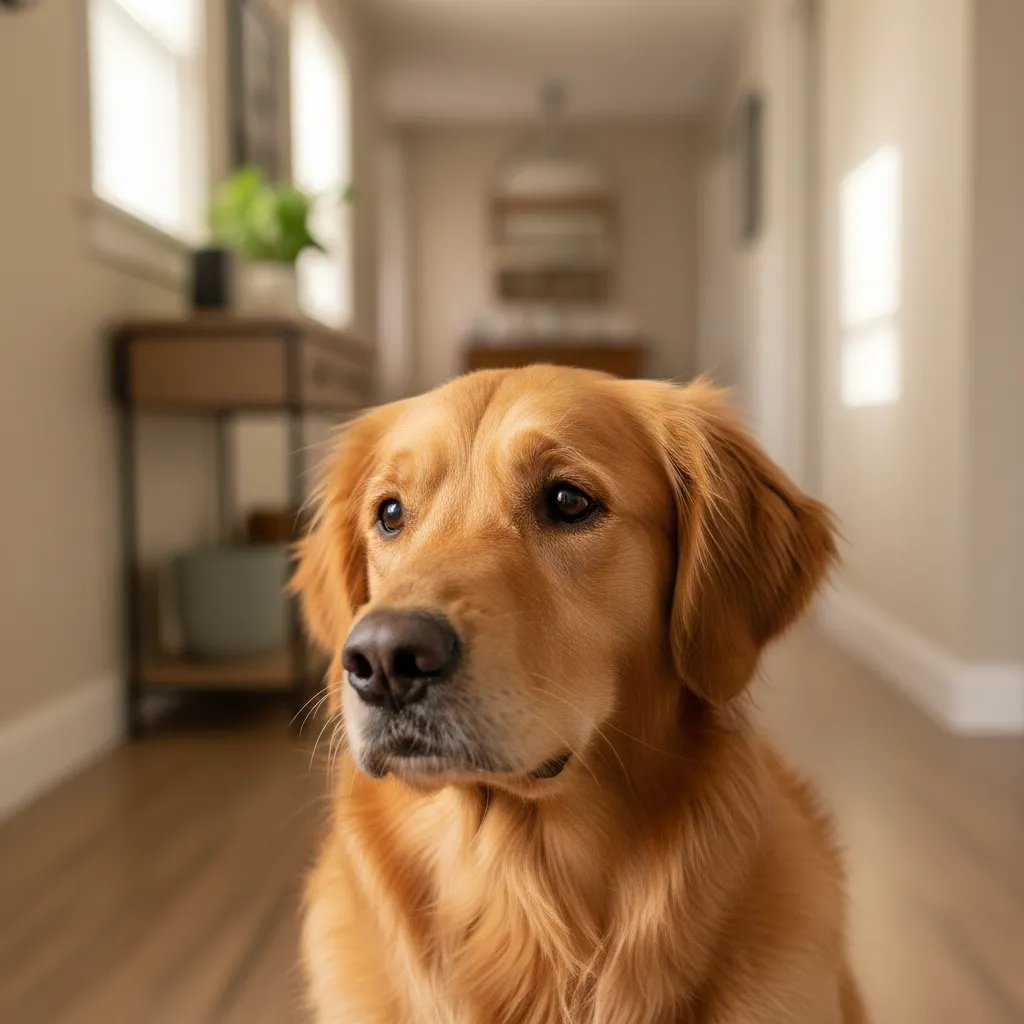
One of the biggest challenges with dog anxiety is that many early warning signs look, at first glance, like normal dog behaviour. Owners tell me their dog “just yawns a lot” or “always licks his lips after eating.” In reality, these subtle signals are often the very first indicators that stress is building. I teach my clients to watch for behaviours across three escalation levels.
Mild Stress Signals
- Lip licking when no food is present
- Frequent yawning outside of tiredness
- “Whale eye” (showing the whites of the eyes)
- Turning the head or body away from a trigger
- Ears pinned flat against the head
- A tucked or low tail, even in breeds that normally carry their tail high
Moderate Stress Signals
- Panting when the dog is not warm or has not exercised
- Pacing, circling or an inability to settle
- Excessive drooling
- Refusing food or treats (a dog who normally loves food and suddenly will not eat is almost always over threshold)
- Whining, whimpering or barking that seems out of context
Severe Stress Signals
- Destructive behaviour focused on exits such as doors, windows or crates
- House soiling in a previously house-trained dog
- Attempting to escape or bolt
- Trembling, cowering or freezing completely
- Self-harm including excessive licking that creates hot spots or open wounds
- Aggression (growling, snapping or biting) as a last-resort fear response
If you are working on basic obedience training and your dog suddenly cannot perform commands they know well, anxiety may be the reason. Stress impairs a dog’s ability to think and learn, so a “stubborn” dog is often simply a worried one.
| Stress Level | Body Language | Vocalisation | Behaviour Change | Recommended Response |
|---|---|---|---|---|
| Mild | Lip licking, yawning, whale eye | None or soft whine | Slight avoidance | Increase distance from trigger; reward calm behaviour |
| Moderate | Panting, pacing, ears flat | Whining, low barking | Cannot settle, refuses treats | Remove from situation; begin desensitisation plan |
| Severe | Trembling, cowering, frozen posture | Howling, frantic barking | Destruction, escape attempts, aggression | Consult veterinarian and certified behaviourist immediately |
Types of Dog Anxiety
Not all dog anxiety looks the same, and identifying the specific type your dog experiences will determine which treatment strategies work best. I generally categorise canine anxiety into four main types.
Separation Anxiety
This is the form I specialise in, and it is arguably the most distressing for both dog and owner. A dog with separation anxiety shows intense panic when left alone, often within minutes of the owner’s departure. Destruction, vocalisation and house soiling are hallmark symptoms. The American Veterinary Medical Association estimates that 20 to 40% of dogs referred to behavioural specialists suffer from some degree of separation distress.
Noise Phobia
Thunderstorms, fireworks, construction noise and even household appliances can trigger profound fear in noise-sensitive dogs. Unlike general nervousness, a true noise phobia tends to worsen over time without intervention because each exposure reinforces the dog’s belief that the sound is dangerous.
Social Anxiety
Some dogs are fearful of unfamiliar people, other dogs, or both. This often develops when a puppy misses the critical socialisation window between 3 and 14 weeks of age. If you are raising a young dog, following a structured puppy training plan that prioritises positive exposure is the best prevention strategy I know.
Generalised Anxiety
Dogs with generalised anxiety appear worried much of the time, regardless of context. They may startle easily, have trouble relaxing even at home, and show chronic low-level stress signals throughout the day. This type frequently has a genetic component and almost always benefits from veterinary involvement alongside behaviour modification.
What Causes Dog Anxiety?
Understanding the root cause helps me build a more targeted treatment plan. In my experience, dog anxiety usually stems from one or more of the following factors.
Genetics and breed predisposition. Certain breeds are statistically more prone to anxiety. A large Finnish study found that Miniature Schnauzers, mixed-breed dogs, and several herding breeds scored highest for fearfulness. If you are researching breeds, it is worth considering temperament alongside size and energy level. Our guides on family-friendly breeds and large dog breeds include temperament information that can help.
Inadequate early socialisation. The first 14 weeks of a puppy’s life represent a narrow window during which positive exposure to people, animals, sounds and environments shapes lifelong confidence. Dogs who miss this window are significantly more likely to develop fear-based behaviours. A thorough first-year care plan should include deliberate socialisation goals.
Traumatic experiences. A single frightening event, such as being attacked by another dog, being caught in a severe storm, or a painful veterinary procedure, can create a lasting fear association. Rescue dogs often arrive with unknown histories, and the anxiety I see in shelter animals is heartbreakingly common.
Medical causes. Pain, hormonal imbalances (particularly thyroid dysfunction), cognitive decline in older dogs, and even food sensitivities can manifest as anxious behaviour. I always recommend a full veterinary health check before assuming the problem is purely behavioural.
Changes in routine or environment. Moving house, a new baby, a change in the owner’s work schedule, or the loss of a companion animal can all trigger anxiety in dogs who were previously relaxed.
How to Diagnose Dog Anxiety
There is no single blood test for anxiety, so diagnosis relies on a combination of behavioural observation, history-taking and medical rule-outs. Here is the process I recommend.
Step 1: Keep a behaviour diary. For at least two weeks, note when your dog shows stress signals, what was happening at the time, and how long the episode lasted. Patterns almost always emerge. Many of my clients discover that their dog’s anxiety peaks at specific times, such as when the postman arrives or during the evening when household noise increases.
Step 2: Rule out medical causes. Book a thorough veterinary examination. Ask specifically about thyroid function, pain assessment, and gastrointestinal health. I have seen dogs whose “anxiety” resolved completely once an underlying dental problem was treated.
Step 3: Assess severity. Use the stress-level table above to gauge whether your dog’s anxiety is mild, moderate or severe. This determines whether you can likely manage the situation with environmental changes and training, or whether you need professional support and possibly medication.
Step 4: Consult a qualified professional. For moderate to severe cases, I strongly recommend working with a certified applied animal behaviourist (CAAB) or a veterinary behaviourist. The ASPCA provides guidance on finding qualified professionals in your area.
Proven Treatment Strategies for Dog Anxiety
After years of refining my approach, I rely on a layered treatment model that addresses the environment, the dog’s emotional state and the owner’s response simultaneously. Here are the core strategies.
1. Management and Environmental Modification
Before any training begins, I help owners reduce their dog’s exposure to triggers. This is not avoidance for its own sake; it is about lowering the dog’s baseline stress so that learning can happen. A dog who is constantly over threshold cannot absorb new information.
- Create a safe space: a quiet room or covered crate (door always open) with comfortable bedding, a white-noise machine, and a long-lasting chew
- Use visual barriers such as window film to block triggers your dog can see from inside the house
- Adjust walk times and routes to avoid peak-stress situations
- Ensure your dog is getting appropriate physical and mental exercise, as under-stimulated dogs are more prone to anxiety
2. Desensitisation and Counter-Conditioning (DS/CC)
This is the gold standard of force-free anxiety treatment, and it is the method I use most often. The principle is straightforward: expose the dog to a very low level of the trigger (so low that the dog notices it but does not react) and pair that exposure with something the dog loves, usually high-value food.
Over many sessions, the intensity of the trigger is gradually increased. The dog learns to associate the previously scary stimulus with good things, fundamentally changing their emotional response. For separation anxiety, this might start with the owner simply picking up their keys, then returning to the sofa. For noise phobia, it might mean playing a recording of thunder at barely audible volume during a relaxed training session.
Key principles for success:
- Progress must be gradual; pushing too fast will set you back
- Sessions should end on a positive note, even if that means cutting them short
- Consistency matters more than session length: five minutes daily outperforms one hour at the weekend
3. Confidence-Building Exercises
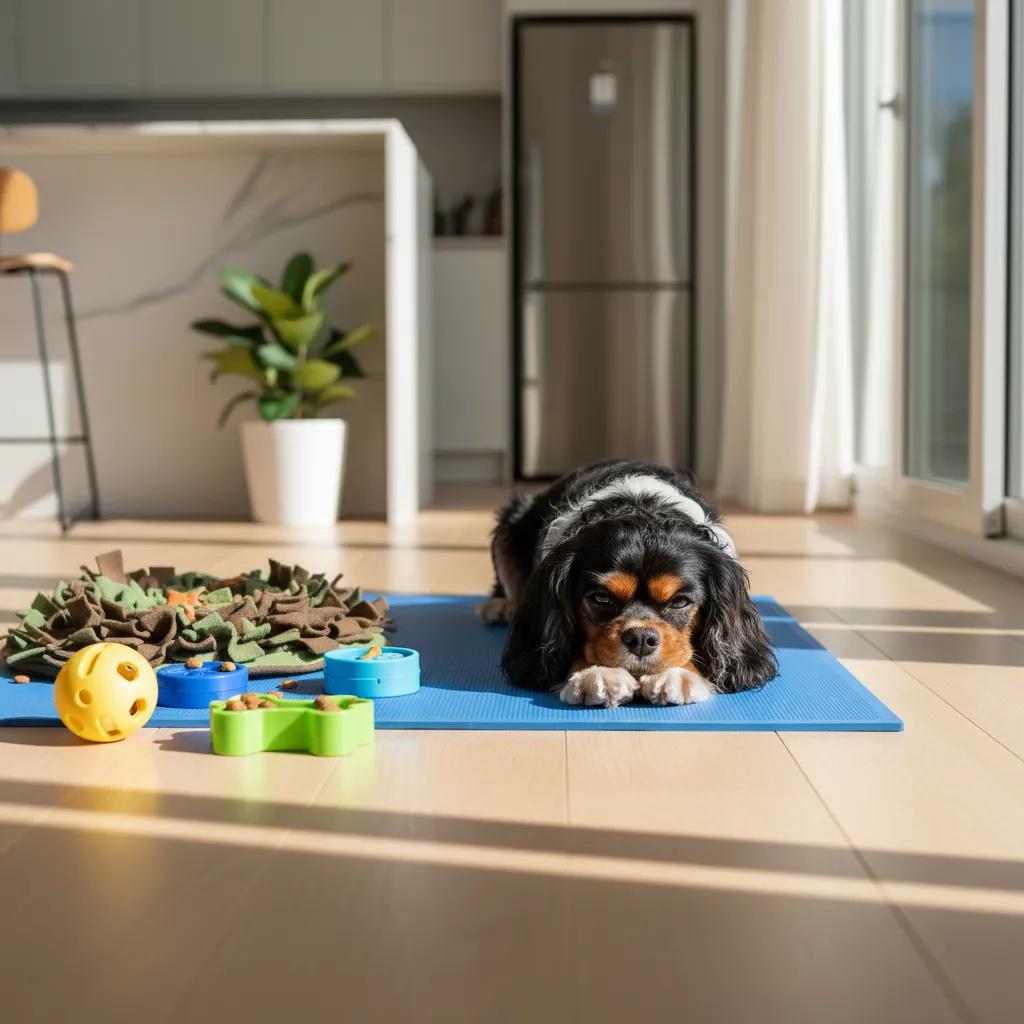
I incorporate confidence-building activities into every anxiety treatment plan. These include:
- Nose work and scent games: searching for hidden treats engages the dog’s brain in a calming, instinct-driven activity
- Shaping games: using clicker training to reward the dog for offering novel behaviours builds problem-solving confidence
- Controlled exposure to novelty: introducing new surfaces, mild obstacles and unfamiliar objects in a low-pressure setting
4. Relaxation Protocols
Dr Karen Overall’s Relaxation Protocol is a programme I assign to nearly every anxious dog I work with. It teaches the dog to remain calm on a mat through a structured series of exercises that gradually introduce mild distractions. The goal is not obedience but emotional regulation, training the dog’s nervous system to settle on cue.
5. Owner Education
I spend as much time coaching owners as I do working with dogs. Common mistakes that inadvertently worsen anxiety include:
- Punishing fear-based behaviours (this confirms to the dog that the situation is indeed dangerous)
- Forcing the dog to “face their fears” through flooding (this causes learned helplessness, not confidence)
- Providing excessive reassurance in a panicked tone, which can amplify the dog’s arousal
Instead, I teach owners to model calm, neutral behaviour, to reward any moment of calmness, and to learn their individual dog’s stress signals so they can intervene before panic escalates. The approach I use aligns with the principles outlined in our essential dog training guide.
Medications and Supplements for Dog Anxiety
I am a trainer, not a veterinarian, so I always defer to the dog’s vet when it comes to medication decisions. That said, I work closely with veterinary teams and can share what the current evidence supports.
Prescription Medications
For moderate to severe anxiety, medication can be genuinely life-changing. The most commonly prescribed options include:
- Fluoxetine (Reconcile): a selective serotonin reuptake inhibitor (SSRI) licensed for canine separation anxiety; typically takes 4 to 6 weeks to reach full effect
- Clomipramine (Clomicalm): a tricyclic antidepressant also licensed for separation anxiety in dogs
- Trazodone: often used as a situational medication for events like vet visits, travel or storms
- Gabapentin: increasingly used for situational anxiety and fear-based veterinary visits
I want to stress that medication is not a shortcut. It works best when combined with a structured behaviour modification plan. Think of it as turning down the volume on the dog’s fear so that training can be heard. The American Kennel Club provides an accessible overview of medication options that owners may find helpful to read before their veterinary appointment.
Supplements and Calming Aids
The evidence for over-the-counter calming products varies widely. Some options with reasonable supporting research include:
- Adaptil (DAP): a synthetic pheromone that mimics the appeasing pheromone produced by nursing mothers; available as a diffuser, collar or spray
- L-theanine and alpha-casozepine: amino acid supplements found in products like Zylkene and Solliquin; mild calming effect supported by some clinical trials
- Pressure wraps (such as the ThunderShirt): can reduce anxiety in some dogs, particularly during noise events; effectiveness varies by individual
I always caution owners against relying solely on supplements for anything beyond mild anxiety. If your dog’s quality of life is significantly affected, a veterinary consultation is essential.
When to Seek Professional Help
Not every anxious dog needs a professional trainer or behaviourist, but there are clear situations where expert help is not just recommended; it is necessary.
Seek professional help immediately if your dog:
- Shows aggression (growling, snapping, biting) linked to fear or anxiety
- Injures themselves during panic episodes (broken nails, worn teeth, skin wounds from excessive licking)
- Cannot be left alone for any period without extreme distress
- Has anxiety that is worsening despite your best efforts over 4 or more weeks
- Refuses food for extended periods due to stress
When choosing a professional, look for credentials such as CPDT-KA, CAAB, DACVB or IAABC-certified. Ask about their methods; any trainer who recommends punishment-based tools (prong collars, shock collars, alpha rolls) for an anxious dog is likely to make the problem significantly worse. The International Association of Animal Behaviour Consultants maintains a searchable directory of qualified professionals.
I also encourage owners to consider how anxiety affects other aspects of their dog’s wellbeing. Dogs living in smaller living spaces may need extra environmental enrichment to manage stress, and anxious dogs sometimes develop secondary issues with grooming tolerance that need patient, separate attention.
Dog anxiety is common, but it is not something your dog simply has to live with. With accurate identification, a structured force-free treatment plan, and veterinary support where needed, most anxious dogs can learn to feel safer, calmer and more confident in their world. The journey requires patience, consistency and compassion, but I promise you: the dog on the other side of that work is worth every effort.
Key Points
- Watch for early stress signals such as lip licking, whale eye and yawning; intervening early prevents escalation
- Keep a two-week behaviour diary to identify your dog’s specific triggers, patterns and severity level
- Use desensitisation and counter-conditioning as your primary training approach: short daily sessions of 5 minutes are more effective than occasional long ones
- Book a full veterinary health check to rule out pain, thyroid issues or other medical causes before starting a behaviour plan
- Choose a trainer with CPDT-KA, CAAB or IAABC credentials and verified force-free methods if professional help is needed
Frequently Asked Questions
How long does it take to treat dog anxiety?
The timeline depends on the severity and type of anxiety. Mild cases may show noticeable improvement within 2 to 4 weeks of consistent desensitisation work. Moderate to severe anxiety, particularly separation anxiety, typically requires 3 to 6 months of structured behaviour modification. If medication is involved, most SSRIs need 4 to 6 weeks to reach therapeutic levels. I always tell my clients to focus on gradual progress rather than a fixed deadline.
Can you cure dog anxiety completely?
In many cases, dog anxiety can be managed so effectively that the dog lives a happy, normal life with minimal symptoms. However, “cure” is not always the right word. Dogs with a strong genetic predisposition or deeply ingrained fear responses may always have a lower threshold for stress. The goal of treatment is to give the dog coping skills, change their emotional response to triggers, and reduce symptoms to a level that no longer affects their quality of life.
Does my dog’s anxiety mean I did something wrong?
Absolutely not. Dog anxiety is influenced by genetics, early life experiences (often before you even got your dog), medical factors and individual temperament. I work with devoted, responsible owners every week whose dogs still struggle with anxiety. Feeling guilty is natural, but it is not productive. The most helpful thing you can do is focus your energy on understanding the behaviour and following a structured treatment plan.
Are certain dog breeds more prone to anxiety?
Yes. Research has identified that breeds including Miniature Schnauzers, Lagotto Romagnolos, Wheaten Terriers, mixed-breed dogs and several herding breeds tend to score higher for fearfulness and noise sensitivity. However, individual variation is enormous, and any breed can develop anxiety. Choosing a reputable breeder who selects for stable temperament and prioritising early socialisation are the most effective preventive steps.
Is it okay to comfort my dog when they are anxious?
Yes. The outdated advice that comforting a fearful dog “reinforces the fear” has been thoroughly debunked by veterinary behaviourists. Fear is an emotion, not a behaviour that can be reinforced with attention. Offering calm, gentle comfort, such as sitting near your dog, speaking in a soft steady voice, or providing gentle contact if the dog seeks it, can help them feel safer. The key is to stay calm yourself; frantic reassurance in a high-pitched voice can inadvertently increase your dog’s arousal.
Can exercise help reduce dog anxiety?
Appropriate exercise can significantly help manage anxiety by reducing excess energy and promoting the release of calming neurochemicals like serotonin. However, exercise alone will not resolve anxiety, and the wrong type of exercise, such as high-arousal fetch sessions or chaotic dog park visits, can actually increase stress in some dogs. I recommend a mix of moderate physical exercise and mental enrichment such as sniff walks and puzzle feeders for anxious dogs.