
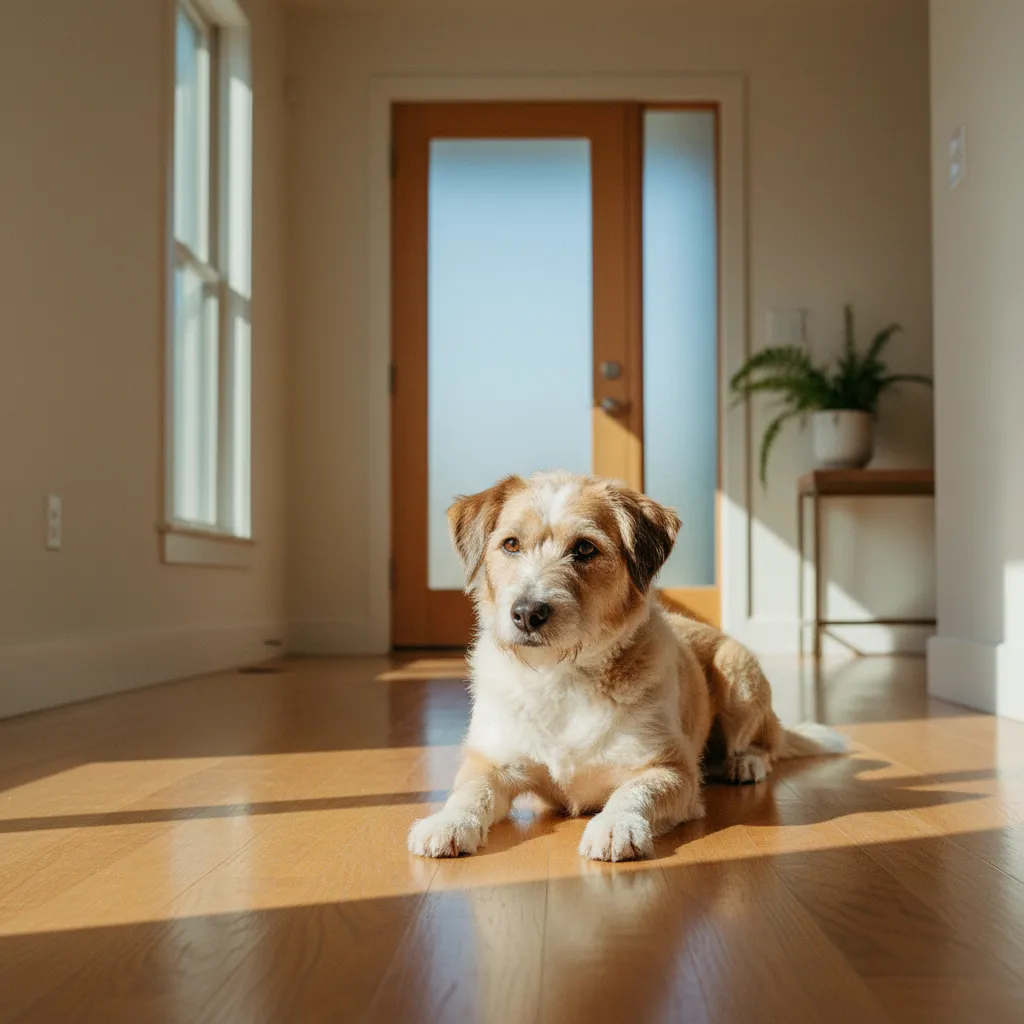
Key Takeaways
- Separation anxiety affects an estimated 14 to 20 per cent of dogs at some point in their lives, making it one of the most common behavioural disorders
- The three hallmark signs are destructive behaviour, excessive vocalisation and house soiling that occur only when the dog is left alone or separated from a specific person
- Systematic graduated absence training, where you slowly increase the time your dog spends alone starting from just a few seconds, is the most effective force-free approach
- Dogs with moderate to severe separation anxiety may benefit from veterinary-prescribed medication combined with behaviour modification, not medication alone
- Early alone-time practice during puppyhood (starting from 8 to 10 weeks) significantly reduces the risk of separation-related problems later in life
- Most dogs show measurable improvement within 4 to 8 weeks of a consistent desensitisation programme, though severe cases can take 6 months or longer
In This Guide
- What Is Separation Anxiety in Dogs?
- Recognising the Signs of Separation Anxiety
- Common Causes and Risk Factors
- Separation Anxiety vs. Boredom: How to Tell the Difference
- Proven Training Techniques for Separation Anxiety
- Medication and Supplements: What the Research Says
- Preventing Separation Anxiety in Puppies and Rescue Dogs
- When to Seek Professional Help
- Creating a Long-Term Management Plan
In my ten-plus years as a certified professional dog trainer in Austin, Texas, I have worked with hundreds of dogs struggling with separation anxiety. It is one of the most heartbreaking issues I encounter because it causes genuine distress for both the dog and the owner. The good news? With the right approach, patience and sometimes professional support, the vast majority of dogs can learn to feel safe and relaxed when left alone. In this guide, I will walk you through everything I know about separation anxiety in dogs, from the earliest warning signs to the proven, science-backed strategies that I use every day in my practice.
What Is Separation Anxiety in Dogs?
Separation anxiety is a behavioural condition in which a dog experiences significant distress when separated from their owner or primary attachment figure. It is not simply a dog being “naughty” or “stubborn.” According to research published in the Journal of Veterinary Behavior, separation anxiety is a genuine panic response, comparable to a panic attack in humans. The dog’s nervous system shifts into a fight-or-flight state, and the resulting behaviours are symptoms of that panic, not deliberate misbehaviour.
I always tell my clients that understanding this distinction is the single most important step. Once you accept that your dog is genuinely frightened rather than defiant, you can approach the problem with empathy and choose training methods that actually work. Punishment-based approaches are not only ineffective for separation anxiety; they make the problem significantly worse by adding fear on top of an already anxious state.
Dogs are social animals who have evolved alongside humans for thousands of years. It is perfectly natural for them to prefer our company. Separation anxiety develops when that preference tips into a state of pathological dependence where the dog simply cannot cope without their person nearby. Some dogs become anxious only when a specific person leaves, while others panic whenever they are left completely alone.
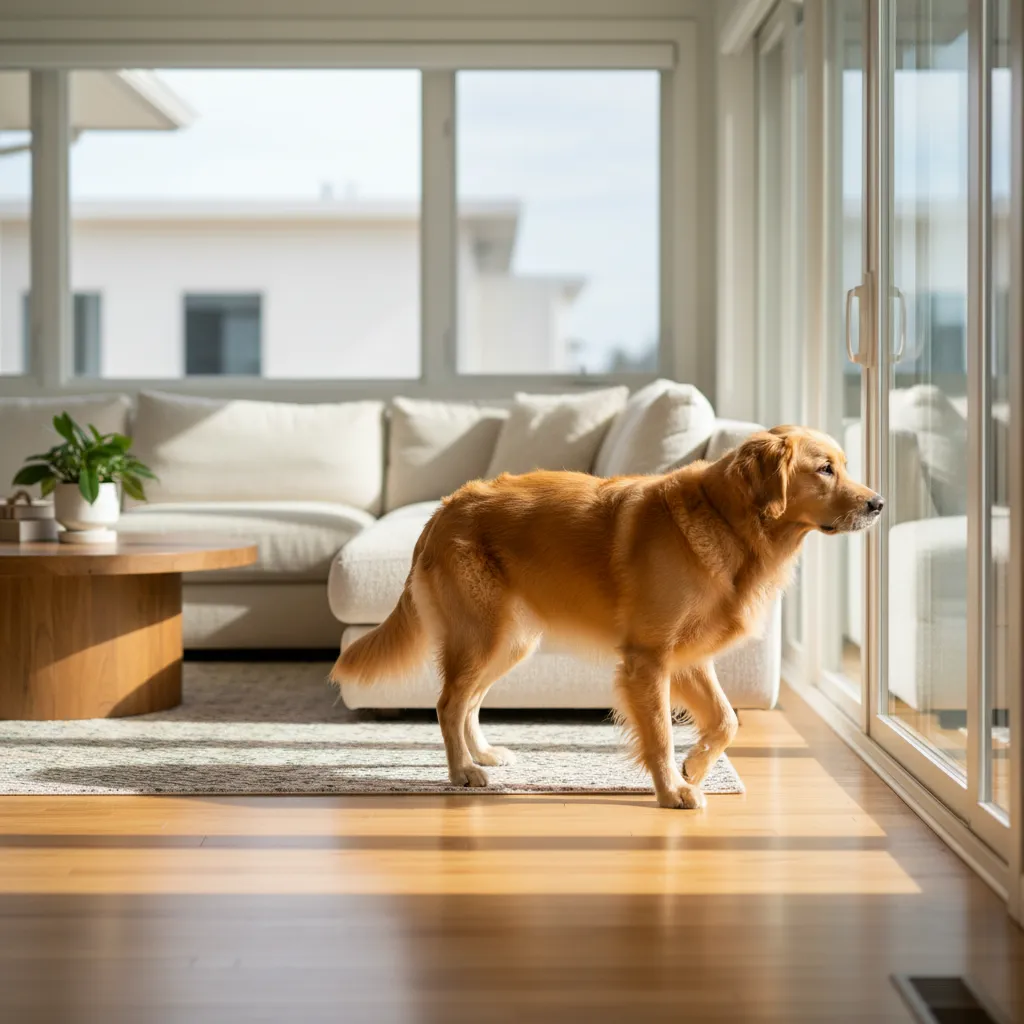
Recognising the Signs of Separation Anxiety
Many owners do not realise their dog has separation anxiety until the problem becomes severe. I recommend setting up a camera to record your dog’s behaviour when you leave, even if you have not noticed any issues. The signs of separation anxiety typically begin within the first 10 to 30 minutes of your departure and can include:
- Excessive vocalisation: persistent barking, howling or whining that starts shortly after you leave and continues for extended periods
- Destructive behaviour: chewing door frames, scratching at doors and windows, destroying furniture or items near exits
- House soiling: urination or defecation indoors despite being fully house-trained
- Pacing and restlessness: walking in repetitive patterns, often along the same path near the door
- Excessive drooling or panting: visible signs of physiological stress even in cool environments
- Escape attempts: trying to break through doors, windows or crates, sometimes resulting in injury
- Refusal to eat: ignoring treats, food puzzles or chews when left alone
- Pre-departure anxiety: becoming visibly distressed when you pick up your keys, put on shoes or reach for your coat
The key diagnostic feature is that these behaviours occur exclusively or primarily when the dog is separated from their attachment figure. If your dog chews furniture whether you are home or not, the issue is more likely boredom or insufficient enrichment rather than separation anxiety. As part of a structured puppy training programme, teaching your dog to settle independently from an early age can prevent many of these signs from developing.
Common Causes and Risk Factors
There is rarely a single cause of separation anxiety. In my experience, it usually results from a combination of genetic predisposition, early life experiences and triggering events. Here are the most common factors I see in my practice:
Changes in routine or household: A sudden shift, such as an owner returning to work after an extended period at home, a family member moving out, or a house move, is one of the most frequent triggers. The post-pandemic period saw a significant increase in separation anxiety cases because dogs who had spent their entire lives with their owners suddenly found themselves alone for hours.
Rehoming and shelter stays: Dogs who have been rehomed, particularly those with multiple rehoming events, are at higher risk. The RSPCA notes that rescue dogs are disproportionately affected, likely because the experience of losing an attachment figure primes the dog to fear future abandonment.
Insufficient early socialisation: Puppies who are not gradually introduced to alone time during the critical socialisation window of 3 to 14 weeks may never develop the coping skills needed to handle solitude. This is why I incorporate alone-time practice into every puppy programme I design.
Breed predisposition: While any breed can develop separation anxiety, certain breeds that were selectively bred for close human partnership, including Labrador Retrievers, German Shepherds, Border Collies, Vizslas and Cavalier King Charles Spaniels, tend to be more susceptible. That said, mixed breed dogs are just as commonly affected. When choosing the right dog for your household, understanding breed temperament is important; you can learn more in our guide to the best dog breeds for families.
Traumatic experiences: A frightening event that occurred while the dog was alone, such as a thunderstorm, firework display, or break-in, can create a negative association with being left.
Over-attachment and lack of independence training: Dogs who are constantly followed by their owners, never encouraged to rest in a separate room, or always carried and comforted may not develop the emotional resilience to manage alone time.
Separation Anxiety vs. Boredom: How to Tell the Difference
One of the most common mistakes I see is owners confusing boredom-related destruction with separation anxiety. The distinction matters enormously because the treatment approaches are completely different. Here is how I help my clients tell them apart:
| Feature | Separation Anxiety | Boredom or Under-Stimulation |
|---|---|---|
| Timing of behaviour | Begins within minutes of owner’s departure | May start after 30 to 60 minutes; often intermittent |
| Location of destruction | Focused on exits: doors, windows, gates | Spread throughout the home; targets novel or interesting objects |
| Vocalisation | Persistent, distressed howling or barking | Intermittent barking, often triggered by outside noises |
| House soiling | Present even in fully house-trained dogs | Rare in adult dogs unless left too long |
| Response to enrichment | Ignores food puzzles and treats when alone | Engages with enrichment toys and treats |
| Body language on camera | Pacing, panting, drooling, trembling | Relaxed between bouts of mischief; may sleep first |
| Behaviour when owner is home | Follows owner constantly; anxious if in separate room | Generally independent; may seek attention but settles |
If your dog falls into the boredom category, the solution is usually straightforward: more physical exercise, mental enrichment and appropriate chew items. For dogs with genuine separation anxiety, enrichment alone will not resolve the issue because the underlying problem is emotional distress, not a lack of stimulation. Larger, high-energy breeds are particularly prone to boredom-related issues that can mimic anxiety, so proper identification is essential.
Proven Training Techniques for Separation Anxiety
The cornerstone of treating separation anxiety is systematic desensitisation, a process of gradually exposing your dog to being alone in small, manageable increments so they learn that your departure is safe and that you always come back. Here is the step-by-step approach I use with my clients:
Step 1: Establish a Baseline
Set up a camera and determine how long your dog can be alone before showing any signs of distress. For some dogs, this might be 30 seconds. For others, it could be 5 minutes. This is your starting point, and there is no shame in whatever number you get. The whole point of this process is to meet your dog exactly where they are.
Step 2: Practise Short Departures
Begin by leaving for durations below your dog’s anxiety threshold. If your dog starts to panic at the 2-minute mark, practise leaving for 30 seconds to 1 minute and returning calmly. Keep your departures and returns low-key: no lengthy goodbyes, no excited greetings. You want to communicate that coming and going is completely unremarkable.
Step 3: Gradually Increase Duration
Over days and weeks, slowly extend the time you are away. I generally recommend increasing by no more than 10 to 20 per cent at a time and mixing in shorter durations to prevent your dog from expecting a consistent increase. A typical session might look like: 1 minute, 2 minutes, 1.5 minutes, 3 minutes, 2 minutes, 4 minutes. The variation is crucial because it teaches the dog that departure length is unpredictable but always manageable.
Step 4: Desensitise Departure Cues
Many dogs begin to panic before you even leave because they have learned that certain actions, such as picking up keys, putting on shoes or grabbing a bag, predict your departure. Break this association by performing these actions randomly throughout the day without actually leaving. Pick up your keys, sit back down. Put on your shoes, then take them off. Over time, these cues lose their predictive power.
Step 5: Build a Positive Alone-Time Routine
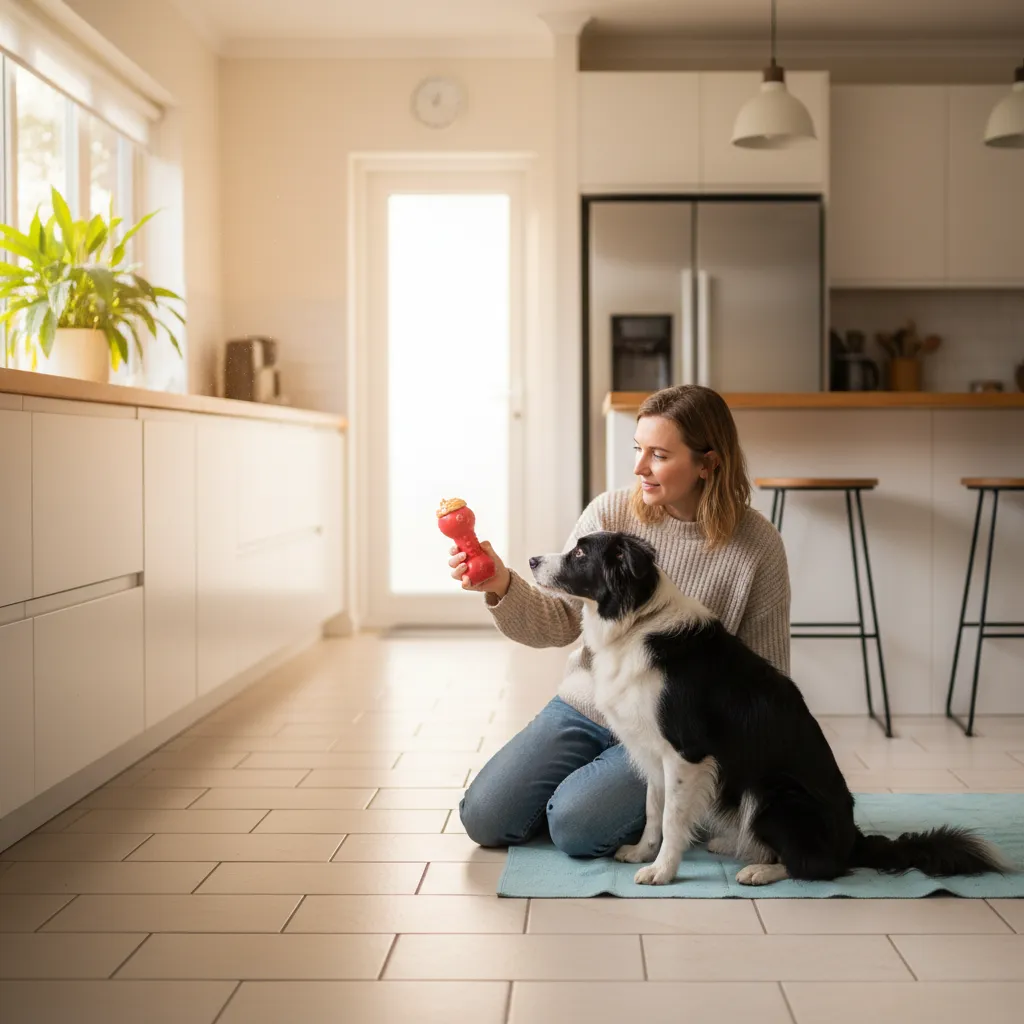
Create a consistent pre-departure routine that your dog associates with good things. I recommend giving a long-lasting chew or food puzzle 5 minutes before you leave, so your dog is already engaged when you step out. A frozen Kong stuffed with a mixture of their regular food, peanut butter and banana works brilliantly for many dogs. Ensuring your dog is on an appropriate, high-quality diet also supports their overall wellbeing and can influence behaviour; see our guide on how to choose the right food for your dog.
Step 6: Manage the Environment During Training
While you are working through the desensitisation programme, it is essential to avoid leaving your dog alone for longer than they can handle. Every time they experience a full-blown panic episode, it sets back your progress. This might mean arranging for a dog sitter, using a daycare, having a friend or family member stay with your dog, or taking them with you when possible. I know this can be challenging, but it is a temporary measure that makes the training dramatically more effective.
Medication and Supplements: What the Research Says
For moderate to severe cases, I often recommend that my clients consult their veterinarian about medication. This is not a failure or a shortcut; it is an evidence-based tool that can make the difference between a dog who makes progress and one who remains stuck in a cycle of panic.
The Blue Cross and numerous veterinary behaviourists agree that medication works best in combination with a structured behaviour modification programme, not as a standalone solution. The most commonly prescribed medications include:
- Fluoxetine (Reconcile): an SSRI specifically licensed for use in dogs with separation anxiety. Takes 4 to 6 weeks to reach full effect.
- Clomipramine (Clomicalm): a tricyclic antidepressant that has shown good results in clinical trials for separation-related behaviours.
- Trazodone: often used as a short-acting supplement for situational anxiety or while waiting for SSRIs to take effect.
For milder cases or as complementary support, some owners explore supplements such as L-theanine, alpha-casozepine (Zylkene) and Adaptil (a synthetic pheromone diffuser). While the evidence for these is less robust than for prescription medications, many of my clients have reported positive results, particularly when combined with training. Always consult your veterinarian before starting any supplement regimen; keeping your dog’s health checks and vaccinations up to date also ensures you are working from a baseline of good physical health.
Preventing Separation Anxiety in Puppies and Rescue Dogs
Prevention is always easier than treatment, and I spend a significant portion of my puppy classes teaching owners how to build alone-time resilience from day one. Here is what I recommend:
For puppies:
- Begin alone-time practice from 8 to 10 weeks of age, starting with just a few seconds behind a baby gate while you step out of sight
- Gradually build up to 30 minutes of alone time by the time the puppy is 12 to 14 weeks old
- Use a crate or puppy-safe area to create a positive “den” space where the puppy feels secure
- Avoid spending every moment with your new puppy, even if you work from home; schedule deliberate alone-time practice daily
- Reward calm, independent behaviour and avoid only giving attention when the puppy is following you or seeking contact
Our detailed week-by-week puppy training plan includes specific milestones for alone-time practice at each stage of development.
For rescue dogs:
- Allow a two-week decompression period before expecting your new dog to handle being alone. During this time, keep departures very short and gradually increase them.
- Establish a consistent daily routine as quickly as possible; predictability reduces anxiety
- Avoid overwhelming your rescue dog with too many new experiences at once; prioritise safety and security in the first month
- If possible, take time off work or arrange for company during the initial settling-in phase
- Watch for subtle signs of distress, as many rescue dogs have learned to suppress obvious signals of anxiety
If you live in a smaller space, choosing a breed suited to apartment living can also help, as dogs comfortable in compact environments often adapt to alone-time routines more readily when properly introduced.
When to Seek Professional Help
While mild separation anxiety can often be addressed by a dedicated owner following a structured plan, I strongly recommend seeking professional help if:
- Your dog has injured themselves during a panic episode (broken nails, damaged teeth, cuts from escape attempts)
- The behaviour has not improved after 4 to 6 weeks of consistent desensitisation training
- Your dog’s anxiety is so severe that they cannot eat, drink or settle at all when alone
- You are receiving complaints from neighbours or facing potential housing issues due to noise
- You feel overwhelmed, frustrated or hopeless about the situation
When choosing a professional, look for a Certified Separation Anxiety Trainer (CSAT), a veterinary behaviourist (a veterinarian with additional board certification in behaviour), or a trainer certified through a recognised body who specialises in separation-related issues. The ASPCA provides excellent guidance on identifying qualified professionals. Always ensure that any trainer you work with uses force-free, reward-based methods. Aversive techniques such as bark collars, citronella sprays and physical corrections have no place in separation anxiety treatment and will make the problem worse.
A veterinary behaviourist can also rule out medical causes that mimic separation anxiety, including urinary tract infections (which can cause house soiling), cognitive dysfunction in older dogs, and pain-related restlessness.
Creating a Long-Term Management Plan
Separation anxiety is highly treatable, but I always want my clients to understand that it requires ongoing management rather than a one-time fix. Dogs who have experienced separation anxiety may be more vulnerable to relapse during times of change or stress. Here is how I help my clients build a sustainable long-term plan:
Maintain daily alone-time practice: Even after your dog can comfortably stay alone for a full work day, continue to incorporate short practice departures regularly. This keeps the skill fresh and reinforces the positive association.
Monitor for early warning signs: If your dog starts shadowing you more closely, showing reluctance when you approach the door, or becoming restless before departures, do not wait for a full relapse. Go back a few steps in your training and rebuild confidence at a lower level.
Plan for transitions: Any significant life change, such as a house move, a new baby, a change in work schedule, or the loss of another pet, can trigger a recurrence. During these times, temporarily reduce the duration your dog is left alone and increase enrichment and exercise.
Keep up with physical and mental exercise: A dog who receives adequate daily exercise and mental stimulation is better equipped to handle alone time. Aim for at least 30 to 60 minutes of physical activity and 15 to 20 minutes of dedicated mental enrichment before departure.
Build a support network: Identify reliable dog sitters, neighbours, friends or family members who can step in during periods when your dog needs extra support. Having a backup plan prevents you from being forced to leave your dog alone for longer than they can manage during setbacks.
I also encourage my clients to keep a simple log or diary of their dog’s progress. Note the duration of your absences, your dog’s behaviour on camera, and any changes in routine. This record helps you spot patterns, celebrate progress and provide useful information to any professionals working with your dog.
Key Points
- Set up a camera to assess your dog’s behaviour when left alone before starting any treatment plan
- Begin graduated absence training at below your dog’s anxiety threshold and increase by no more than 10 to 20 per cent each session
- Desensitise departure cues by randomly performing pre-departure actions (picking up keys, putting on shoes) without leaving
- Consult your veterinarian about medication for moderate to severe cases; it works best alongside a behaviour modification programme
- Avoid leaving your dog alone for longer than they can handle during the training period; every panic episode sets back progress
Frequently Asked Questions
How long does it take to treat separation anxiety in dogs?
Most dogs with mild to moderate separation anxiety show significant improvement within 4 to 8 weeks of consistent desensitisation training. Severe cases may take 3 to 6 months or longer, particularly if medication needs time to take effect. The key factor is consistency: daily practice sessions with gradual increases in alone time produce the best results. Every dog progresses at their own pace, and setbacks are a normal part of the process.
It depends on the individual dog. Some dogs find a crate comforting because it provides a secure, den-like space. However, many dogs with separation anxiety feel more panicked when confined and may injure themselves trying to escape. I recommend testing your dog’s response to the crate using a camera before relying on it. If your dog shows any signs of distress in the crate, such as panting, drooling, scratching or biting at the bars, use a puppy-proofed room or pen instead.Can you crate a dog with separation anxiety?
In most cases, no. Because separation anxiety is typically an attachment to a specific person rather than a general dislike of being alone, adding a second dog does not address the root cause. I have seen cases where a confident companion dog helps slightly, but I have also seen cases where the anxious dog’s behaviour remains unchanged, and the new dog even begins to develop anxiety as well. Focus on desensitisation training before considering a second pet.Does getting a second dog help with separation anxiety?
The three biggest mistakes I see are: punishing the dog for destructive behaviour or house soiling (this increases fear and worsens anxiety), using a bark collar or aversive device (this suppresses the symptom without addressing the emotion), and flooding, which means forcing the dog to endure long absences in the hope they will “get used to it.” Flooding almost always makes separation anxiety significantly worse and can cause lasting psychological harm.What are the worst things to do if your dog has separation anxiety?
Research suggests that breeds selectively bred for close human partnership, such as Labrador Retrievers, German Shepherds, Border Collies, Vizslas and Cavalier King Charles Spaniels, may be more predisposed. However, separation anxiety can affect any breed or mixed breed. Environmental factors, early life experiences and individual temperament play at least as large a role as genetics. No breed is immune, and no breed is guaranteed to develop it.Is separation anxiety more common in certain breeds?
Most dogs can learn to be comfortable alone, and many reach a point where they show no signs of distress during normal absence durations. However, dogs who have experienced separation anxiety may remain more vulnerable to relapse during stressful life changes. I prefer to think of it as a condition that is successfully managed rather than permanently cured. Ongoing maintenance, including regular alone-time practice and awareness of early warning signs, helps prevent recurrence.Can separation anxiety in dogs be cured permanently?