
Key Takeaways
- Your puppy needs 3 core veterinary visits in the first year, starting within 48 hours of bringing them home
- The critical socialization window closes around 14 to 16 weeks of age, making early positive exposure essential for lifelong confidence
- Puppies under 6 months should eat 3 meals per day, transitioning to twice daily feeding between 6 and 12 months
- House training typically takes 4 to 6 months of consistent routine, though some puppies need up to a year
- A proper puppy care plan covers 7 key areas: health, nutrition, training, socialization, grooming, safety and exercise
- Puppies need only 5 minutes of structured exercise per month of age, twice daily, to protect developing joints
In This Guide
- Preparing Your Home for a New Puppy
- First-Week Veterinary Care and Health Foundations
- Puppy Nutrition: Feeding Schedule by Age
- Socialization and Early Experiences
- House Training and Basic Obedience
- Grooming and Handling from Day One
- Exercise and Physical Development
- Preventing Separation Anxiety Early
- Month-by-Month Puppy Care Timeline
I still remember the first puppy I raised on my own, a wiggly Lab mix named Biscuit who chewed through two pairs of shoes before I even had her a week. That was over a decade ago, and since then I have helped hundreds of families in Austin navigate the exciting, exhausting first year of puppy care. The truth is, most new puppy parents feel overwhelmed because they do not know what to prioritize and when. That is exactly why I created this complete first-year checklist: to give you a clear, week-by-week roadmap so nothing falls through the cracks.
Whether you have just brought home an 8-week-old bundle of energy or you are still preparing, this guide covers every essential aspect of puppy care, from that critical first vet visit to the moment your pup celebrates their first birthday as a well-adjusted young dog.
Preparing Your Home for a New Puppy
Before your puppy arrives, puppy-proofing is not optional. I tell every client the same thing: get on your hands and knees and crawl through every room your puppy will access. You will be amazed at the electrical cords, small objects and toxic items you find at puppy level.
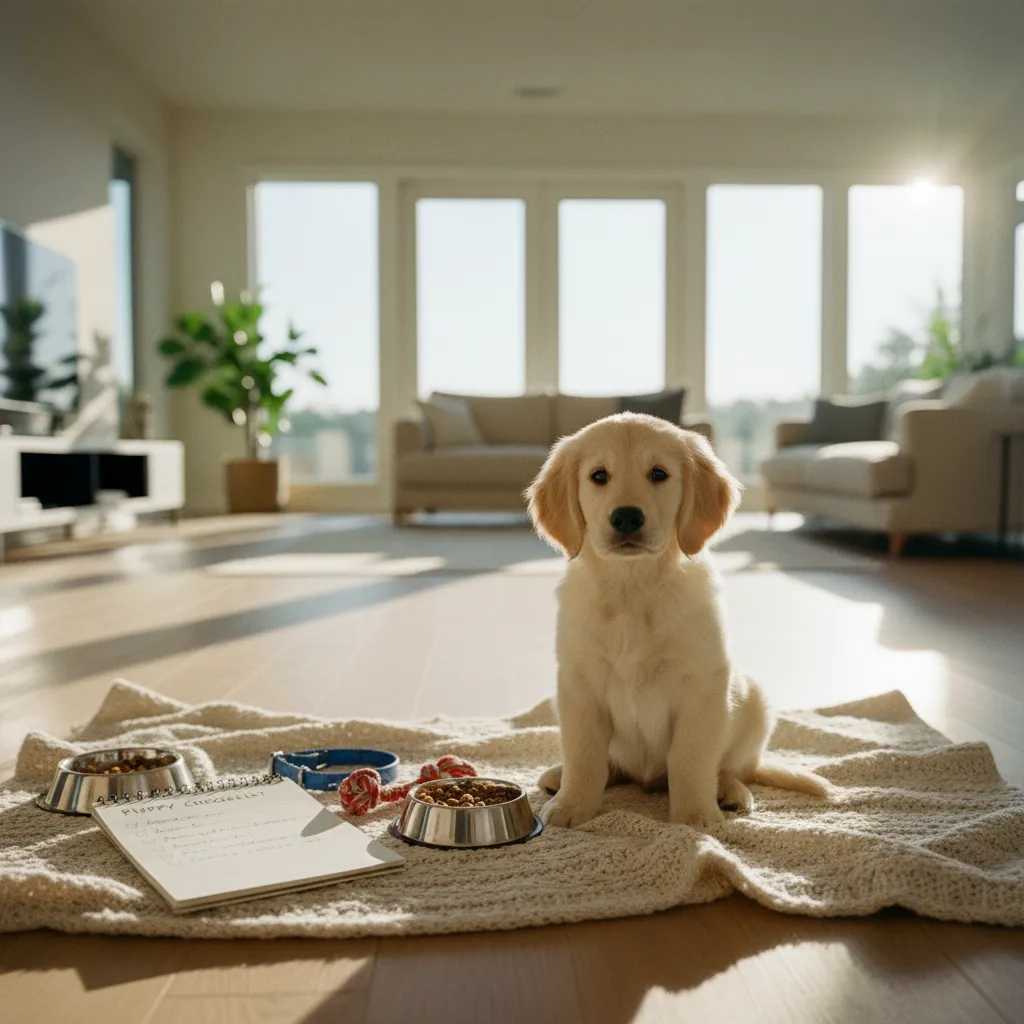
Your essential supplies checklist should include:
- An appropriately sized crate (big enough to stand, turn around and lie down, but not so large they can toilet in one corner)
- Stainless steel or ceramic food and water bowls
- A flat collar with ID tags plus a 6-foot leash
- Enzymatic cleaner for inevitable accidents
- Three to four chew toys of different textures
- A comfortable bed or blanket for the crate
- Puppy-specific food recommended by your veterinarian
- Baby gates or an exercise pen to limit access
Remove or secure all toxic houseplants (lilies, sago palms, pothos), household chemicals, medications and small items that could be swallowed. The ASPCA Animal Poison Control Center maintains a comprehensive list of toxic substances, and I recommend bookmarking it before your puppy arrives.
Designate a quiet, confined area where your puppy will sleep and rest. This becomes their safe space, and it plays a huge role in successful crate training and early separation anxiety prevention.
First-Week Veterinary Care and Health Foundations
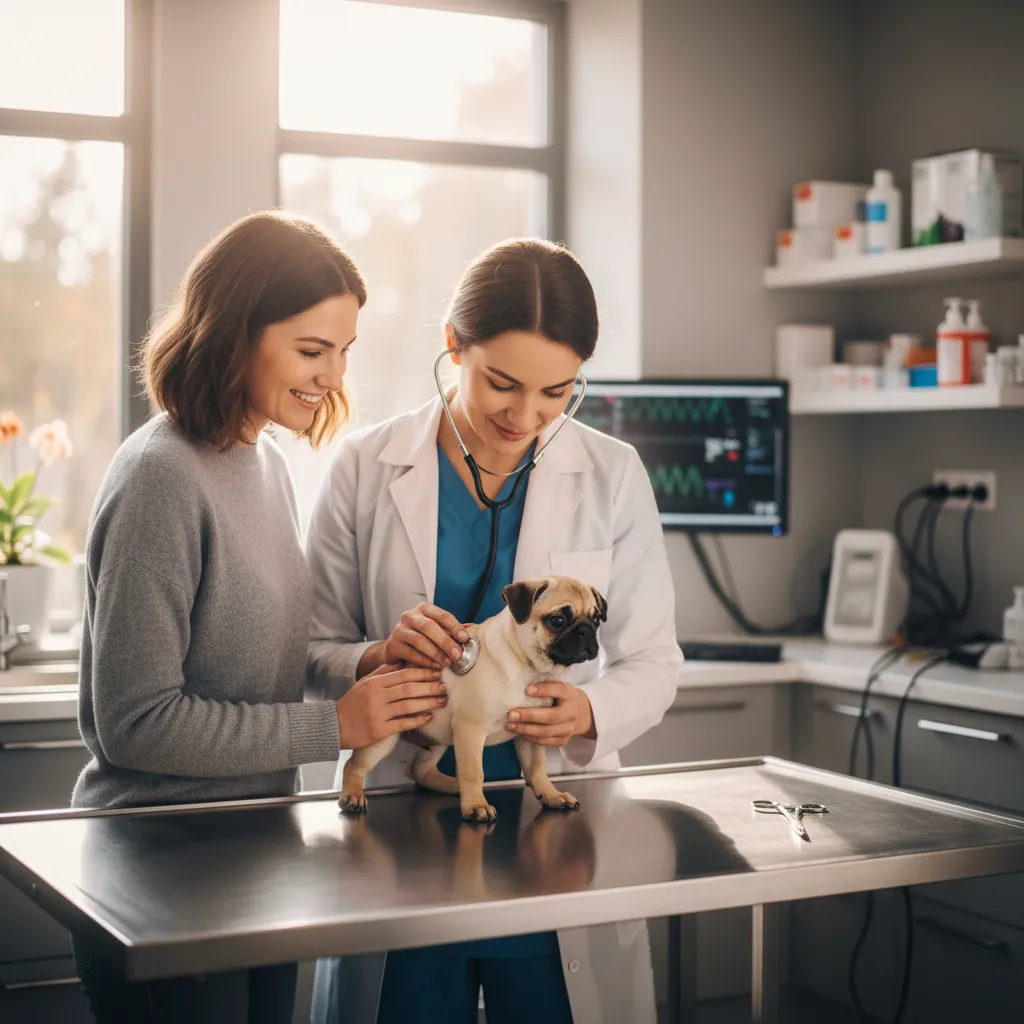
I cannot stress this enough: schedule your puppy’s first veterinary exam within 48 hours of bringing them home. Even if the breeder or rescue provided recent health records, your own vet needs to establish a baseline. This initial visit typically includes a physical examination, fecal parasite screening and a discussion about the vaccination schedule your puppy needs.
During the first year, your puppy will need a series of core vaccinations administered every 3 to 4 weeks between 6 and 16 weeks of age. These protect against distemper, parvovirus, adenovirus and rabies. The American Veterinary Medical Association recommends discussing non-core vaccines like Bordetella and Leptospirosis based on your puppy’s lifestyle and geographic risk factors.
Other first-year health milestones include:
- Spaying or neutering, typically discussed between 4 and 9 months depending on breed and size
- Monthly heartworm, flea and tick prevention starting as early as 8 weeks
- Microchipping, which your vet can do during any visit
- Dental assessment as adult teeth come in around 4 to 7 months
Keep a dedicated puppy health folder, whether physical or digital, with all vaccination records, deworming dates and vet visit summaries. You will need these for boarding, training classes and grooming appointments.
Puppy Nutrition: Feeding Schedule by Age
Proper nutrition is one of the most impactful aspects of puppy care, and getting it right during the first year sets the foundation for lifelong health. Puppies have very different nutritional requirements than adult dogs. They need higher protein and fat content to support rapid growth, along with specific calcium-to-phosphorus ratios that protect developing bones and joints.
I always recommend choosing a food that meets AAFCO standards for growth or “all life stages.” For a deeper look at selecting the right formula, check out our guide on how to choose the right diet for your dog.
| Age | Meals Per Day | Portion Guidance | Key Nutritional Notes |
|---|---|---|---|
| 8 to 12 weeks | 3 to 4 | Follow package guidelines for target adult weight | Soak kibble slightly for easier chewing |
| 3 to 6 months | 3 | Increase portions gradually as weight increases | Monitor body condition weekly; ribs should be easily felt |
| 6 to 9 months | 2 to 3 | Begin transitioning toward twice-daily feeding | Small breeds may switch to adult food; large breeds stay on puppy formula |
| 9 to 12 months | 2 | Adjust based on activity level and body condition | Large and giant breeds continue puppy food until 12 to 24 months |
Treats should make up no more than 10% of your puppy’s daily caloric intake. For training, I use tiny pieces of plain boiled chicken or commercial training treats no bigger than a pea. Overfeeding treats is one of the fastest routes to an overweight puppy, and excess weight puts dangerous stress on growing joints, especially in large and giant breed puppies.
Always provide fresh water and monitor intake. Puppies that suddenly drink significantly more or less than usual warrant a veterinary call.
Socialization and Early Experiences
If I could give every new puppy parent just one piece of advice, it would be this: prioritize socialization above everything else before 16 weeks of age. The socialization window is a neurological reality, not just a training philosophy. During this period, puppies form their understanding of what is safe and normal in the world. Positive experiences during this window build confidence that lasts a lifetime, while missed opportunities can result in fearfulness that takes months or years to address.
Effective socialization does not mean exposing your puppy to as many things as possible. Quality matters far more than quantity. Here is my recommended approach:
- Introduce 3 to 5 new experiences per week, paired with treats and calm praise
- Expose your puppy to different surfaces (grass, tile, metal grates, gravel)
- Let them observe traffic, bicycles, strollers and umbrellas from a comfortable distance
- Arrange brief, positive meetings with people of different ages, appearances and clothing
- Play recordings of thunderstorms, fireworks and sirens at low volume during mealtime
- Visit pet-friendly stores for controlled exposure to new environments
A common concern is balancing socialization with vaccination status. Until your puppy is fully vaccinated, avoid dog parks and areas with high canine traffic. However, you can safely carry your puppy in public, attend well-managed puppy socialization classes (where all participants show proof of vaccination) and arrange playdates with healthy, vaccinated adult dogs you know and trust.
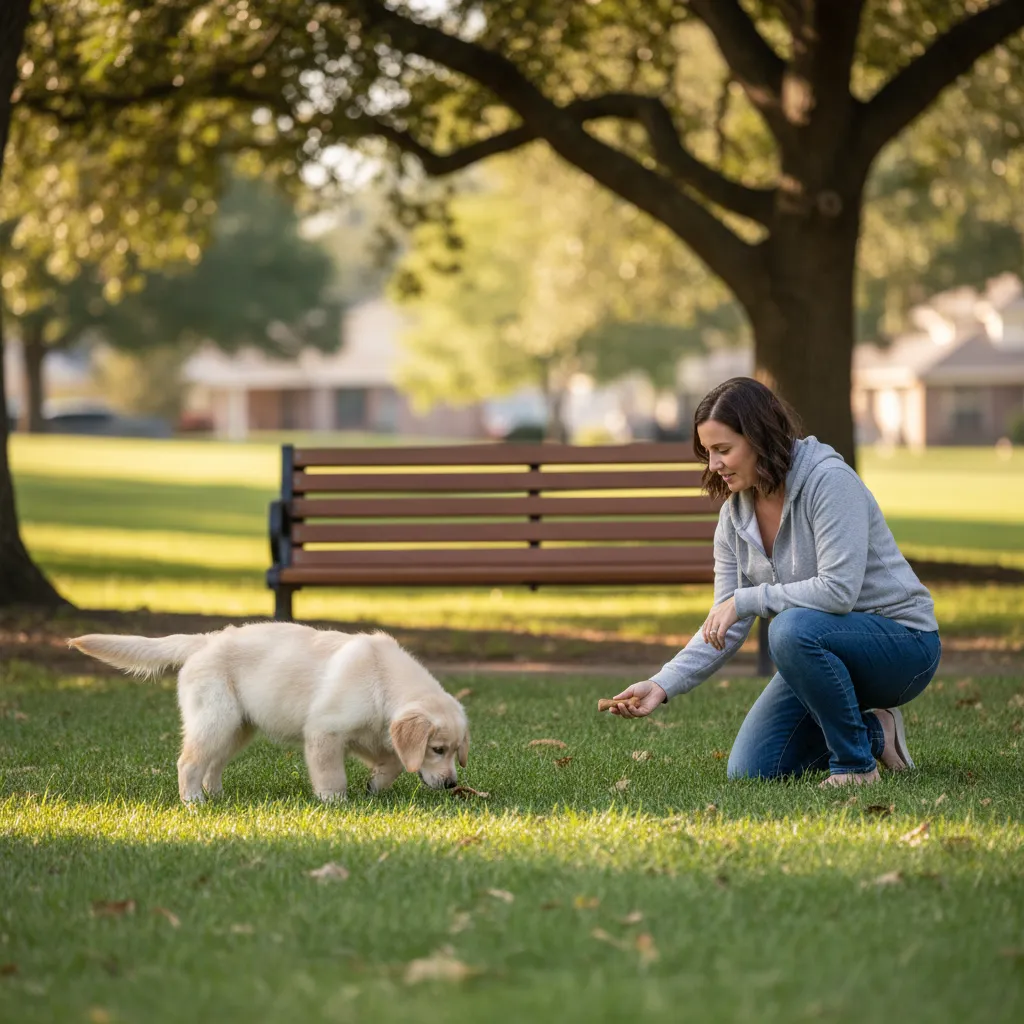
For a structured socialization and training plan, our week-by-week puppy training guide breaks everything down by age and developmental stage.
House Training and Basic Obedience
House training is usually the first major challenge of puppy care, and patience is your greatest tool. The average puppy takes 4 to 6 months to become reliably house trained, though some breeds and individual dogs need closer to a year. Small breeds in particular often take longer due to smaller bladders and faster metabolisms.
My house training protocol is straightforward:
- Take your puppy outside first thing in the morning, after every meal, after naps, after play sessions and before bed
- Go to the same spot every time and use a consistent cue word like “go potty”
- Reward immediately after they finish, not when you get back inside
- Supervise constantly when indoors; if you cannot watch them, use the crate
- Clean all accidents thoroughly with enzymatic cleaner to eliminate odor markers
Never punish a puppy for house training accidents. Rubbing a puppy’s nose in a mess or yelling does not teach them where to go; it teaches them to hide when they need to eliminate. Every punishment-based approach I have seen in my career has slowed progress or created new behavioral problems.
For basic obedience, start with five foundational cues: sit, down, come, stay and leave it. Keep training sessions to 3 to 5 minutes for young puppies (their attention spans are genuinely short) and always end on a positive note. I use positive reinforcement exclusively in my practice, meaning we reward desired behaviors rather than correcting unwanted ones. This approach builds a puppy who is eager to learn and genuinely enjoys working with you.
Consistent training from day one is one of the most effective things you can do for your puppy’s long-term behavior. If you are looking for a structured approach, our puppy training week-by-week plan covers each skill at the appropriate developmental stage.
Grooming and Handling from Day One
Many people do not think of grooming as part of puppy care until their dog is matted or terrified of nail trims. I encourage starting gentle handling exercises from the very first week. The goal is not to give a full grooming session; it is to create positive associations with being touched everywhere.
Each day, practice briefly touching and examining your puppy’s:
- Ears (look inside, gently fold them back)
- Paws (touch each toe, press gently on pads)
- Mouth (lift lips, touch gums and teeth)
- Tail area
- Belly and flanks
Pair every handling session with high-value treats. Touch a paw, give a treat. Lift an ear, give a treat. This cooperative care approach means your adult dog will calmly accept veterinary examinations, grooming appointments and medication administration rather than needing to be restrained.
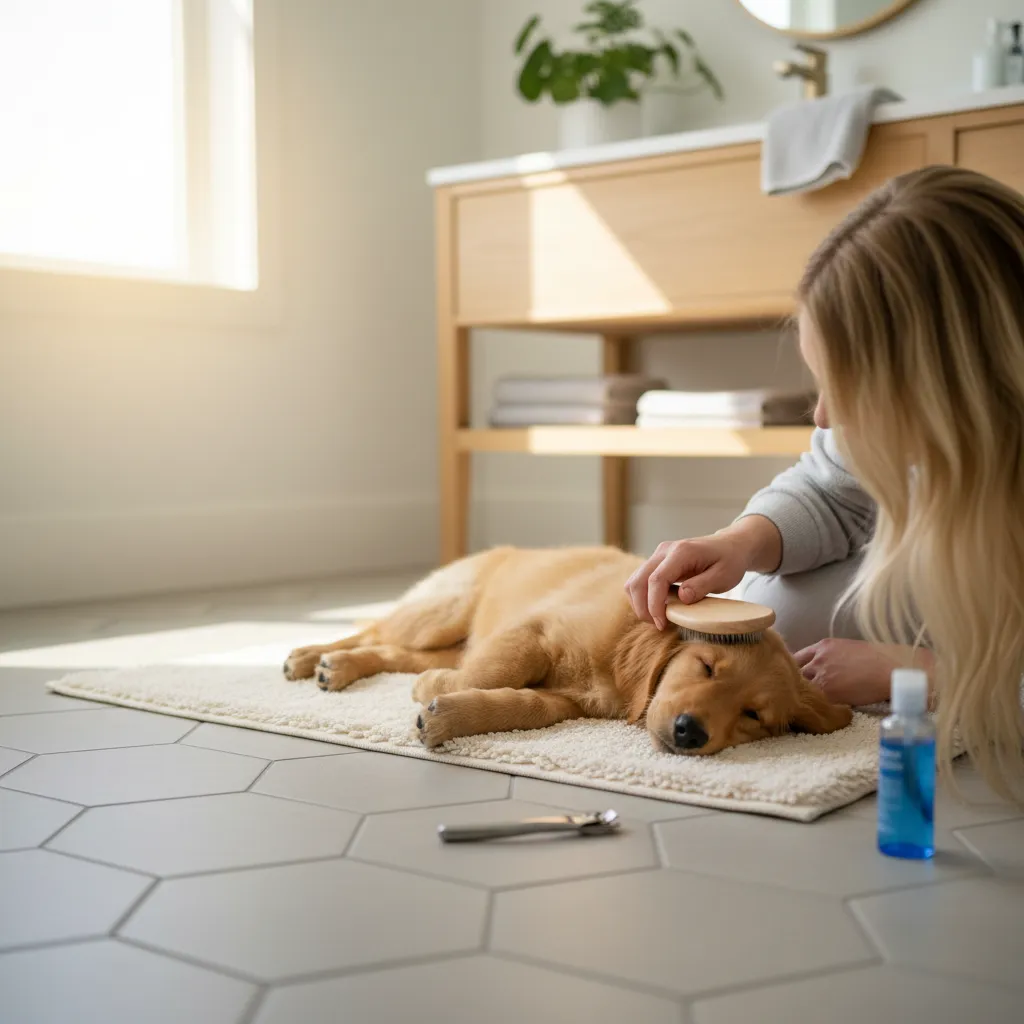
Introduce grooming tools gradually. Let your puppy sniff a brush before you use it. Run clippers nearby (turned on) before they ever touch a nail. For a comprehensive approach to home grooming, including step-by-step instructions for bathing, brushing and nail trimming, see our complete guide to DIY dog grooming.
A good rule of thumb for puppy grooming frequency: brush 2 to 3 times per week regardless of coat type (this builds the habit), bathe only when genuinely dirty or every 4 to 6 weeks, and trim nails every 2 weeks or when you hear them clicking on hard floors.
Exercise and Physical Development
Puppies seem to have boundless energy, but their bodies are far more fragile than they appear. Those growth plates, the soft areas of developing bone near the joints, do not fully close until 12 to 18 months in most breeds (and up to 24 months in giant breeds). Over-exercising a puppy risks permanent joint damage.
The widely cited guideline among veterinary professionals is 5 minutes of structured exercise per month of age, twice daily. So a 3-month-old puppy gets two 15-minute walks per day. This does not include free play in a safe, enclosed area, which is fine in short bursts because the puppy can self-regulate their activity level.
Activities to embrace in the first year:
- Short, positive leash walks exploring the neighborhood
- Off-leash play in securely fenced areas
- Mental enrichment like puzzle feeders, snuffle mats and training games
- Gentle tug-of-war (let the puppy win sometimes)
- Swimming introduction in shallow, calm water (with supervision)
Activities to avoid until fully grown:
- Forced running or jogging alongside you
- Repeated high-impact jumping (agility obstacles, catching frisbees at height)
- Extended hikes on rough terrain
- Excessive stair climbing
Remember that mental exercise tires puppies just as effectively as physical activity. A 10-minute training session or food puzzle can be equivalent to a 30-minute walk in terms of settling your puppy afterward. For small breed puppies in apartments, indoor enrichment games are especially valuable for burning energy safely.
Preventing Separation Anxiety Early
As someone who specializes in separation anxiety rehabilitation, I can tell you with certainty that prevention is infinitely easier than treatment. Many well-meaning puppy parents make the mistake of spending every moment with their new puppy for the first few weeks, then suddenly returning to work and leaving the puppy alone for 8 hours. This dramatic shift is one of the most common triggers for separation distress.
From the very first day, practice brief, calm separations:
- Step out of the room for 30 seconds, then return without fanfare
- Gradually increase the duration over days and weeks
- Give a stuffed Kong or long-lasting chew when you leave
- Keep departures and arrivals low-key; no dramatic goodbyes or excited hellos
- Use a camera to monitor your puppy’s behavior when alone
If your puppy shows signs of distress, including excessive barking, destructive behavior focused on exits, panting, drooling or house soiling only when alone, contact a certified professional trainer or veterinary behaviorist early. Separation anxiety is a genuine panic disorder, not a behavior problem that can be punished away, and early intervention makes a significant difference in outcomes.
Month-by-Month Puppy Care Timeline
Here is your at-a-glance reference for the entire first year. I keep a version of this posted on my fridge for every foster puppy I raise, and I encourage you to do the same.
| Month | Health | Training Focus | Socialization Priority |
|---|---|---|---|
| Month 1 (8 to 12 weeks) | First vet visit, begin vaccinations, start parasite prevention | Crate training, name recognition, house training routine | Handling exercises, household sounds, meeting family members |
| Month 2 (12 to 16 weeks) | Second round of vaccinations, discuss spay/neuter timeline | Sit, down, come; loose leash introduction | Peak socialization: new people, surfaces, environments, puppy classes |
| Month 3 (16 to 20 weeks) | Final puppy vaccinations, post-vaccine vet check | Stay, leave it, polite greeting manners | Continued exposure; world access expands after final vaccines |
| Months 4 to 6 | Spay/neuter consultation, dental check as adult teeth emerge | Impulse control, recall in distracting environments | Dog parks (vaccinated), longer outings, car rides |
| Months 6 to 9 | Possible spay/neuter surgery, 6-month wellness check | Adolescent refresher on basics, longer stays, leash manners | Navigating the “fear period”; go slowly with new experiences |
| Months 9 to 12 | Transition to adult food (small breeds), annual vet planning | Advanced obedience, proofing commands in real-world settings | Continued exposure; reinforce previously learned confidence |
This timeline is a general guide. Individual puppies develop at different rates, and breed plays a significant role. Large breed puppies tend to mature more slowly across the board, while smaller breeds often reach physical and behavioral maturity faster. Adjust your expectations and your plan accordingly.
One thing I want to highlight: around months 6 to 9, many puppies go through a second fear period. This is a normal developmental phase where a previously confident puppy may suddenly become cautious or reactive to things they handled fine before. Do not panic and do not force exposure. Simply go back to the basics of creating positive associations, give your puppy space and wait for the phase to pass. Pushing through a fear period with flooding or corrections can create lasting behavioral damage.
Understanding the normal developmental stages of puppyhood helps you stay patient and proactive. For families with children, choosing the right breed from the start makes the first year significantly smoother, and our guide to the best dog breeds for families with children can help with that decision.
The first year of puppy care is genuinely one of the most rewarding experiences a dog lover can have. Yes, there will be chewed shoes, midnight potty trips and moments of frustration. But every bit of effort you invest now pays off exponentially in the years ahead. The well-socialized, properly trained, healthy puppy you raise today becomes the confident, well-adjusted companion who enriches your life for the next decade or more.
You have everything you need to give your puppy the best possible start. Trust the process, stay consistent, celebrate the small wins and do not hesitate to reach out to a qualified professional if you hit a bump in the road. Your puppy is counting on you, and I know you are up for it.
Key Points
- Schedule your puppy’s first vet visit within 48 hours of bringing them home and keep a health record folder from day one
- Focus intensely on socialization before 16 weeks of age, aiming for 3 to 5 new positive experiences per week
- Feed 3 meals per day until 6 months, then transition to twice-daily feeding with an AAFCO-approved puppy food
- Limit structured exercise to 5 minutes per month of age, twice daily, and supplement with mental enrichment
- Practice brief, calm separations from day one to prevent separation anxiety before it starts
Frequently Asked Questions
How often should I take my puppy to the vet in the first year?
Plan for at least 3 to 4 veterinary visits during the first year. The first visit should happen within 48 hours of bringing your puppy home, followed by vaccination appointments every 3 to 4 weeks until about 16 weeks of age. A 6-month wellness check and a spay/neuter consultation round out the schedule. If your puppy shows any signs of illness, such as vomiting, diarrhea, lethargy or loss of appetite, schedule an additional visit promptly.
When can my puppy go outside and meet other dogs safely?
Your puppy can go outside in controlled environments immediately. You can carry them in public spaces and let them walk in your own yard if no unknown dogs have access. Full ground access in public areas and dog parks should wait until 1 to 2 weeks after the final round of puppy vaccinations, typically around 16 to 18 weeks of age. In the meantime, puppy socialization classes with vaccination requirements and playdates with known, healthy dogs are safe and highly recommended.
What is the best age to start training a puppy?
Training should begin the day you bring your puppy home, regardless of age. Puppies as young as 8 weeks can learn basic cues like sit, their name and crate training. The key is keeping sessions very short (3 to 5 minutes), using positive reinforcement and setting realistic expectations. Formal group training classes, often called puppy kindergarten, are ideal starting around 8 to 12 weeks as long as your puppy has begun their vaccination series.
How do I know if my puppy is eating the right amount?
Monitor your puppy’s body condition rather than relying solely on food package guidelines, which are general estimates. You should be able to feel your puppy’s ribs easily without pressing hard, but not see them prominently. Viewed from above, your puppy should have a visible waist. Weigh your puppy at each vet visit and adjust portions if they are gaining too quickly or too slowly. Your veterinarian can help you determine the ideal growth rate for your puppy’s breed and expected adult size.
What should I do if my puppy cries at night?
Nighttime crying is normal in the first few weeks as your puppy adjusts. Place the crate in or near your bedroom so your puppy can hear and smell you. Take them out for a quiet potty break if they cry, but keep the interaction minimal: no play, no extended comfort, just business and back to the crate. Most puppies begin sleeping through the night within 1 to 2 weeks if you maintain a consistent bedtime routine, including a final potty trip, a brief settling period and a calm environment.
How much sleep does a puppy need?
Puppies need a remarkable amount of rest. Most puppies sleep 18 to 20 hours per day in the first few months, gradually decreasing to about 12 to 14 hours by their first birthday. Adequate sleep is essential for healthy brain development, immune function and emotional regulation. If your puppy becomes nippy, hyperactive or struggles to settle, they are very likely overtired. Enforce regular nap times in the crate to prevent overstimulation and help them develop a healthy rest routine.