
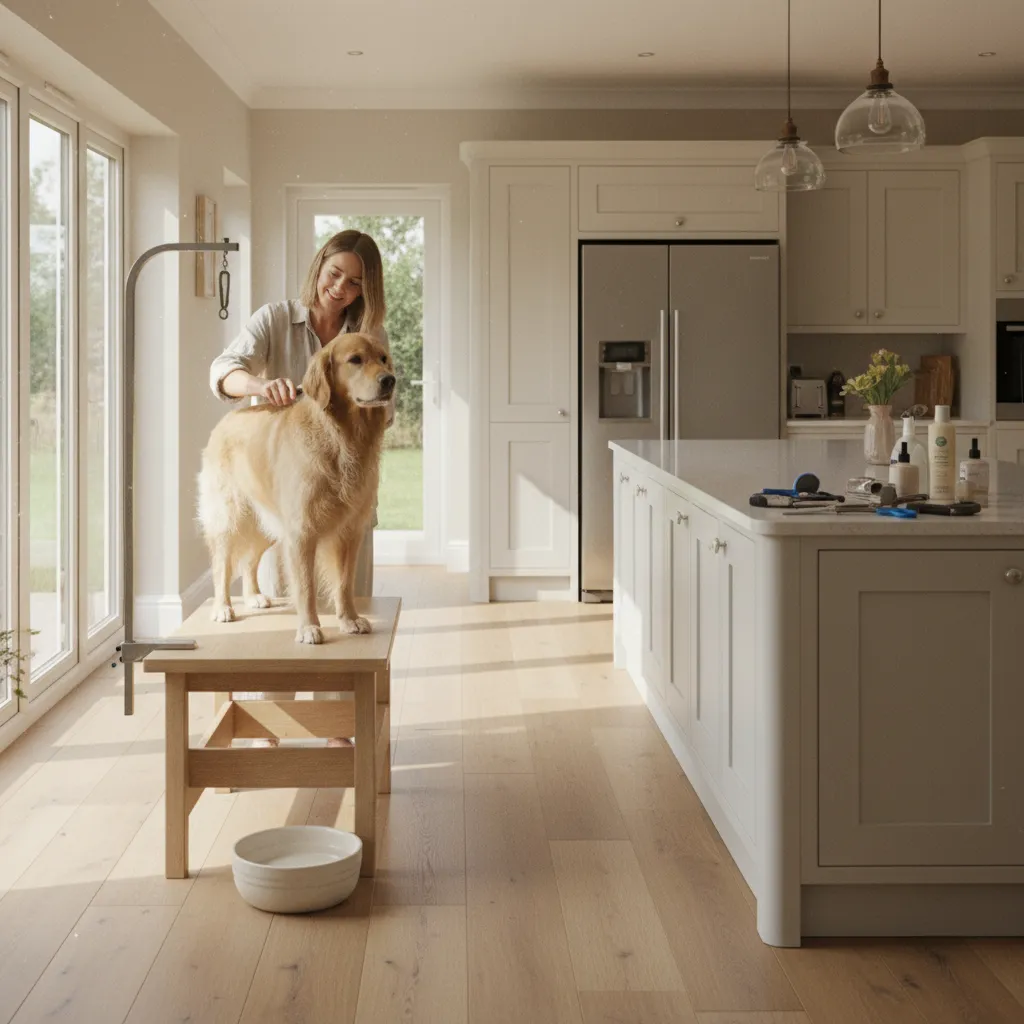
Dog grooming at home is one of the most rewarding habits you can build with your pet. I have spent over a decade helping dog owners in Austin develop confident, low-stress routines for everything from brushing to nail trims, and I can tell you that regular home grooming does far more than keep your dog looking good. It strengthens your bond, lets you spot health issues early and saves you a significant amount of money over a lifetime of professional appointments.
Whether you have a short-coated Labrador or a high-maintenance Poodle cross, this guide walks you through every step of dog grooming at home so you can get started with confidence today.
Key Takeaways
- Most dogs need a full grooming session (brush, bath, nails, ears, teeth) at least once every four to six weeks, with brushing two to three times per week in between
- A basic home grooming toolkit costs roughly £40 to £80 and pays for itself after just two or three sessions compared to professional fees
- Nail trimming should remove only 1 to 2 mm at a time to avoid cutting the quick, which can cause pain and bleeding
- Dogs with double coats (such as Golden Retrievers and Huskies) should never be shaved because the undercoat regulates temperature and protects against sunburn
- Introducing grooming tools gradually with positive reinforcement reduces stress and builds a dog’s tolerance over just two to three weeks
- The PDSA recommends checking your dog’s skin, ears and teeth during every grooming session to catch problems early
In This Guide
Why Groom Your Dog at Home
I always tell my clients that grooming is not a luxury; it is a fundamental part of responsible dog ownership. When you groom your dog at home, you create a calm, familiar environment where your pet can relax rather than face the noise and unfamiliar smells of a grooming salon. For dogs who already struggle with separation anxiety, the trip to a professional groomer can be genuinely distressing.
Home grooming also puts you in the best position to notice changes in your dog’s body. Lumps, skin irritation, ear infections, dental issues and parasites are all far easier to spot when you are running your hands through your dog’s coat on a regular basis. The RSPCA advises that regular grooming is essential for all dogs regardless of coat type, and starting at home makes it easier to keep a consistent schedule.
From a financial perspective, professional grooming sessions for a medium-sized dog typically cost £30 to £60 per visit. If you groom monthly, that is £360 to £720 per year. A one-time investment in quality tools gives you everything you need to handle the vast majority of grooming tasks yourself.
Essential Dog Grooming Tools
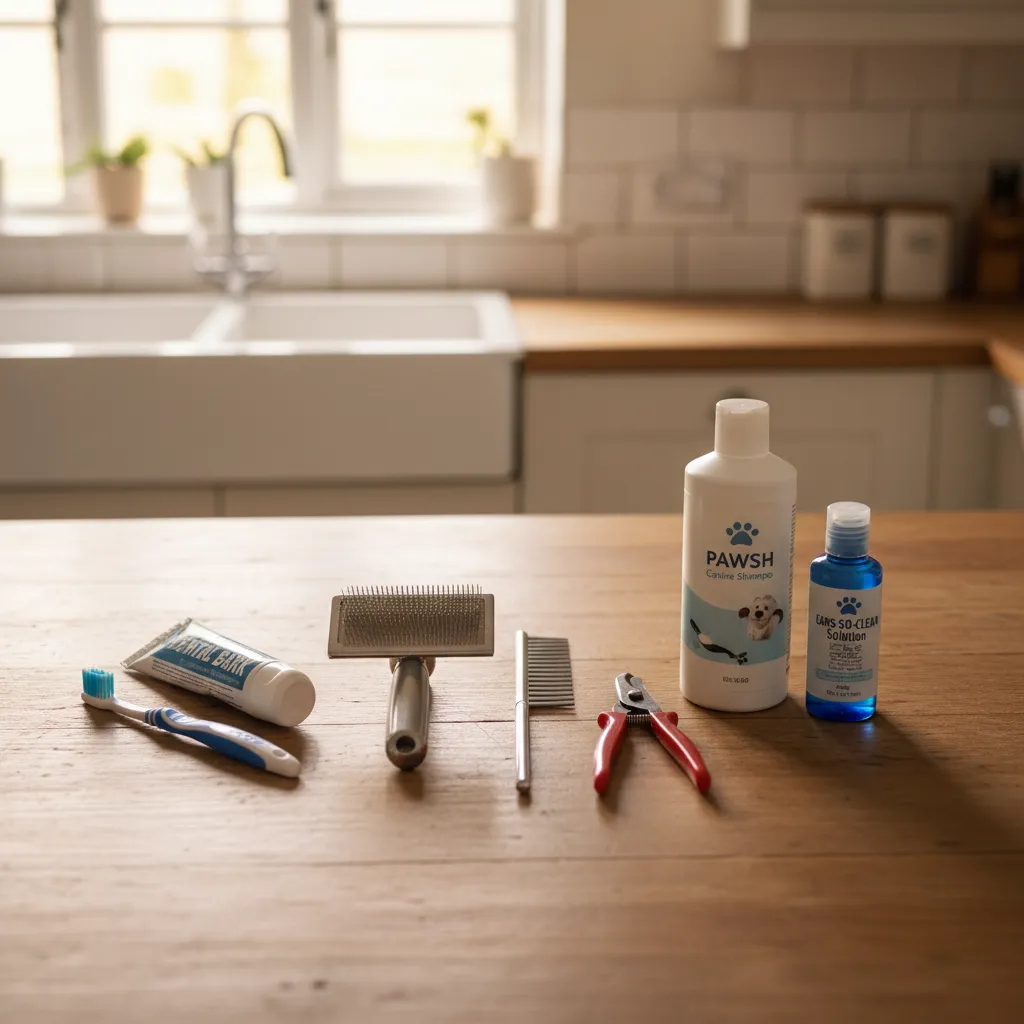
Before you start, you need the right equipment. One mistake I see beginners make is buying too many specialist gadgets. Keep it simple. Here is what I recommend for a solid home grooming kit:
- Slicker brush: works on nearly every coat type and removes loose hair, tangles and light mats
- Metal comb: essential for checking that you have brushed all the way through the coat, not just the surface
- Undercoat rake: a must for double-coated breeds like German Shepherds and Border Collies
- Nail clippers or grinder: guillotine-style clippers work well for small to medium dogs, while grinders suit dogs who dislike the clipping sensation
- Dog-specific shampoo: human shampoo is too acidic for canine skin; choose a pH-balanced formula between 6.5 and 7.5
- Ear cleaning solution: a veterinary-approved ear cleaner prevents wax build-up and infection
- Dog toothbrush and toothpaste: never use human toothpaste as it contains xylitol, which is toxic to dogs
- Absorbent towels and a non-slip mat: safety first, especially in the bath
If you plan to trim your dog’s coat, invest in a pair of quality thinning shears and rounded-tip scissors. Clippers are useful for breeds that need regular haircuts, but they require a bit more skill and confidence. If you are new to dog grooming at home, I suggest starting with brushing, bathing and nails before progressing to clipper work.
How to Brush Your Dog’s Coat
Brushing is the single most important grooming task you can do. It removes dead hair, distributes natural oils, prevents mats and gives you a chance to inspect your dog’s skin. How often you brush depends on your dog’s coat type, but two to three sessions per week is a good baseline for most breeds.
Here is the technique I teach in my training sessions:
- Start with the body. Work in the direction of hair growth using gentle, short strokes. Begin at the shoulders and move toward the tail.
- Brush in sections. Lift the top layer of coat and brush the undercoat first, then let the top layer fall and brush through it.
- Pay attention to friction areas. Behind the ears, under the armpits, the groin and the back of the thighs are prime matting zones.
- Use a metal comb to check your work. If the comb glides through without snagging, you have done a thorough job.
- Finish with praise and a treat. Building a positive association with brushing now pays off for years to come.
For puppies, I recommend introducing the brush during the early weeks of puppy training. Short, positive sessions of just 30 to 60 seconds teach young dogs that grooming is nothing to fear. Pair each touch of the brush with a small treat, and gradually increase the duration as your puppy gains confidence.
If you encounter a mat, never pull or cut it out with scissors unless you can clearly see the skin beneath. Mats sit close to the skin, and cutting blindly is one of the most common causes of accidental grooming injuries. Instead, work a small amount of detangling spray into the mat and tease it apart with your fingers or a mat splitter.
Bathing Your Dog at Home Step by Step
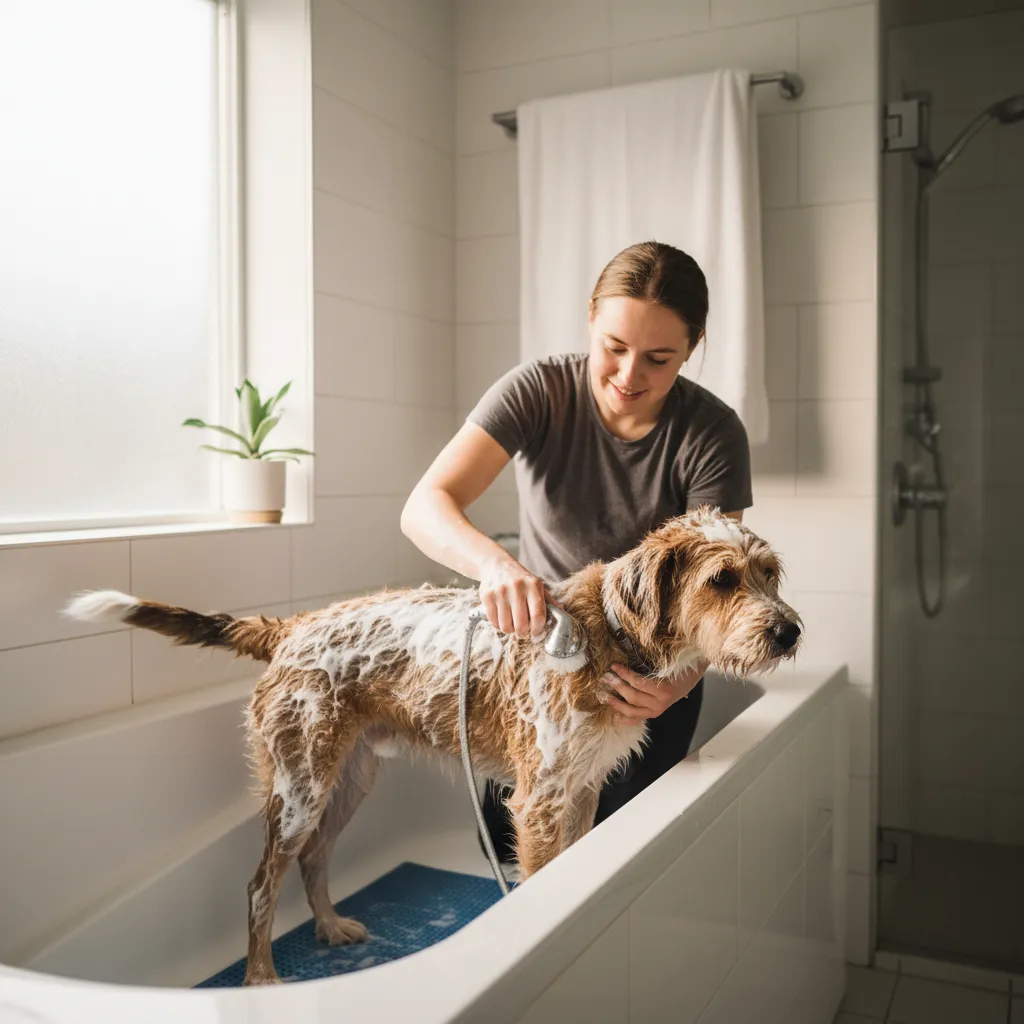
Most dogs only need a bath every four to eight weeks unless they have rolled in something unpleasant. Over-bathing strips the coat of natural oils and can lead to dry, itchy skin. Here is my step-by-step process for a stress-free bath at home:
- Brush thoroughly before the bath. Wet mats tighten and become almost impossible to remove, so always brush first.
- Place a non-slip mat in the bath or shower tray. Dogs panic when their feet slide, and a secure surface makes the entire experience calmer.
- Use lukewarm water. Test it on the inside of your wrist, just as you would for a baby. Dogs are sensitive to temperature, and water that feels comfortable to you may be too hot for them.
- Wet the coat completely, starting from the neck and working backward. Avoid spraying water directly into the ears or eyes.
- Apply shampoo and massage it into the coat using circular motions. Work it through to the skin, paying extra attention to the belly, legs and under the tail.
- Rinse thoroughly. Leftover shampoo residue causes irritation and flaking. I always rinse twice to be safe.
- Towel dry first, then use a hairdryer on a low, cool setting if your dog tolerates it. Keep the dryer moving to avoid concentrating heat on one spot.
A note on nutrition: if your dog’s coat is consistently dull, dry or flaky despite regular grooming, the issue may be dietary. Omega-3 and omega-6 fatty acids play a critical role in skin and coat health, so make sure your dog’s food provides adequate levels of these nutrients.
Nail Trimming Made Simple
Nail trimming is the task that worries dog owners the most, and I completely understand why. The fear of cutting the quick (the blood vessel inside the nail) makes many people avoid it altogether. But overgrown nails cause real problems: they alter your dog’s gait, create pain when walking and can even curl into the paw pad.
Here is how I approach nail trims with my own dogs and with clients’ dogs:
- Trim every two to three weeks. Frequent small trims are safer and less stressful than infrequent big cuts.
- Use sharp clippers. Dull blades crush the nail rather than cutting cleanly, which is uncomfortable.
- Trim only 1 to 2 mm at a time. On light-coloured nails, you can see the pink quick. On dark nails, look at the cut surface; when you see a dark centre dot appear, stop.
- Keep styptic powder on hand. If you do nick the quick, a dab of styptic powder stops the bleeding within seconds.
- Do not forget the dewclaws. These nails do not wear down naturally and can grow into the skin if neglected.
If your dog is terrified of nail clippers, a rotary nail grinder is an excellent alternative. The gradual filing motion gives you more control and eliminates the pressure sensation of clipping. Introduce the grinder over several days: let your dog sniff it, turn it on near them, touch it to one nail, and reward generously at each stage.
Ear Cleaning, Eye Care and Teeth Cleaning
Ear Cleaning
Dogs with floppy ears, such as Cocker Spaniels and Basset Hounds, are particularly prone to ear infections because the ear flap traps moisture. I recommend checking your dog’s ears weekly and cleaning them every two to four weeks unless your vet advises otherwise.
- Apply a few drops of veterinary-approved ear cleaner into the ear canal.
- Massage the base of the ear for 20 to 30 seconds. You should hear a squelching sound.
- Let your dog shake their head, then wipe away the loosened debris with a cotton ball.
- Never insert cotton buds into the ear canal. They push debris deeper and can damage the eardrum.
Eye Care
Flat-faced breeds like Pugs and French Bulldogs, as well as small breeds with prominent eyes, often develop tear staining. Gently wipe the area around the eyes daily with a damp cotton pad. If you notice excessive discharge, redness or squinting, consult your vet promptly.
Teeth Cleaning
Dental disease affects an estimated 80% of dogs over the age of three, according to veterinary research. Daily brushing is the gold standard, but even three to four times per week makes a significant difference. Use a dog-specific toothpaste (many dogs love the poultry flavour) and a soft-bristled brush or finger brush.
Lift your dog’s lip and brush in small circles along the gum line, focusing on the outer surfaces of the teeth where plaque builds up fastest. If your dog is not used to having their mouth handled, start by letting them lick the toothpaste off your finger for a few days before introducing the brush.
Grooming Tips for Anxious Dogs
As someone who specialises in anxiety rehabilitation, I see a lot of dogs who have had negative grooming experiences. Whether it is a past injury, a frightening visit to a loud salon or simply a lack of early socialisation, grooming fear is remarkably common and entirely manageable.
Here is my force-free approach to building grooming confidence:
- Break the process into micro-steps. Do not attempt a full grooming session with an anxious dog. Start with one paw, one ear or 30 seconds of brushing, then stop and reward.
- Use high-value treats. Cheese, cooked chicken or whatever makes your dog’s eyes light up. The goal is to create a powerful positive association.
- Watch for stress signals. Lip licking, yawning, whale eye (showing the whites of the eyes), panting and turning away all indicate your dog is uncomfortable. If you see these, stop and give your dog a break.
- Pair tools with rewards before using them. Let your dog sniff the clippers. Click them near the dog (not on the nails). Reward. Repeat over several sessions before you actually trim.
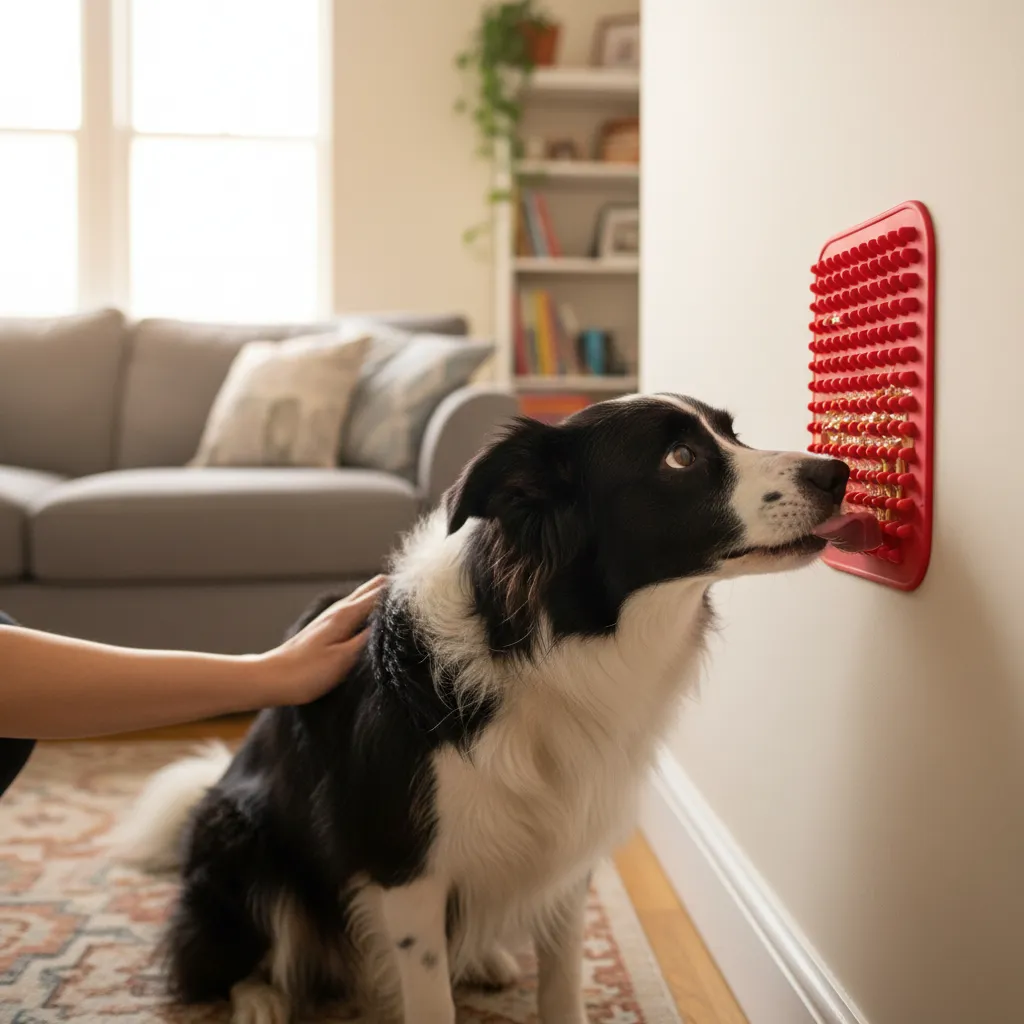
- Use a lick mat with peanut butter during grooming. This provides a calming distraction and has been shown to lower cortisol levels in dogs.
I used this exact protocol with a rescue Border Collie who had not been groomed in over two years. Within three weeks of short, positive sessions, she was calmly allowing full brushing, ear cleaning and nail trims. Patience is everything. If your dog has severe grooming anxiety that does not improve with gradual desensitisation, speak to a certified behaviourist or your vet about additional support. The approach is similar to the gradual exposure techniques I describe in our puppy training guide.
Coat Type Grooming Guide
Not all coats are created equal. The grooming tools and frequency you need depend entirely on your dog’s coat type. Here is a quick reference to help you tailor your routine.
| Coat Type | Example Breeds | Brushing Frequency | Key Tools | Special Notes |
|---|---|---|---|---|
| Smooth/Short | Beagle, Boxer, Dalmatian | Once a week | Rubber curry brush, bristle brush | Sheds moderately; a rubber brush lifts loose hair effectively |
| Double Coat | Golden Retriever, Husky, German Shepherd | 3 to 4 times per week | Undercoat rake, slicker brush, metal comb | Never shave; the undercoat insulates against heat and cold |
| Wire/Rough | Border Terrier, Schnauzer, Wire Fox Terrier | 2 to 3 times per week | Slicker brush, stripping knife | Hand-stripping maintains coat texture; clipping softens the coat over time |
| Long/Silky | Yorkshire Terrier, Shih Tzu, Afghan Hound | Daily | Pin brush, metal comb, detangling spray | Highly prone to matting; keep hair around eyes trimmed for visibility |
| Curly/Wool | Poodle, Bichon Frise, Lagotto Romagnolo | Daily to every other day | Slicker brush, metal comb, clippers | Does not shed but mats quickly; professional clips every 6 to 8 weeks recommended |
| Hairless | Chinese Crested, Xoloitzcuintli | N/A (skin care instead) | Moisturiser, sunscreen, gentle cleanser | Prone to sunburn and acne; regular skin care replaces coat brushing |
If you are unsure which category your dog falls into, particularly with mixed breeds, look at the coat characteristics rather than the breed label. Large breeds and family dog breeds vary widely in coat type, so always match your grooming tools to the coat in front of you rather than relying solely on breed generalisations.
When to See a Professional Groomer
Home grooming handles the majority of your dog’s needs, but there are times when a professional groomer is the better choice:
- Breed-specific haircuts. Poodle clips, Bichon sculpting and terrier hand-stripping require specialist skills and training.
- Severe matting. If the coat is matted close to the skin over large areas, a professional can safely remove the mats without injuring your dog.
- Anal gland expression. While some groomers offer this service, I recommend having it done by your vet to reduce the risk of injury or infection.
- Dogs with skin conditions. If your dog has been diagnosed with a skin condition by your vet, a groomer experienced with medicated baths and sensitive handling can be invaluable.
- First-time clipper cuts. If you have never used clippers before, watching a professional work on your dog once or twice can teach you proper technique and blade angles.
When choosing a groomer, ask about their qualifications, whether they use force-free handling methods, and request a tour of the salon. A good groomer will welcome your questions and be transparent about their process. The Kennel Club maintains a list of accredited groomers that can help you find a reputable professional in your area.
Regular vaccinations should also be up to date before visiting any grooming salon, as dogs from multiple households share the same space and equipment.
Key Points
- Invest in a slicker brush, metal comb, nail clippers, dog shampoo and a toothbrush as your core grooming toolkit
- Brush your dog two to three times per week minimum, adjusting for coat type as outlined in the grooming table above
- Trim nails every two to three weeks, removing only 1 to 2 mm at a time to avoid cutting the quick
- Introduce grooming tools gradually using positive reinforcement: treats, praise and short sessions build lasting confidence
- Check ears, eyes, skin and teeth during every grooming session to catch health issues early
Frequently Asked Questions
How often should I groom my dog at home?
Most dogs benefit from brushing two to three times per week, with a full grooming session (bath, nails, ears, teeth) every four to six weeks. Long-coated and curly-coated breeds need daily brushing to prevent mats. Short-coated breeds like Beagles can manage with a weekly brush. Adjust the frequency based on your dog’s coat type, activity level and time of year, as shedding increases during spring and autumn.
Use sharp, appropriately sized clippers and trim only 1 to 2 mm at a time. On light nails, stop before you reach the pink quick. On dark nails, look for a dark dot appearing in the centre of the cut surface, which signals you are close to the quick. Keep styptic powder nearby in case of accidental nicks. If your dog is nervous, try a rotary nail grinder, which many dogs tolerate better than traditional clippers.What is the best way to cut a dog’s nails without hurting them?
No. Human shampoo has a pH of around 5.5, while a dog’s skin pH is closer to 7.0. Using human shampoo disrupts the acid mantle of your dog’s skin, leading to dryness, irritation and increased vulnerability to bacteria and parasites. Always choose a shampoo specifically formulated for dogs, and if your dog has sensitive skin, look for hypoallergenic or oatmeal-based formulas.Can I use human shampoo on my dog?
Start with very short sessions of just 30 seconds and pair every grooming interaction with high-value treats. Let your dog investigate each tool before you use it. Watch for stress signals such as lip licking, yawning and whale eye, and stop before your dog becomes overwhelmed. Using a lick mat smeared with peanut butter during grooming provides a calming distraction. Over two to three weeks of gradual, positive exposure, most dogs become significantly more comfortable.How do I groom a dog that is scared of grooming?
No. A double coat acts as insulation against both heat and cold. Shaving removes this natural temperature regulation and exposes your dog’s skin to sunburn and UV damage. Instead, keep your double-coated dog comfortable by brushing regularly to remove loose undercoat, providing access to shade and fresh water, and avoiding exercise during the hottest part of the day.Should I shave my double-coated dog in summer?
Seek professional grooming if your dog has severe matting close to the skin, needs a breed-specific haircut (such as a Poodle clip), has a skin condition requiring medicated bathing, or if you are not yet confident using clippers. A professional groomer is also the better choice for anal gland expression, which should ideally be done by a vet to minimise the risk of injury.What are the signs that my dog needs professional grooming rather than home grooming?