
Key Takeaways
- The best dog food should list a named animal protein (such as chicken, lamb or salmon) as the first ingredient on the label
- Dogs require a balance of at least 18% protein and 5% fat in their diet, according to FEDIAF European guidelines for adult maintenance
- Puppies, senior dogs and active breeds each have distinct nutritional requirements that a single “one-size-fits-all” food cannot meet
- Wet food typically contains 70–80% moisture, making direct comparison with dry kibble misleading unless you calculate on a dry-matter basis
- A gradual transition over 7–10 days is essential when switching foods to avoid digestive upset
- Your veterinarian remains the most reliable source of dietary advice tailored to your individual dog’s health needs
In This Guide
- Why Your Dog’s Diet Matters More Than You Think
- Understanding the Different Types of Dog Food
- How to Read Dog Food Labels Like a Professional
- Matching Food to Your Dog’s Life Stage
- Breed Size and Activity Level Considerations
- Common Dietary Issues and How to Address Them
- Raw and Homemade Diets: What You Should Know
- How to Switch Your Dog’s Food Safely
- Comparing Popular Dog Food Categories
I’ve spent more than a decade working with dogs of every breed, size and temperament. While my primary expertise is in behaviour and training, I’ve learned one lesson that cuts across every area of canine wellbeing: what you put in your dog’s bowl shapes everything, from coat condition and energy levels to mood and trainability. Choosing the best dog food is not about picking the most expensive bag on the shelf. It is about understanding your dog’s individual needs, reading labels with confidence and making informed decisions that support a long, healthy life.
In this guide, I’ll walk you through every factor that matters when selecting the right diet for your dog. Whether you’re bringing home a new puppy or re-evaluating what you feed your senior companion, this article will give you the knowledge to choose wisely.
Why Your Dog’s Diet Matters More Than You Think
Nutrition is the foundation of your dog’s health. A poor diet does not just cause weight gain; it can contribute to skin problems, joint deterioration, digestive disorders and even behavioural issues. In my training practice, I regularly see dogs whose reactivity, hyperactivity or inability to focus improves dramatically once their diet is adjusted. The connection between gut health and behaviour is well documented in veterinary science, and I’ve witnessed it first-hand hundreds of times.
The Pet Food Manufacturers’ Association (PFMA) reports that around 12 million households in the UK own a dog. Yet surveys consistently show that many owners struggle to distinguish between marketing claims and genuine nutritional quality. Terms like “premium,” “natural” and “holistic” are not legally regulated in pet food labelling, which means they can appear on products of widely varying quality.
When I work with families who have just chosen a family-friendly breed, one of the first conversations we have is about nutrition. Getting the diet right from the start saves you money on veterinary bills, reduces behavioural challenges and gives your dog the best possible quality of life.
Understanding the Different Types of Dog Food
Before you can choose the best dog food, you need to understand the main categories available. Each type has distinct advantages and limitations, and the right choice depends on your dog’s needs, your budget and your lifestyle.
Dry food (kibble) is the most popular option in the UK. It is convenient, shelf-stable and generally the most affordable per serving. Quality kibble provides complete nutrition and the crunchy texture can offer some dental benefits, though this effect is often overstated. Look for brands that use named meat meals and avoid those that rely heavily on cereal fillers like wheat and maize as primary ingredients.
Wet food tends to be more palatable for fussy eaters and contains significantly more moisture, which can benefit dogs who don’t drink enough water. However, it spoils quickly once opened and typically costs more per calorie than dry food. Because wet food contains 70–80% water, the protein percentage on the label looks lower than kibble, but on a dry-matter basis, the protein content may actually be comparable or higher.
Cold-pressed food is manufactured at lower temperatures than traditional kibble, which proponents argue preserves more nutrients. It is growing in popularity across the UK and sits between kibble and raw feeding in terms of processing.
Raw food (BARF or prey-model) involves feeding uncooked meat, bones, offal and sometimes vegetables. I’ll cover this in more detail later in the article, as it requires careful handling and planning.
Freeze-dried and dehydrated foods offer the convenience of dry food with minimal processing. They are lightweight, shelf-stable and reconstituted with water before serving. These tend to be the most expensive option but can be excellent for dogs with sensitivities.
How to Read Dog Food Labels Like a Professional
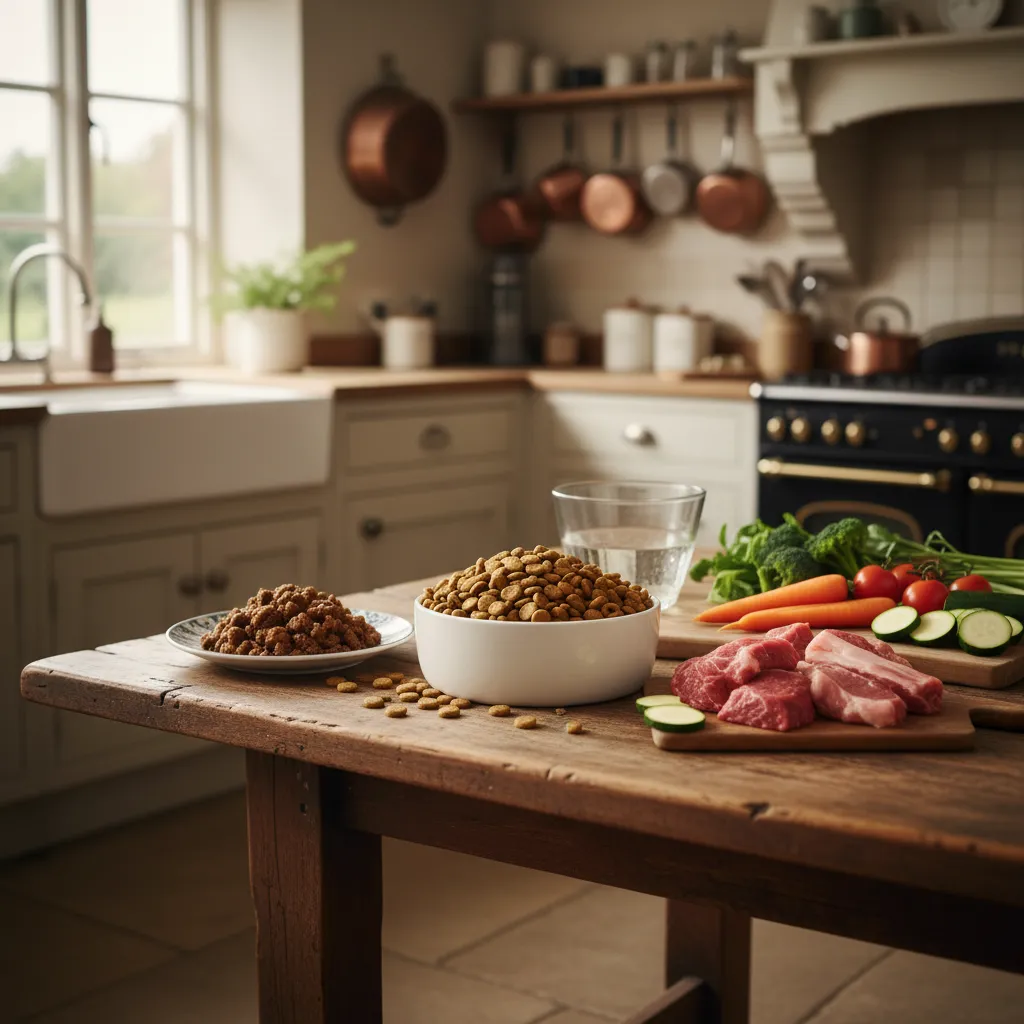
The ingredients list on a dog food package is your most powerful tool. In the UK, ingredients must be listed in descending order by weight, so the first few items tell you the most about what your dog is actually eating. Here is what to look for and what to avoid.
Named animal proteins should come first. “Chicken,” “lamb” or “salmon” is far better than vague terms like “meat and animal derivatives” or “animal by-products.” Named proteins tell you exactly what your dog is consuming, and they indicate a higher-quality product.
Meat meal versus fresh meat. Fresh chicken listed first might sound impressive, but fresh meat contains around 70% water. After cooking, it shrinks significantly. A product listing “chicken meal” (which is already dehydrated) as the first ingredient may actually contain more protein per serving. The best foods often combine both fresh meat and meat meal.
Fillers and additives to watch for. Excessive use of wheat, maize, soya and beet pulp can indicate a lower-quality food that bulks up volume without adding nutritional value. Artificial colours, flavours and preservatives (such as BHA, BHT and ethoxyquin) are best avoided. Instead, look for natural preservatives like tocopherols (vitamin E) and rosemary extract.
The analytical constituents panel shows the guaranteed levels of protein, fat, fibre and ash. For an average adult dog, look for a minimum of 18–25% crude protein and 5–15% crude fat on an as-fed basis for dry food. The FEDIAF nutritional guidelines provide the European standards that reputable manufacturers follow.
Matching Food to Your Dog’s Life Stage
One of the biggest mistakes I see dog owners make is feeding the same food throughout their dog’s entire life. Nutritional requirements change significantly with age, and choosing the right food for each life stage is essential.
Puppies (up to 12–18 months) need food that supports rapid growth and development. Puppy-specific formulas contain higher levels of protein, fat, calcium and phosphorus. Large-breed puppies require carefully controlled calcium levels to prevent skeletal problems; too much calcium can be just as harmful as too little. If you are following a structured puppy training programme, pairing it with appropriate nutrition will help your puppy learn faster and recover better from the mental effort of training sessions.
Adult dogs (1–7 years) need a maintenance diet that sustains energy without promoting weight gain. Activity level plays a significant role here. A working Border Collie needs far more calories than a companion Cavalier King Charles Spaniel who enjoys short daily walks.
Senior dogs (7+ years) often benefit from reduced-calorie diets with added joint support (glucosamine, chondroitin and omega-3 fatty acids). Older dogs may also need more easily digestible proteins as kidney and liver function can decline with age. Your veterinarian can recommend blood tests to identify specific nutritional needs as your dog ages.
It’s also worth noting that dogs who are recovering from illness, pregnant or nursing have unique dietary demands that should be discussed with your vet. Never adjust a dog’s diet dramatically during these sensitive periods without professional guidance.
Breed Size and Activity Level Considerations
The best dog food for a Chihuahua is not the best dog food for a Great Dane, and it goes far beyond simply adjusting portion sizes. Dogs of different sizes have fundamentally different metabolic rates and physical needs.
Small breeds (under 10 kg) have faster metabolisms and burn calories more quickly relative to their body weight. They often do better with energy-dense foods served in smaller, more frequent meals. Small kibble sizes also matter; tiny dogs can struggle with large biscuits. If you own a small breed in an apartment setting, our guide to small dog breeds for apartments covers how lifestyle and diet work together for compact companions.
Large and giant breeds face different challenges entirely. They are more susceptible to joint problems, bloat (gastric dilatation-volvulus) and obesity. Foods formulated for large dog breeds typically include joint-supporting supplements, controlled fat levels and larger kibble pieces that encourage chewing rather than gulping.
| Factor | Small Breeds (under 10 kg) | Medium Breeds (10–25 kg) | Large/Giant Breeds (25+ kg) |
|---|---|---|---|
| Metabolic rate | High; needs energy-dense food | Moderate | Slower; risk of weight gain |
| Feeding frequency | 2–3 meals per day | 2 meals per day | 2 meals per day (smaller to reduce bloat risk) |
| Kibble size | Small | Medium | Large (encourages chewing) |
| Key supplements | Omega fatty acids for coat | Balanced formula | Glucosamine, chondroitin, controlled calcium |
| Calorie needs (approx.) | 40–50 kcal per kg body weight | 30–40 kcal per kg body weight | 20–30 kcal per kg body weight |
| Common dietary risks | Hypoglycaemia if meals skipped | Obesity with overfeeding | Bloat, joint stress from excess weight |
Activity level is equally important. Working dogs, sporting breeds and dogs who participate in agility or canicross need significantly more calories and protein than sedentary companions. If your dog’s ribs are easily felt but not visible, and they have a visible waist when viewed from above, their weight is likely in a healthy range. Adjust portions based on body condition rather than relying solely on feeding guides printed on packaging, which tend to overestimate.
Common Dietary Issues and How to Address Them

Throughout my career, I’ve encountered countless dogs whose health and behaviour improved once a dietary issue was identified and resolved. Here are the most common problems I see.
Food allergies and intolerances. True food allergies in dogs are less common than many owners believe; environmental allergies are far more prevalent. However, when food sensitivities do occur, the most frequent culprits are beef, dairy, chicken, wheat and soya. Symptoms include persistent itching, ear infections, paw licking and digestive upset. An elimination diet supervised by your veterinarian is the gold standard for identifying trigger ingredients. This involves feeding a single novel protein source (such as venison or duck) for 8–12 weeks while monitoring symptoms.
Obesity. The PDSA Animal Wellbeing (PAW) Report estimates that around 51% of dogs in the UK are overweight or obese. Excess weight shortens lifespan, worsens joint disease and increases the risk of diabetes and heart problems. Reducing treats, measuring portions accurately with a kitchen scale and choosing a lower-calorie formula are practical first steps.
Digestive sensitivity. Loose stools, flatulence and vomiting can indicate that a food does not agree with your dog. Common triggers include sudden food changes, high-fat diets and artificial additives. A diet with limited ingredients and a single protein source often resolves these issues. Prebiotics and probiotics, either in the food or as supplements, can also support gut health.
Dental health. While diet alone cannot replace proper dental care, choosing foods with an appropriate texture and avoiding sticky, sugary treats supports oral hygiene. Dental chews approved by the Veterinary Oral Health Council (VOHC) can complement a good diet.
It’s also important to keep your dog’s vaccination schedule up to date, as a well-nourished and fully vaccinated dog has the strongest possible immune system.
Raw and Homemade Diets: What You Should Know
Raw feeding has surged in popularity over the past decade, and I regularly receive questions about whether it is the best dog food option. My position, informed by both practical experience and the available evidence, is nuanced.
Potential benefits of raw feeding reported by owners include shinier coats, smaller stools, improved dental health and increased energy. Some dogs with chronic digestive issues do seem to thrive on a well-formulated raw diet.
Potential risks are significant and should not be dismissed. Raw meat carries a risk of bacterial contamination, including Salmonella, Campylobacter and E. coli, which can affect both dogs and the humans handling the food. The British Veterinary Association (BVA) advises against raw feeding due to these risks, particularly in households with young children, elderly family members or immunocompromised individuals.
If you choose to feed raw, follow these guidelines:
- Source from a reputable supplier who follows Defra guidelines on raw pet food production
- Handle raw meat with the same hygiene precautions you would use for human food preparation
- Ensure the diet is nutritionally complete and balanced; muscle meat alone is not sufficient
- Include appropriate ratios of bone, offal, muscle meat and, if following BARF principles, vegetables and supplements
- Work with a qualified canine nutritionist to formulate the diet, especially for puppies and dogs with health conditions
Homemade cooked diets carry fewer bacterial risks but are notoriously difficult to balance nutritionally without professional guidance. Studies have found that the majority of homemade dog food recipes available online are deficient in at least one essential nutrient. If you want to cook for your dog, invest in a consultation with a board-certified veterinary nutritionist who can create a tailored recipe with the correct supplementation.
How to Switch Your Dog’s Food Safely
Once you’ve identified the best dog food for your pet, resist the temptation to switch overnight. A sudden change in diet is one of the most common causes of digestive upset in dogs. I recommend a gradual transition over 7–10 days using the following schedule:
- Days 1–2: 75% old food, 25% new food
- Days 3–4: 50% old food, 50% new food
- Days 5–7: 25% old food, 75% new food
- Days 8–10: 100% new food
If your dog experiences loose stools at any stage, slow the transition down. Some dogs with sensitive stomachs may need two full weeks to adjust. Adding a probiotic supplement during the transition can help support healthy gut bacteria.
Watch for signs that the new food agrees with your dog: firm, well-formed stools; a shiny coat; good energy levels; and enthusiasm at mealtimes. If symptoms like persistent diarrhoea, vomiting or lethargy continue beyond the transition period, the food may not be suitable and you should consult your vet.
Comparing Popular Dog Food Categories
To help you make a practical decision, here is a comparison of the main dog food types across the factors that matter most.
| Category | Average Cost (per day, medium dog) | Convenience | Nutritional Control | Palatability | Shelf Life |
|---|---|---|---|---|---|
| Standard dry kibble | £0.80–£1.50 | Very high | Moderate | Moderate | 12–18 months |
| Premium dry kibble | £1.50–£3.00 | Very high | High | Moderate to high | 12–18 months |
| Wet/tinned food | £2.00–£4.00 | High | Moderate | High | 2–3 years (unopened) |
| Cold-pressed | £2.00–£3.50 | High | High | High | 9–12 months |
| Commercial raw (frozen) | £3.00–£5.00 | Low to moderate | High | Very high | 6–9 months (frozen) |
| Freeze-dried | £4.00–£7.00 | High | Very high | Very high | 18–24 months |
| Homemade (cooked) | £3.00–£6.00+ | Low | Variable (needs formulation) | Very high | 3–5 days (refrigerated) |
No single category is universally the “best.” The right choice balances your dog’s health needs, your budget and your daily routine. Many owners find success with a combination approach: a quality dry food as the base with wet food or fresh toppers added for variety and additional moisture. This can be particularly effective for fussy eaters.
When evaluating any dog food, prioritise products that carry a statement confirming they meet FEDIAF nutritional guidelines for complete and balanced nutrition. This is the closest equivalent to a quality guarantee in the European pet food industry.
Remember that the best dog food is one your dog actually enjoys eating, digests well and thrives on over time. Glossy marketing and celebrity endorsements mean nothing if the food does not suit your individual dog. Trust the evidence: a healthy coat, bright eyes, consistent energy and well-formed stools are the most reliable indicators that you have found the right diet.
Key Points
- Always check that a named animal protein is the first ingredient on the label before buying any dog food
- Choose a formula designed for your dog’s specific life stage (puppy, adult or senior) rather than an all-life-stages product
- Use a kitchen scale to measure portions accurately instead of relying on the scoop method, which often leads to overfeeding
- Transition to new food gradually over 7–10 days to prevent digestive upset and allow your dog’s gut bacteria to adjust
- Book a veterinary nutrition consultation if your dog has allergies, a chronic health condition or if you want to feed a raw or homemade diet
Frequently Asked Questions
How do I know if my dog’s current food is good enough?
Look at your dog rather than the packaging. A dog thriving on their diet will have a shiny coat, clear eyes, consistent energy levels and firm stools. If your dog has persistent skin issues, digestive problems, dull fur or low energy, it may be time to reassess their food. Check that a named protein is the first ingredient and that the food meets FEDIAF guidelines for complete nutrition.
Not necessarily. Grain-free diets became popular due to the belief that grains cause allergies, but true grain allergies in dogs are uncommon. In fact, the US FDA has investigated a potential link between certain grain-free diets (particularly those high in legumes and potatoes) and dilated cardiomyopathy (DCM) in dogs. Unless your veterinarian has diagnosed a specific grain intolerance, a quality food containing whole grains like brown rice, oats or barley is a perfectly healthy choice.Is grain-free dog food better for my dog?
Feeding amounts depend on your dog’s weight, age, breed and activity level. Packaging guidelines are a starting point, but they often overestimate portions. Use your dog’s body condition score as the primary guide: you should be able to feel their ribs without pressing hard, and they should have a visible waist when viewed from above. Weigh portions with a kitchen scale and adjust every few weeks based on body condition.How much should I feed my dog each day?
Yes, mixing wet and dry food is a common and effective approach. It combines the dental and cost benefits of kibble with the palatability and moisture content of wet food. Just be mindful of total calorie intake; reduce the amount of each food proportionally so you are not accidentally doubling portions. Ensure both products are labelled as complete foods rather than complementary.Can I mix wet and dry dog food together?
Many whole foods make excellent low-calorie treats. Safe options include carrots, blueberries, apple slices (without seeds), cooked sweet potato and plain cooked chicken. Avoid grapes, raisins, onions, garlic, chocolate, xylitol (often found in sugar-free products) and macadamia nuts, all of which are toxic to dogs. Treats of any kind should make up no more than 10% of your dog’s daily calorie intake.What human foods are safe to give my dog as treats?
Most small and medium breeds can transition to adult food at around 12 months of age. Large and giant breeds grow more slowly and often benefit from staying on puppy food until 18–24 months. Your veterinarian can advise on the ideal timing based on your dog’s growth rate and breed. Always transition gradually over 7–10 days to avoid digestive issues.At what age should I switch my puppy to adult dog food?